
Cabinet Secretary for Health Hon. Aden Duale has outlined major milestones in the transformation of Kenya’s healthcare system, saying the government is firmly on course in implementing Universal Health Coverage (UHC).
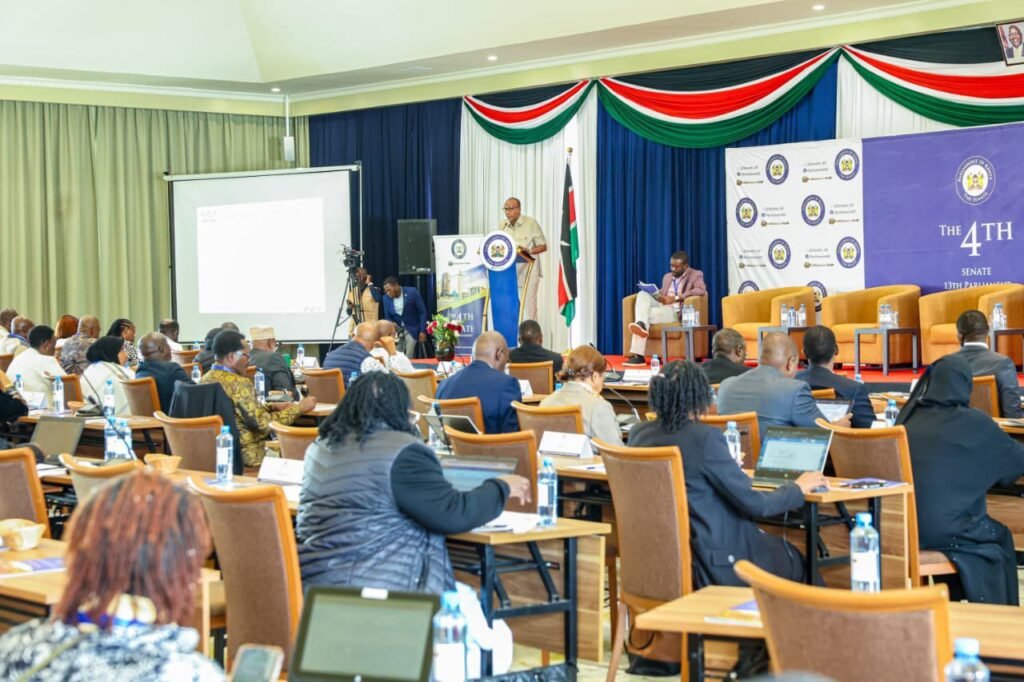
Speaking during the Senate Assessment and Planning Retreat, the CS said reforms in the health sector are grounded in constitutional principles and strengthened by new laws aimed at improving access, efficiency and accountability.
Devolution expands access to Level 4 and 5 hospitals
Addressing senators at the retreat chaired by Edwin Sifuna, Duale said devolution has played a central role in expanding access to healthcare services across the country.
“Functional Level 4 and 5 hospitals have now been established across all 47 counties,” he stated, describing the decentralisation of health services as “a significant constitutional milestone that has improved equity and brought specialised services closer to communities.”
He emphasised that county governments are now better positioned to deliver critical and referral services, reducing the burden on national referral facilities and cutting travel costs for patients seeking specialised care.
The Health CS said the reforms are anchored on four key pieces of legislation: the Social Health Insurance Act, the Digital Health Act, the Primary Health Care Act and the Facility Improvement Financing Act.
“These four statutes together provide the legal framework guiding the sector’s transformation,” Duale told the Senate, adding that the laws were designed to ensure sustainability, transparency and universal access to quality healthcare.
SHA financing model and safeguards
On health financing, Duale reported steady progress under the Social Health Authority (SHA), which replaced the former NHIF structure.
“Millions of Kenyans have registered under SHA, and funds are being collected and disbursed to healthcare providers,” he said.
The CS addressed concerns raised in recent public discourse regarding KES 12.7 billion in claims, clarifying that the amount relates to claims that were flagged, rejected and therefore not paid.
“The KES 12.7 billion cited relates to claims that were flagged, rejected and unpaid through strengthened verification systems,” Duale explained. “These safeguards are in place to protect public resources and ensure only legitimate claims are settled.”
He added that enhanced verification mechanisms and digital oversight have strengthened accountability in the management of public health funds.
Duale also highlighted the introduction of the “Lipa SHA Pole Pole” model, a flexible contribution plan designed to accommodate informal sector workers.
“The ‘Lipa SHA Pole Pole’ model allows those in the informal sector to contribute flexibly and remain covered under the national health insurance framework,” he said.
Free primary healthcare and digital transformation
The Cabinet Secretary underscored the ongoing rollout of free Primary Health Care services at Level 2 and 3 facilities nationwide.
“We are implementing free Primary Health Care services at Level 2 and 3 facilities to reduce out-of-pocket costs and improve access to essential services,” Duale said.
He noted that the reforms aim to shift the focus from curative to preventive care, ensuring early diagnosis and treatment at community and primary facility levels.
On digital transformation, Duale said thousands of health facilities have already been integrated into the TaifaCare platform.
“Thousands of health facilities have been linked to the TaifaCare platform, supported by an AI-powered fraud detection engine that identifies and blocks suspicious claims in real time,” he said.
The integration, he added, enhances transparency, speeds up claims processing and strengthens public confidence in the system.
Strengthening the health workforce
Duale further highlighted investments in human resources for health, particularly at the grassroots level.
He said 107,000 Community Health Promoters have now been formally recognised and digitised to improve service delivery at the community level.
“The formal recognition and digitisation of 107,000 Community Health Promoters is a major step in strengthening service delivery at the grassroots,” he noted.
The CS also referenced ongoing reforms aimed at improving medical equipment supply chains and expanding access to specialised services in public hospitals.
Call for legislative and budgetary support
Duale concluded by calling for sustained legislative and financial backing to consolidate the progress made.
“These reforms are anchored on transparency, sustainability and equitable access to quality healthcare for all Kenyans,” he said. “We require continued legislative and budgetary support to fully realise Universal Health Coverage.”
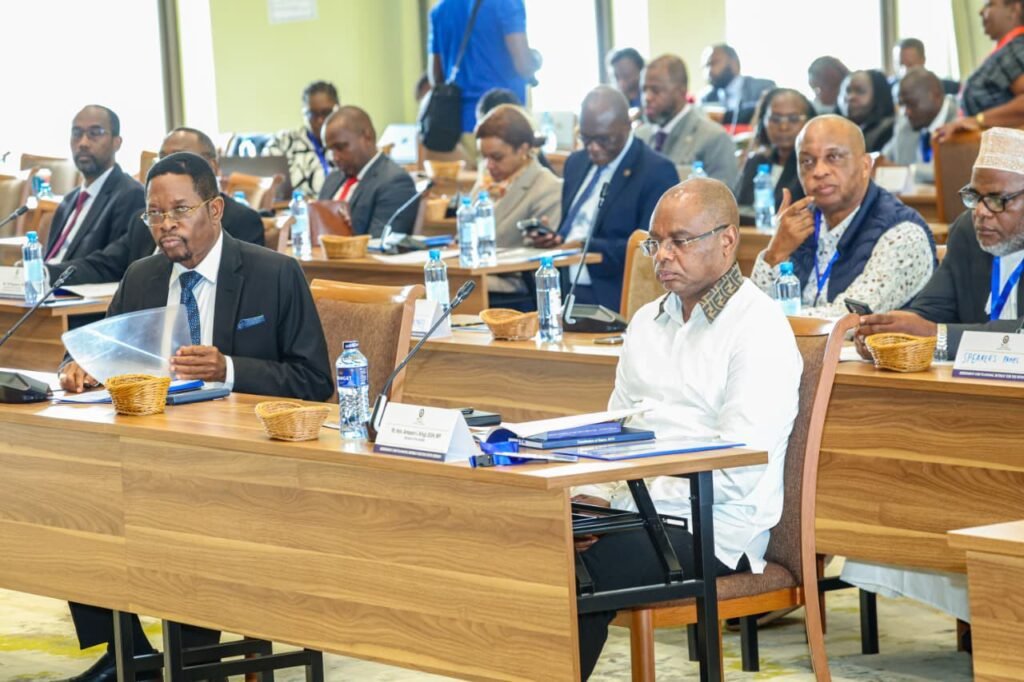
The retreat was attended by Principal Secretary for Medical Services Dr. Ouma Oluga; Director-General for Health Dr. Patrick Amoth; Council of Governors Health Committee Chair H.E. Abdulswamad Sherrif Nassir; Senate Health Committee Chair Sen. Jackson Mandago; Social Health Authority CEO Dr. Mercy Mwangangi; and Digital Health Agency CEO Eng. Anthony Lenayara.
The government maintains that the ongoing reforms mark a decisive shift toward a more inclusive, technology-driven and financially sustainable healthcare system in Kenya.


