
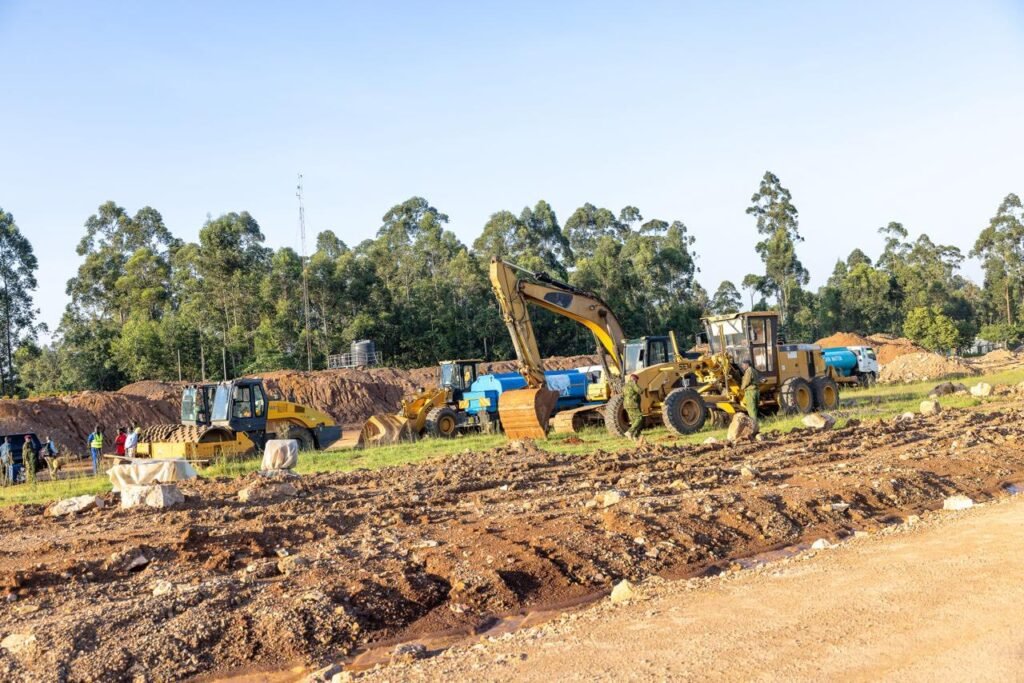
The ongoing expansion of Kakamega Airstrip is expected to transform air connectivity in Western Kenya, reduce travel bottlenecks and open new economic opportunities in a region that has long relied on distant airports for air transport.
President William Ruto recently inspected the project alongside Shinyalu MP Fred Ikana, highlighting the government’s intention to upgrade the facility into a modern regional air transport hub capable of handling larger commercial aircraft.
Once completed, the upgraded airstrip is expected to strengthen trade, tourism and investment flows across Western Kenya.

Improving air connectivity in Western Kenya
Western Kenya is home to more than 11 million people, including residents of Kakamega, Bungoma, Busia, Vihiga and parts of Trans Nzoia counties. Despite this large population and vibrant agricultural economy, the region currently relies heavily on Kisumu International Airport, located about 50 kilometres from Kakamega, for most air travel.
Transport experts say the distance and limited air infrastructure have historically slowed business mobility and increased travel costs for investors and traders.
The expansion of Kakamega Airstrip aims to address this gap by providing a closer and more accessible aviation facility for the region.
The upgraded airstrip will allow scheduled domestic flights linking Western Kenya directly to Nairobi, Mombasa and other regional cities, significantly reducing travel time for business travellers.
Major investment in infrastructure
The project forms part of the government’s broader aviation infrastructure development programme aimed at modernising smaller airstrips across the country.
According to the Kenya Airports Authority (KAA), the Kakamega Airstrip upgrade includes the extension and strengthening of the runway, improvements to taxiways and the modernisation of terminal facilities.
The project is estimated to cost about Sh1.2 billion, with funds allocated for runway expansion, safety equipment and improved passenger handling facilities.
The current runway is being upgraded to support larger turboprop and regional jet aircraft, enabling airlines to operate regular commercial flights to the region.
Officials say the improvements will increase the airstrip’s operational capacity and make it safer for both passenger and cargo flights.
Boosting trade, tourism and agriculture
Western Kenya is one of the country’s most productive agricultural regions, producing large volumes of sugarcane, maize, tea, dairy products and horticultural crops.
Better air connectivity could help farmers and exporters move high-value produce more quickly to markets in Nairobi and international cargo hubs.
The airstrip could also support the development of a regional cargo hub serving nearby counties.
Tourism officials believe the improved infrastructure could attract more visitors to sites such as Kakamega Forest, the country’s only tropical rainforest, which receives thousands of eco-tourists each year.
Easier access could significantly increase visitor numbers and boost the local hospitality sector.

Job creation and regional development
Infrastructure projects such as airport upgrades often generate employment both during construction and after completion.
Government planners estimate that hundreds of jobs could be created directly through construction activities and airport operations.
Indirect employment opportunities are also expected in sectors such as transport, hospitality, logistics and trade.
Local leaders say the airstrip expansion will help position Kakamega as an emerging economic hub in Western Kenya.
Reducing pressure on Kisumu airport
Kisumu International Airport currently serves as the main aviation gateway for much of Western Kenya and parts of the Lake Region.
While Kisumu handles both domestic and international flights, growing passenger demand has increased pressure on its facilities.
A modernised Kakamega Airstrip could distribute passenger traffic more evenly across the region, improving efficiency and travel convenience.
By strengthening aviation infrastructure in Western Kenya, the government hopes toThe ongoing expansion of Kakamega Airstrip is expected to transform air connectivity in Western Kenya, reduce travel bottlenecks and open new economic opportunities in a region that has long relied on distant airports for air transport.
President William Ruto recently inspected the project alongside Shinyalu MP Fred Ikana, highlighting the government’s intention to upgrade the facility into a modern regional air transport hub capable of handling larger commercial aircraft.
Once completed, the upgraded airstrip is expected to strengthen trade, tourism and investment flows across Western Kenya.
Improving air connectivity in Western Kenya
Western Kenya is home to more than 11 million people, including residents of Kakamega, Bungoma, Busia, Vihiga and parts of Trans Nzoia counties. Despite this large population and vibrant agricultural economy, the region currently relies heavily on Kisumu International Airport, located about 50 kilometres from Kakamega, for most air travel.
Transport experts say the distance and limited air infrastructure have historically slowed business mobility and increased travel costs for investors and traders.
The expansion of Kakamega Airstrip aims to address this gap by providing a closer and more accessible aviation facility for the region.
The upgraded airstrip will allow scheduled domestic flights linking Western Kenya directly to Nairobi, Mombasa and other regional cities, significantly reducing travel time for business travellers.
Major investment in infrastructure
The project forms part of the government’s broader aviation infrastructure development programme aimed at modernising smaller airstrips across the country.
According to the Kenya Airports Authority (KAA), the Kakamega Airstrip upgrade includes the extension and strengthening of the runway, improvements to taxiways and the modernisation of terminal facilities.
The project is estimated to cost about Sh1.2 billion, with funds allocated for runway expansion, safety equipment and improved passenger handling facilities.
The current runway is being upgraded to support larger turboprop and regional jet aircraft, enabling airlines to operate regular commercial flights to the region.
Officials say the improvements will increase the airstrip’s operational capacity and make it safer for both passenger and cargo flights.
Boosting trade, tourism and agriculture
Western Kenya is one of the country’s most productive agricultural regions, producing large volumes of sugarcane, maize, tea, dairy products and horticultural crops.
Better air connectivity could help farmers and exporters move high-value produce more quickly to markets in Nairobi and international cargo hubs.
The airstrip could also support the development of a regional cargo hub serving nearby counties.
Tourism officials believe the improved infrastructure could attract more visitors to sites such as Kakamega Forest, the country’s only tropical rainforest, which receives thousands of eco-tourists each year.
Easier access could significantly increase visitor numbers and boost the local hospitality sector.
Job creation and regional development
Infrastructure projects such as airport upgrades often generate employment both during construction and after completion.
Government planners estimate that hundreds of jobs could be created directly through construction activities and airport operations.
Indirect employment opportunities are also expected in sectors such as transport, hospitality, logistics and trade.
Local leaders say the airstrip expansion will help position Kakamega as an emerging economic hub in Western Kenya.
Reducing pressure on Kisumu airport
Kisumu International Airport currently serves as the main aviation gateway for much of Western Kenya and parts of the Lake Region.
While Kisumu handles both domestic and international flights, growing passenger demand has increased pressure on its facilities.
A modernised Kakamega Airstrip could distribute passenger traffic more evenly across the region, improving efficiency and travel convenience.
By strengthening aviation infrastructure in Western Kenya, the government hopes to stimulate regional economic growth and improve connectivity for millions of residents and businesses.


