
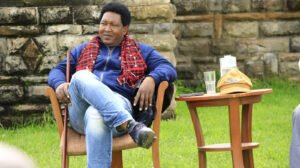
Narok Senator Ledama Olekina has entered the ongoing debate on fuel prices, arguing that Kenya’s Road Maintenance Levy is critical for sustaining infrastructure development and that reducing levies would slow road expansion.
In a post on X on Monday, April 20, 2026, Senator Olekina stated: “I know it hurts a lot, but the truth is: Fuel isn’t ‘free money.’ Cheaper fuel means less levy revenue for roads.”
He supported his position with regional comparisons: Kenya currently has 164,967 km of roads, of which 15.1% (24,868 km) are paved. By contrast, Uganda has approximately 146,000 km with only 4.4% paved (6,466 km), while Tanzania has 181,000 km with about 8% paved (15,000 km).
“Kenya uses a fuel/roads levy, and cheaper fuel still means less road funding unless the gap is covered elsewhere. The choice is simple: lower taxes and cheaper fuel with slower road development, or higher levies and stronger road expansion,” Olekina added.He cautioned against politicising the matter: “The opposition should stop turning every fuel conversation into cheap politics and blaming Ruto for everything.”
The Road Maintenance Levy Fund (RMLF), which includes a levy of KSh 25 per litre on fuel, collected KSh 119.7 billion in the 2024/25 financial year. Of this amount, only about KSh 3.68 billion was disbursed to the 47 county governments, even though counties manage roughly 76% of the national road network.Kenya’s total road network has expanded significantly, growing from 161,820 km in 2016 to 239,122 km by 2025. Official figures as of mid-2024 list 24,868 km as paved, with national roads showing a much higher paving rate (nearly 49%) compared to county roads (around 2.5%).
The government has also pursued securitisation of portions of the levy to clear contractor arrears and revive stalled projects, while President William Ruto has defended the KSh 25 levy as necessary for long-term infrastructure gains.
Strong Public reactions highlight concerns over corruption and road quality
Senator Olekina’s remarks drew sharp responses from many Kenyans who questioned the effectiveness of the levy given persistent road challenges and past reports of fund mismanagement.James Chege (
@_James041) replied: “The Auditor General reports confirm that more than KSh 211B has been stolen in the name of the unconstitutional Railway Development Levy Fund. Railway Levy, Petroleum levy etc are all taxes deducted from a litre of petrol. You have been stealing funds and now to tell us about road maintenance for roads you’ve failed to maintained? Tuesday is Tuesday. #RejectFuelPrices”Deskviator (
@Commoner_254) cited a specific project: “A good example of the 3B road of the Ngong-Suswa….. It is being counted in the total of Paved Rds. #3B gobbled up and the road is in tatters, barely months after being ‘completed’. What is the point of your gospel. Taxes za matakataka that go to never complete projects #RejectFuelPrices”KEN (
@kenkhalifa) added: “Which road development? Ngong-Suswa is a joke after 4B, thats a joke. Lower fuel prices thats the irreducible minimum, cut back on dubious expenses like 8Million a day chopper rides and end corruption.”g.n.kibia (
@gnkibia) stated: “The problem is Not high fuel prices. The problem is Corruption and misuse of money collected from the high fuel price. Fight Corruption and the noise will go down. Have development that is people centered.”Ha~Cunha Matata (
@mdouglasok) emphasised priorities: “Roads are secondary to basic needs. Putting food on the table is more important than a tarmacked road… Remove all the levies in the short term and when the price stabilise then reinstate the levies back.”Peter Ndirangu (
@peter_ndirangu2) called for accountability: “Stop guilt-trapping Kenyans,” while sharing a breakdown indicating that taxes and levies form a substantial portion of the pump price.
Calls for greater county share and transparency
The debate coincides with ongoing demands from the Council of Governors (CoG) for a larger portion of the RMLF. Governors are pushing for 42% of the fund to be allocated to counties, arguing that the current low disbursement does not match their responsibility for the majority of roads used by ordinary citizens.
CoG Transport Committee Chairperson Kimani Wamatangi has stressed that people paying the levy expect their local roads to be maintained by the closest level of government.Fuel prices in Kenya include several components — the Road Maintenance Levy, excise duty, VAT, and the Petroleum Development Levy — which together account for a significant share of the final cost at the pump.
While the government maintains that sustained investment through levies is essential for infrastructure progress, public frustration remains high amid cost-of-living pressures, with many calling for reduced wastage, stronger anti-corruption measures, and more efficient use of collected funds.
TopNews.ke will continue to follow developments, including any official government response on fuel pricing, levy utilisation, and road maintenance efforts.


