
The Senate has intensified scrutiny of Taita Taveta County’s water sector after audit reports revealed that Tavevo Water and Sewerage Company Limited is grappling with deep financial distress, governance failures and massive operational losses that have pushed the utility to the brink of collapse.
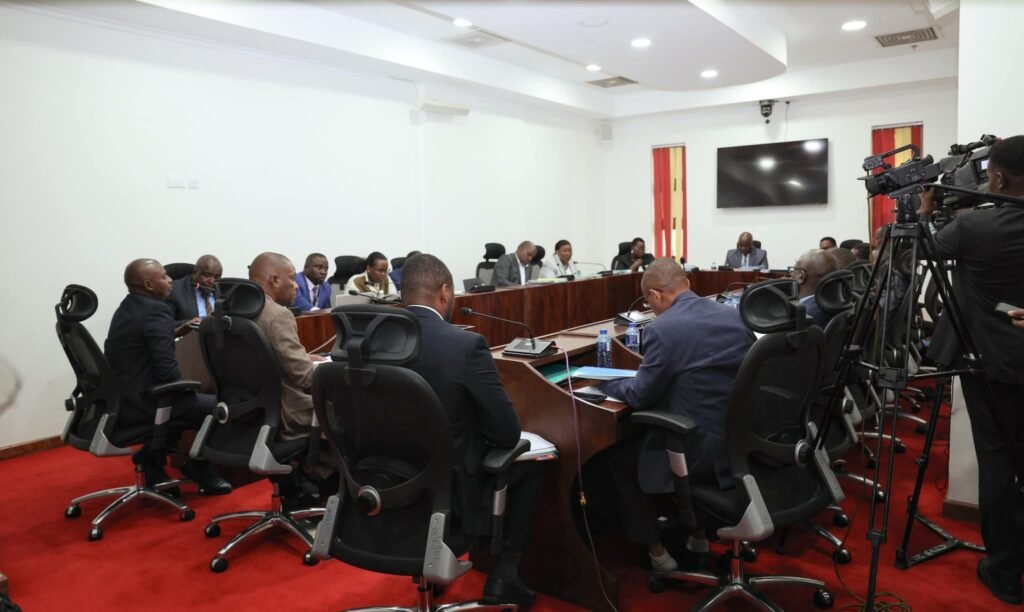
Governor Andrew Mwadime appeared before the Senate County Public Investments and Special Funds Committee in January 28, 2026 to answer questions on the financial operations of Tavevo Water and the county’s municipalities for the year ending June 30, 2025. What began as a routine audit review quickly escalated into a damning examination of mismanagement and ethical breaches.
Billions Lost Through Water Wastage and Poor Controls
At the heart of the Senate’s concern is Tavevo’s non-revenue water (NRW), which stands at about 50 per cent, meaning half of all treated water never generates income due to leaks, illegal connections and faulty billing systems.
Committee chair Senator Godfrey Osotsi told the governor that the losses were indefensible, noting that the Water Services Regulatory Board (WASREB) caps acceptable NRW at 25 per cent. “You are losing almost half of your water,” Osotsi said during the January 27 sitting at Bunge Tower. “This represents institutional failure and raises serious questions about management accountability.”
Audit figures presented to the committee show that Tavevo lost approximately Sh386.2 million in potential revenue in a single year due to NRW, further weakening its already fragile finances.
A utility technically insolvent
The Auditor-General’s report painted an even bleaker picture, flagging a “material uncertainty related to going concern” — a warning that the company may not survive without urgent intervention.
According to the audited accounts, Tavevo’s current liabilities stood at about Sh985 million, compared to current assets of Sh653.4 million, leaving a negative working capital of more than Sh331 million. In earlier audit periods, the deficit exceeded Sh500 million, underscoring a persistent downward trend.
“You are operating a company that is effectively bankrupt,” Senator Osotsi told Governor Mwadime. “Yet you failed to clearly disclose the measures being taken to mitigate this condition in your financial statements.”
Governance and ethics under the spotlight
Beyond finances, senators raised alarm over governance lapses, including the absence of a functional audit committee, failure to disclose donated assets such as vehicles from the Coast Water Services Board, and continued reliance on estimated billing rather than actual meter readings.
Senator Raphael Chimera questioned the integrity of Tavevo’s leadership after auditors revealed that companies linked to the firm’s Company Secretary had provided legal services without proper conflict-of-interest declarations. “This is a direct violation of leadership and integrity principles,” Chimera said. “How can the public trust a utility where the person meant to enforce compliance is benefiting from contracts?”
The Senate has previously asked the Ethics and Anti-Corruption Commission (EACC) to investigate suspected graft involving about Sh100 million at the water company.
Billing inequities and public trust
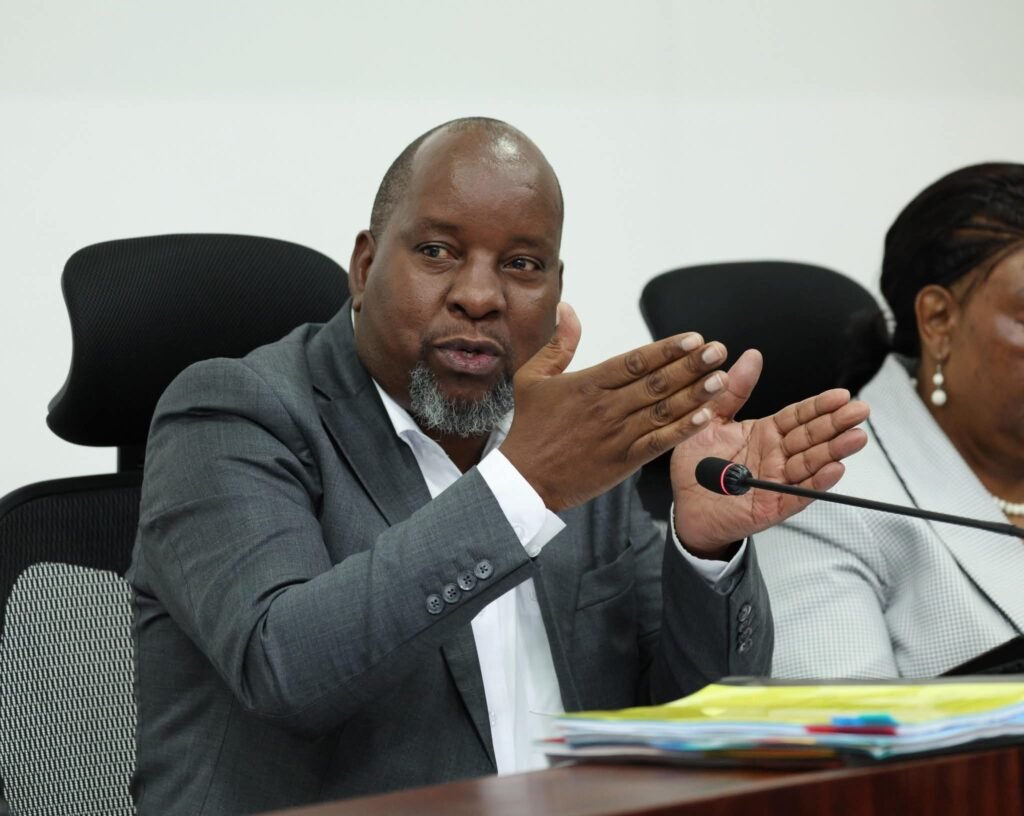
Taita Taveta Senator Johnes Mwaruma pressed the county on billing transparency, questioning whether residents were being charged fairly. “Customer deposits must be held in trust by law,” Mwaruma said, pointing to an unexplained Sh32 million shortfall. “Failure to account for this money is a serious breach.”
He also demanded clarity on how consumers are classified as urban or rural and large or small users, warning that opaque billing systems erode public confidence and worsen revenue collection.
County promises reforms as Senate issues ultimatum
In his defence, Governor Mwadime admitted that the problems were severe but said corrective measures were underway. “We acknowledge irregularities in Tavevo, some of which were inherited,” he told senators. “We have established a Non-Revenue Water coordination unit, are engaging professional debt collectors, and enforcing conflict-of-interest policies.”
The governor also cited plans to solarise pump stations to reduce electricity costs, one of the main contributors to the utility’s financial strain.
The Senate has now issued the county with a 60-day ultimatum to implement sweeping reforms, warning that failure to stabilise Tavevo Water could trigger tougher sanctions.
As scrutiny continues, the Taita Taveta water crisis has become a case study in how financial mismanagement, weak oversight and governance failures can cripple essential public services — with residents paying the price through unreliable water supply and rising bills.

