
Gideon Moi’s failure to appear before the Independent Electoral and Boundaries Commission (IEBC) in Kabarnet to present his nomination papers for the Baringo senatorial by-election was more than a missed appointment — it was a statement.
Despite the heavy mobilisation of supporters and the expectation of a grand KANU comeback, Moi’s convoy never arrived. The IEBC’s 11 a.m. to 2 p.m. slot lapsed in silence. No banners. No red berets. Only questions.
That silence grew louder given the timing — a day after Gideon held a private meeting with President William Ruto. In Kenya’s political theatre, few things happen by accident. A handshake, a meeting, or an absence often signals a deeper alignment in motion.
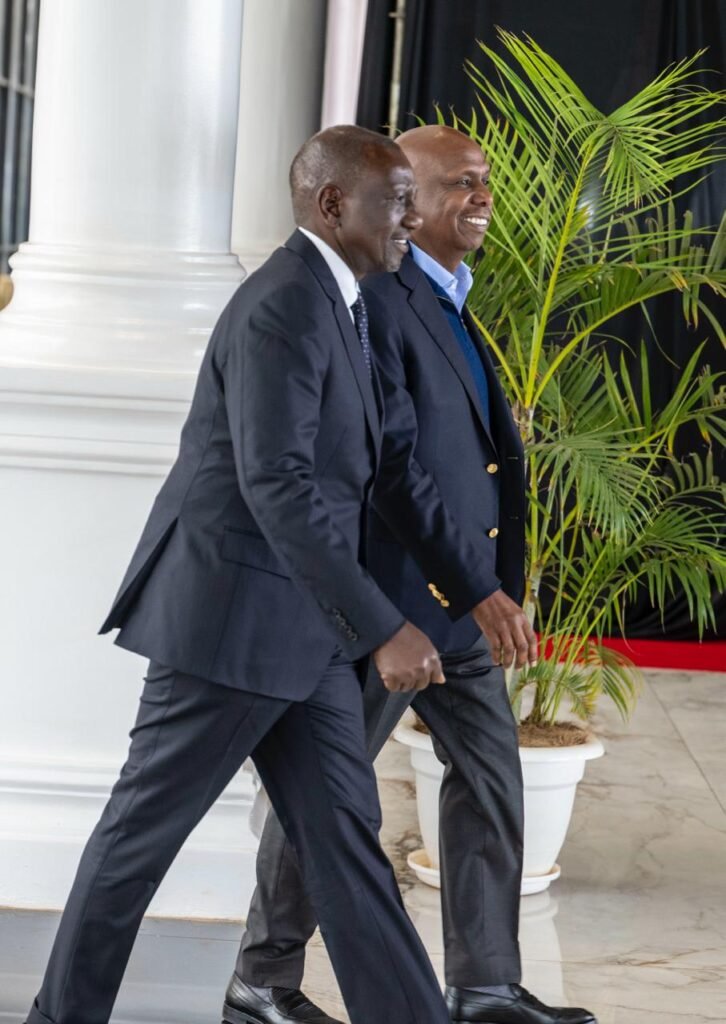
A legacy paused
For Gideon Moi, son of the late President Daniel arap Moi, this moment could mark the quietest yet most consequential turn of his political life. Groomed for national leadership, he was long seen as the heir to a dynasty that once defined Kenyan politics. Yet his 2022 defeat in Baringo — a humiliating loss in his father’s backyard — stripped KANU of both prestige and presence. Since then, Gideon has kept a low profile, appearing more in private consultations than public rallies.
His meeting with President Ruto on the eve of his IEBC appointment has fuelled speculation of a silent détente — or even a soft landing. Some within KANU whisper that the decision not to contest was strategic: a way to avoid another public defeat that could further diminish his political weight.
Fading footprint
For KANU, the no-show is another blow to an already fragile structure. Once Kenya’s unassailable ruling party, it now survives on nostalgia rather than numbers. Under Gideon, KANU tried to position itself as a centrist force — flirting with Azimio la Umoja while keeping communication lines open with Ruto’s government. But the shifting political tides have blurred its identity.
With Raila Odinga’s rapprochement with Ruto through the broad-based government, the opposition space has shrunk, leaving KANU stranded between irrelevance and absorption. Skipping the Baringo race denies the party visibility when it needs it most. In Kenya’s coalition politics, out of sight often means out of the deal.
Calculated silence
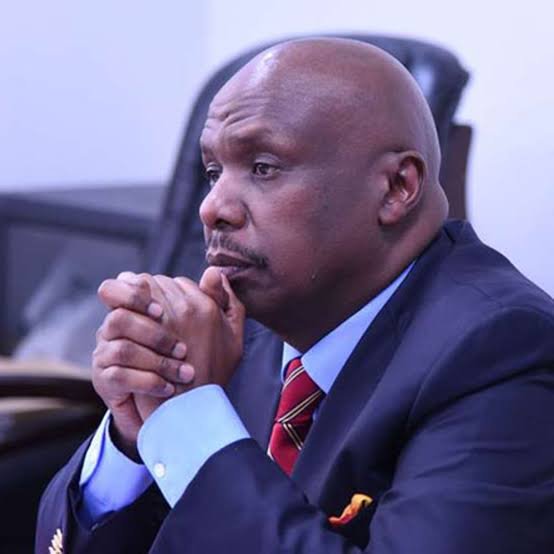
Those close to Gideon insist his absence was not retreat but calculation. Engaging in a bruising by-election he was unlikely to win could have publicly underscored his political decline. Instead, by stepping aside — possibly under a gentleman’s understanding with State House — he preserves political capital and keeps his options open for 2027.
The Moi family, after all, has built its legacy on patience and positioning, not protest. Gideon’s silence may therefore signal strategic coexistence with Ruto’s administration — a tacit alignment rather than open opposition.
Without a Moi
For the first time in decades, Baringo heads into an election without a Moi on the ballot. The symbolism is striking: a dynasty that once commanded the Rift Valley’s loyalty now watches from the sidelines.
As the 2027 race looms, Gideon Moi faces a defining crossroad — to re-emerge as a coalition powerbroker or retreat permanently from frontline politics. For now, his quiet no-show may prove less a withdrawal than a repositioning — a move in the long game of Kenyan power.


