
Top agencies and lobbies in the financial sector are lining up to give their views over the State’s plan to sell its stakes in Safaricom.
Members of Parliament are set to conduct public participation beginning Tuesday regarding the government’s plan to sale its shares in the telecommunications firm.
According to an internal schedule prepared by the Finance and National Planning Committee, and the Public Debt and Privatisation Committee, a meeting will be held first on Monday to prepare for the process before the public participation on Tuesday.
SERVICE PROVIDERS
The public engagements, which is a requirement of the Constitution, will continue until January 21 in Kiambu County. Although it will involve all stakeholders, big interest has been shown by lobbies in the financial sector, following the big debate that the sale ignited.
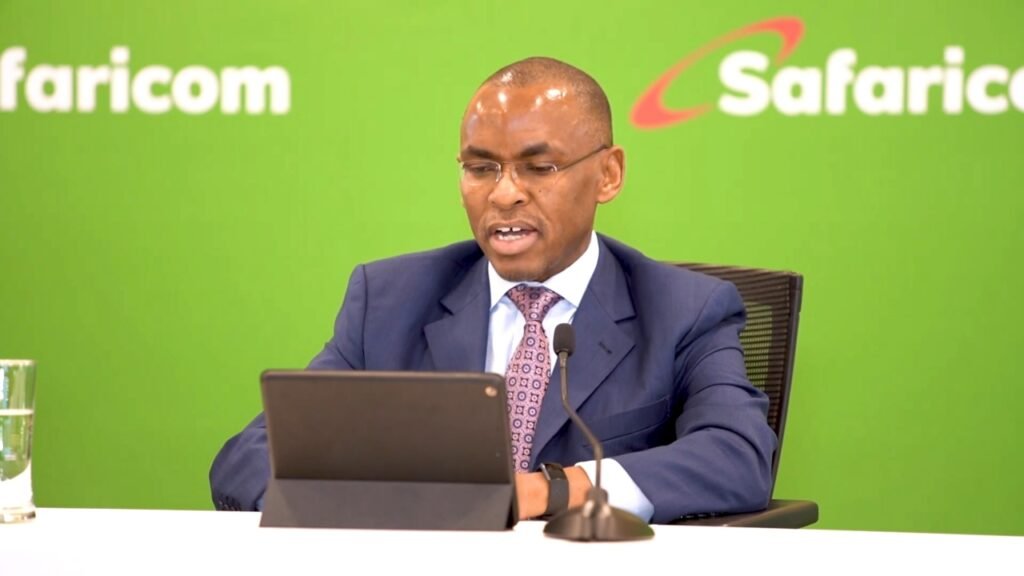
On Wednesday morning, Safaricom PLC will appear before the MPs from 930 to 11 am, followed closely by the Institute of Certified Public Accountants of Kenya, who will meet with the legislators from 1130 to 1 pm.
Jamii Telecommunications Ltd, Safaricom Dealers Association, Safaricom Foundation, Airtel Kenya, Technology Service Providers of Kenya, Telkom Kenya, and Mwananchi (Zuku) will be giving their views on the sale between 2pm and 6pm.

BUNGE LA MWANANCHI
On Thursday, Kenya Bankers Association, Kenya Association of Air Operators, Petroleum Institute of East Africa, Kenya Private Sector alliance, Kenya National Chamber of Commerce, Digital Financial Services Association of Kenya Devices, and the Federation of Kenya Employers will give their views on the matter to the MPs.
The Law Society of Kenya, the Institute of Economic Affairs, the Association of Stockbrokers of Kenya and Westminster Consulting, among others, are scheduled to appear before the joint committee on January 16.
The Kenya Human Rights Commission, Amnesty International, Bunge La Mwanachi, Katiba Institute and the Central Organisation of Trade Unions will appear before the joint committee on January 19.
The panel will then meet with other stakeholders before retreating to consolidate all views received and to draft its report, which is expected to be presented when the House resumes its sittings on February 10.
PARTIAL SALE
National Assembly Speaker Moses Wetangula gave permission to the two committees to begin their meetings earlier than usual, before the regular sittings resume, to give them time to consider the government’s Sessional Paper on the partial sale of Safaricom’s shares.
“This earlier resumption of their sittings shall allow committees to conduct extensive public participation to obtain the views of the affected stakeholders, noting that Safaricom PLC is a government- linked company that is listed in the Nairobi Stock Exchange,” said Wetangula.
Kiharu MP Ndindi Nyoro has criticised the government’s plan to sell a 15 per cent stake in Safaricom, saying the State risks undervaluing one of Kenya’s most important companies.
Nyoro argued that using the current market price as the reference point for the transaction is a facade that would deny Kenyans fair value.
Nyoro said the government must seek the right and optimal value for the stake and questioned whether the Nairobi Securities Exchange (NSE) reflects the true worth of major companies. He pointed out that several listed firms trade far below what he considers their real value, citing this as proof that Safaricom should not be priced solely based on its share price.
He gave examples from the market to show the gap between asset values and market valuations. He noted that Kengen has assets of more than Ksh500 billion but trades at a valuation of around Ksh55 billion. KCB’s valuation is also below its book value, while Kenya Re, Total Kenya, Car & General and Kenya Power all trade far lower than what their assets or profits might suggest.
BOLSTER FINANCES
Facing high public debt, limited room to raise taxes, and annual debt repayments that absorb 40% of government revenues, President William Ruto’s administration is turning to asset sales to bolster its finances.
Ruto’s government is creating the two funds to invest in roads, irrigation projects, energy-generation plants and the country’s main airport, without increasing public debt.
It is also divesting from other state firms, including the sale of shares in Kenya Pipeline Company in an initial public offering on the Nairobi bourse scheduled for next year.
The Safaricom transaction requires approvals from parliament and regulators, Mbadi said. Safaricom jumped more than 4% after the announcement to 29.25 shillings per share. Vodacom slipped more than 2%.
The purchase will lift Vodacom’s stake to 55%, giving the South African group effective control of Safaricom, known for its M-Pesa mobile money service.
“Vodacom is paying a control premium,” said Eric Musau, head of research at Nairobi-based Standard Investment Bank.
TAKEOVER OFFER
The South African operator said it did not intend to launch a takeover offer once the acquisition is completed and will apply to the market regulator for exemptions related to its increased stake.
Vodacom will also be required to maintain Safaricom’s workforce, its current identity and associated branding, Mbadi said.
The government’s Safaricom stake will be reduced to 20% from current 35% but Mbadi said that will still give it influence over the strategic direction of the firm.
The deal will allow Vodacom, which also operates in other African markets, such as the Democratic Republic of the Congo and Tanzania, to deepen its presence in high-growth markets, including Ethiopia, where Safaricom started operations in 2022, it said.


