
The Rironi–Mau Summit Highway is one of the largest and most consequential road infrastructure projects currently underway in Kenya, aimed at easing congestion, lowering transport costs, and strengthening the country’s role as a regional trade and logistics hub.
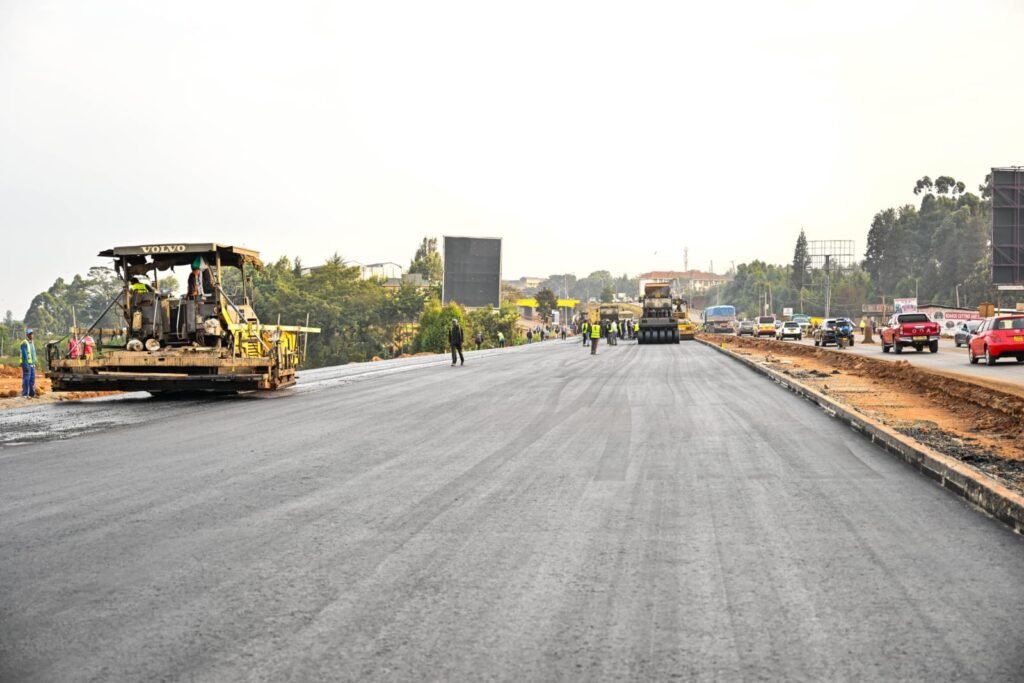
The road sits along the Northern Corridor, the main artery connecting the Port of Mombasa to Uganda, Rwanda, South Sudan and the Democratic Republic of Congo. For decades, this stretch has been notorious for traffic gridlock, accidents and high transport costs, especially for farmers and long-haul truck drivers.
Scope, Design and Timeline
The project covers a total corridor of about 233 kilometres, with the main upgrade focusing on the 175-kilometre Rironi–Mau Summit section. Once completed, the highway will be transformed into a modern dual carriageway, featuring four lanes between Rironi and Naivasha and six lanes between Naivasha and Nakuru.
Construction officially began in late 2025 after the project was launched by President William Ruto in Kamandura, Kiambu County. The government has set June 1, 2027, Madaraka Day, as the completion and opening date.

Speaking during the launch in November 2025, President Ruto said the government had opted for a new financing approach to avoid delays that have stalled major projects in the past.
“If we waited for the national budget, we would have waited a lifetime. This road is more than a highway; it is a gateway to prosperity, unity and transformation,” the President said.
Cost, Financing and the PPP Model
The Rironi–Mau Summit Highway is being implemented under a Public-Private Partnership model, with estimates placing the total cost between KSh 184 billion and KSh 290 billion. The project follows a design, build, finance, operate, maintain and transfer framework, under which private partners will run the road for 30 years before handing it back to the government.
Key partners include China Road and Bridge Corporation, Shandong Hi-Speed Road and Bridge, and the National Social Security Fund. NSSF is investing tens of billions of shillings in the project, a move the government says will deliver strong long-term returns for Kenyan retirees.
NSSF Managing Trustee David Koross, speaking in February 2026, said the fund was targeting stable, long-term assets.
“We are investing in an asset class that matches our liabilities,” Koross said, noting that the road is expected to generate consistent revenue over decades.
Tolling and What Motorists Will Pay
Once operational, the highway will be a tolled road. Estimates indicate motorists will pay about KSh 8 per kilometre, translating to roughly KSh 1,400 for a full journey from Rironi to Mau Summit. Toll charges will be reviewed annually to reflect inflation and currency movements.
The government says toll revenues will be ring-fenced to maintain the highway and ensure debt repayment, reducing the burden on taxpayers.
Economic Impact and Job Creation
Beyond easing traffic, the project is expected to significantly boost economic activity. Government estimates indicate between 10,000 and 15,000 jobs will be created during construction, many targeting young people.
President Ruto said the highway would directly support farmers, traders and manufacturers by cutting travel time and transport costs.
“This project will create thousands of jobs and give young Kenyans skills that will serve them for life,” he said.
Former Transport Cabinet Secretary Kipchumba Murkomen also described the road as a major economic enabler, saying in November 2025 that it would attract investment, foreign exchange and employment.
Current Status and Progress
As of early 2026, construction activity is ongoing across several sections of the corridor, including Rironi, Gilgil, Kariandusi and Mau Summit. The government says splitting the road into multiple sections has helped speed up progress and maintain the 2027 deadline.
Transport Cabinet Secretary Davis Chirchir, after inspecting the project in January 2026, expressed confidence in the pace of work.
“The government has been encouraged by the level of mobilisation and coordination on the ground,” Chirchir said.
Why the Highway Matters
The Rironi–Mau Summit Highway is central to Kenya’s broader infrastructure strategy. By decongesting one of the busiest road corridors in the country, the project is expected to improve road safety, enhance regional trade, support agriculture and lower the cost of doing business.
For commuters, transporters and businesses, the highway represents a long-awaited solution to years of delays and inefficiencies, while for the government, it stands as a flagship example of using partnerships to deliver large-scale infrastructure faster and more sustainably.

