


Kenyan roses can spend more than a month travelling to Europe and still arrive in good condition. The challenge is keeping them cool, handling them carefully and choosing flowers that can withstand the journey.
That possibility is driving efforts to connect Naivasha’s flower-growing belt to European buyers through refrigerated containers carried by the Standard Gauge Railway (SGR) to Mombasa, then shipped overseas.
For exporters, the attraction is lower freight costs and another way to reach buyers when air cargo space is expensive or limited. For Kenya, it is an opportunity to make its railway and ports serve a valuable agricultural industry more effectively.
But the slower route comes with a demanding condition: the flowers must reach the market with enough life left for shops to sell them and customers to enjoy them.
Why is Kenya exporting flowers by sea?
Air freight remains important because it is fast. Sea freight offers an additional option for suitable flowers and orders that can be planned further ahead.
The Kenya Flower Council identifies high airfreight costs and capacity shortages as reasons to develop sea transport. The disruption caused by COVID-19 exposed the risks of depending heavily on flights.
The scale of the business makes transport efficiency significant. According to the KNBS Economic Survey 2026, Kenya exported 130,600 tonnes of cut flowers in 2025, earning Sh81.3 billion.
Fresh horticultural exports, including flowers, fruits and vegetables, earned Sh143.8 billion that year.
Protecting the quality of those exports matters as much as producing them. A flower that arrives damaged can lose its commercial value even when it was grown to the required standard.
How does the Naivasha–Mombasa route work?
The intended journey connects farms and packing facilities to Naivasha’s Inland Container Depot, where refrigerated containers can be loaded onto the SGR.
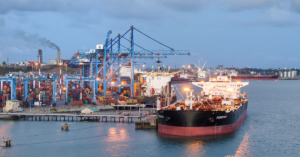
The containers travel to Mombasa port for loading onto ships. At the destination, flowers pass through import handling and distribution before reaching retailers.
A refrigerated container, commonly called a reefer, maintains suitable conditions during transport. The cold chain is the wider system that keeps produce cool through storage, loading, travel and unloading.
A documented trial in March 2025 brought together Nini Flowers, Dutch Flower Group, Maersk, Kenya Railways and Kenya Ports Authority.
Flying Swans, a project partner, reported that the container travelled from Naivasha to Mombasa in a day, with Rotterdam as its overseas destination.
TradeMark Africa later reported that a pilot shipment preserved flower quality after more than a month in transit by rail and sea. These trials show that the journey is possible. Scaling it up requires dependable services and consistent results.
How can roses stay fresh for weeks at sea?
Cooling slows deterioration, but successful shipping requires more than placing flowers inside a refrigerated box.
Research by Wageningen specialists examined a 2021 shipment of Kenyan roses that took 35 days, including a customs delay. Flowers received treatments before shipment, were cooled and travelled under controlled conditions.
The experimental container was set at 0.5°C, with oxygen and carbon dioxide levels controlled. Sensors monitored conditions during the journey.
Results differed between rose varieties and growers. Some flowers performed better than others despite receiving similar handling.
Researchers identified problems including dried leaves, fungal infection and flowers failing to open. Their work shows why exporters must test varieties and handling methods for sea transport.
The commercial test continues after arrival: flowers must survive distribution and shop displays, then retain an acceptable vase life in the customer’s home.
How much cheaper could sea freight be?
TradeMark Africa illustrated the potential savings in an August 2025 comparison.
It estimated air transport at US$3.50 per kilogramme, or US$31,500 for nine tonnes of flowers. Sea freight for the same shipment was estimated at around US$8,500 per container.
These figures explain the interest in shipping. They are dated estimates, rather than current price quotations or a complete account of every storage, handling and delivery charge.
Exporters must also weigh the longer journey against buyer requirements and the risk of rejected or damaged flowers.
The cheapest freight option only makes business sense if the produce arrives in saleable condition.
What would the proposed Naivasha hub add?
Flying Swans describes the proposed Naivasha Consolidation Centre as a facility for cold storage, pre-cooling, combining consignments and loading refrigerated containers.
Consolidation means bringing produce from several farms together into larger shipments. This could help exporters fill containers and organise regular departures.
The centre is proposed for the Naivasha Inland Container Depot, close to production areas and connected to the railway.
Supporting equipment is also being pursued. TradeMark Africa’s June 2026 procurement clarification covers 15 generator sets to power refrigerated containers for Kenya Railways, alongside temperature-monitoring systems.
That document confirms procurement activity. It does not establish that the equipment has been delivered or commissioned.
What must work before more growers benefit?
Reliable cooling, predictable departures and coordinated inspections are essential.
TradeMark Africa has documented efforts to agree responsibilities across farm collection, packing, customs clearance, transport and ship loading. Delays or poor handling at any stage can undermine the journey.
A shared hub could create opportunities for growers with smaller consignments. Whether they benefit will depend on access arrangements, service charges, quality requirements and how savings are shared.
The route can complement air freight, particularly for suitable varieties and planned orders. Urgent deliveries will still place a premium on speed.
Kenya has demonstrated that flowers can travel by rail and sea. The next test is whether that journey can become reliable and affordable enough for more exporters to use—and valuable enough for growers to benefit.
Quick answers
Are Kenyan flowers already travelling by train and ship?
Yes. Project partners documented a refrigerated rail trial from Naivasha to Mombasa in March 2025, linked to an onward sea shipment to Rotterdam.
Is the proposed Naivasha cold-chain hub already operational?
The project partner describes it as a proposed facility. The documents reviewed do not establish that the planned consolidation centre has been commissioned.
Will sea freight replace air freight for Kenyan flowers?
It offers an additional option. Suitability depends on flower variety, handling, journey time and buyers’ delivery requirements.


