
Deputy President Kithure Kindiki has revealed Kenya Kwanza administration’s resolve to undo decades of marginalisation of Northern Kenya.
The region has largely lagged behind since independence but ongoing infrastructure and service projects have marked beginning of a new era of inclusion and prosperity.
Determined to change
Speaking earlier this week at Water Grounds in Garissa Town during an empowerment event for small-scale traders affected by the Suq Mugdi market fire, Prof. Kindiki said the region had long been excluded from national development, but President William Ruto’s government was now determined to change that.
“It was very hard and cumbersome for the people from northern Kenya to get identification documents before 2022,” the Deputy President said. “President Ruto promised that when elected, he would ensure that everybody would be served equally. He fulfilled that promise on 5th February this year in Wajir when he abolished the discriminatory vetting policy. All Kenyans, irrespective of religion or ethnicity, are now served equally.”
Kindiki also pointed to the reopening of the Garissa Passport Office, which had remained closed since 2019, as a symbol of the administration’s resolve to restore access to public services. “This is part of efforts to end historical marginalisation and integrate the region fully into the national economy,” he said.
On the same day, the Deputy President inspected the ongoing Sh710 million upgrade of the Garissa Airstrip — a joint investment between the national government and Garissa County — and the Sh1.7 billion Tana River-Garissa Bridge that will enhance connectivity between the two counties.

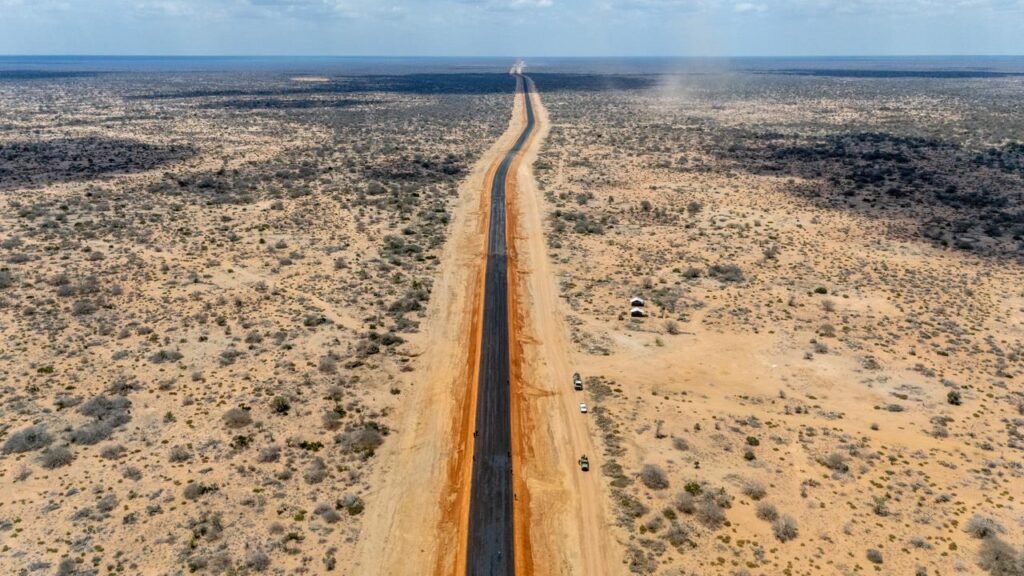
He also highlighted major infrastructure projects that, he said, would open up a new frontier of commerce, agriculture, logistics, and security in the region. Chief among them is the 750-kilometre Mandera–Wajir–Isiolo highway, being constructed at a cost of Sh100 billion, the longest road project undertaken by any government since independence.
“This road will ease mobility, reduce the cost of goods, and unlock economic potential,” said Kindiki. “It will connect communities from Mandera through Ramu, Elwak, Tarbaj, Wajir, Modogashe, and Kula Mawe to Isiolo, linking the region more closely with the rest of the country.”
Cross-border trade
He also announced progress on the 370-kilometre Lamu–LAPSSET corridor linking Lamu–Ijara–Garissa–Isiolo, and the planned Garissa–Dadaab–Liboi–Harhar road, which will connect Kenya to Somalia and strengthen cross-border trade and security.
Garissa is also benefitting from the government’s Sh13 billion investment in affordable housing, produce markets, and student hostels, as well as a Sh1.7 billion last-mile electricity connection programme expected to reach over 7,000 households.

Prof. Kindiki said all theinitiatives are designed to make Northern Kenya a new centre of growth. “This region has the potential to become Kenya’s next agricultural and logistics hub. We are investing in infrastructure to enable that transformation,” he said.
Collaboration
He also pledged government commitment to addressing health inequalities, noting the high child mortality rates in the region. “We must work harder to reduce preventable deaths and improve access to healthcare,” he said, echoing Health Cabinet Secretary Aden Duale’s call for stronger collaboration between national and county governments.
As Kenya Kwanza’s flagship projects take shape, the Deputy President said the administration’s goal is clear: to erase the legacy of neglect and position Northern Kenya as a thriving, integrated part of the nation’s economic future.


