
President William Ruto’s talks with US Secretary of State Marco Rubio have placed Kenya’s mineral wealth back in the spotlight. At the centre of the conversation is Mrima Hill in Kwale County, which contains deposits of niobium and rare earth elements.
The hill has repeatedly been described as holding minerals worth $62 billion. That figure has helped create the impression that Kenya is sitting on an enormous, ready-to-mine fortune.
The reality is more complicated.
Mrima Hill may be strategically important, but the value Kenya eventually receives will depend on what can be extracted economically, how the project is structured and whether the country exports raw ore or builds industries around the minerals.
What minerals are found at Mrima Hill?
Mrima Hill is a carbonatite formation containing niobium and several rare earth elements.
Niobium is mainly used to make steel stronger without adding excessive weight. It is important in pipelines, buildings, transport infrastructure and specialised alloys used in aircraft engines and other equipment exposed to extreme heat.
Rare earth elements have equally important applications. They are used in powerful permanent magnets found in electric motors, wind turbines, electronics, radar systems and some military equipment.
Despite their name, rare earths are not always rare in the ground. The challenge is finding deposits with sufficient concentrations and separating the elements economically without causing unacceptable environmental damage.
Kenya’s Ministry of Mining has conducted a mineral assessment of Mrima Hill and subsequently invited investors to undertake a detailed feasibility study and develop the niobium and rare-earth project.
That feasibility stage is crucial. It should establish how much of the resource can actually be recovered, the cost of developing the mine and processing facilities, and the environmental safeguards required.
Why is the United States interested?
Critical minerals have become part of the economic rivalry between the United States and China.
China dominates several stages of the global rare-earth supply chain, particularly refining and magnet manufacturing. That gives Beijing considerable influence over materials required by industries ranging from electric vehicles to advanced defence equipment.
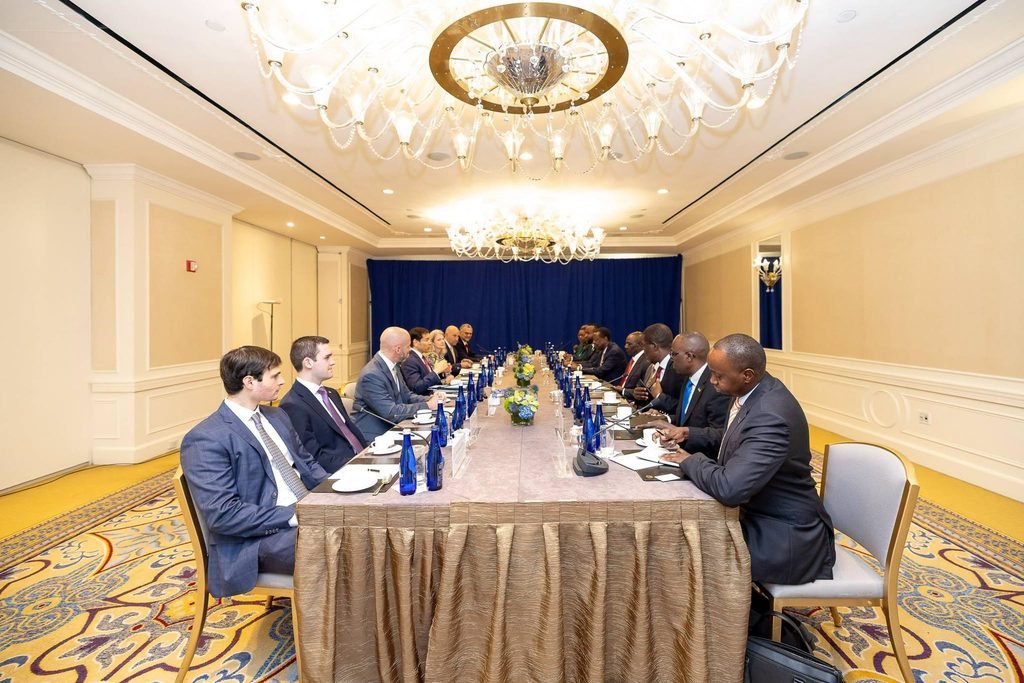
The US is consequently looking for alternative suppliers and processing partners.
American officials have said they want to support transparent mining, secure supply chains and local mineral processing in Kenya. President Ruto has similarly said any agreement should attract investment and ensure that minerals are processed locally rather than simply exported in raw form.
That distinction matters.
Shipping raw mineral concentrates overseas would earn Kenya export revenue, taxes and royalties. But refining the minerals locally could create additional jobs, technical skills and supporting industries.
The greatest opportunity may therefore lie beyond the mine itself.
If Kenya can develop reliable power, laboratories, processing plants and specialist training, its mineral sector could support a wider industrial economy. Without those investments, the country risks remaining only a source of raw materials for industries located elsewhere.
Is Mrima Hill really worth $62 billion?
The $62 billion figure should be treated cautiously.
It originated from estimates publicised by a previous private developer more than a decade ago. It was based on the assumed value of minerals underground and did not fully account for extraction, processing, financing and environmental-management costs.
Mineral resources are not the same as money in the bank.
A company must first establish what portion of a geological resource can be mined profitably. It must then meet the cost of building a mine, roads, processing facilities and waste-management systems.
Commodity prices may also change before production begins.
Kenya’s potential earnings cannot therefore be calculated by multiplying an estimated quantity of minerals by today’s international price. A credible valuation must be based on an independently verified feasibility study and a mine plan.
The $62 billion headline is useful for attracting attention. It is not proof that the government—or any investor—will collect anything close to that amount.
Has Kenya handed Mrima Hill to the US?
There is no publicly available evidence that Kenya has sold Mrima Hill or transferred ownership of its minerals to the United States.
The Constitution classifies minerals and mineral oils as public land vested in the national government in trust for the people.
What is publicly known is that Kenya invited investors to compete for the opportunity to conduct detailed feasibility work and develop the deposit. American and Australian-linked companies have been reported among the interested groups, but the presence of US companies should not be confused with a completed government-to-government transfer.
Kenya and the US have discussed a broader critical-minerals partnership. However, no final agreement granting Washington ownership of Mrima Hill has been publicly released.
That leaves legitimate questions which the government should answer once an investor is selected:
- Who will own the operating company?
- How much will Kenya receive through taxes, royalties and equity?
- Which processing activities must take place in Kenya?
- Can unprocessed ore be exported?
- Who carries the cost of environmental rehabilitation?
- What benefits are guaranteed to the local community?
Transparency on those issues would help distinguish a national development project from a conventional raw-material extraction deal.
The Cortec dispute offers a warning
Mrima Hill has been at the centre of a major licensing dispute before.
Cortec Mining Kenya obtained rights relating to the deposit, but the licence was later revoked. Kenyan courts found serious problems with the process, including requirements connected to environmental approval and the hill’s protected status.
The investors subsequently took Kenya to international arbitration. In 2018, the tribunal dismissed their claims and ordered them to meet the arbitration costs and part of Kenya’s legal expenses.
That history provides an important lesson: mineral wealth does not excuse shortcuts.
A poorly issued licence can expose the country to years of litigation, frighten away credible investors and delay development of the resource itself.
The current process will be judged partly by whether Kenya has learned from that experience.
The community and environmental question
Mrima Hill is not an empty piece of land waiting for excavators.
It is culturally important to the Digo community and is associated with sacred traditions. Residents have also raised concerns about land ownership, possible displacement, livelihoods and access to religious sites.
The deposit reportedly includes thorium alongside niobium and rare earth elements. That makes environmental testing and the management of mine waste especially important.
Local consultation cannot be reduced to a meeting held after the important decisions have already been made. Communities need access to the environmental studies, proposed mine boundaries, resettlement plans and benefit-sharing arrangements before development begins.
A project presented as strategically important to Kenya should also deliver visible improvements in Kwale—through employment, training, infrastructure and a clear share of mineral revenues.
Otherwise, the benefits will appear national and international while the risks remain local.
The five tests any Mrima Hill deal must pass
Kenya should not reject foreign investment simply because major powers have strategic interests. The country needs capital, technology and access to global markets.
But a credible Mrima Hill agreement should pass five tests.
First, the investor and the full terms of the agreement should be disclosed.
Second, the size and commercial quality of the deposit should be independently verified instead of relying on the $62 billion headline.
Third, the agreement should contain enforceable requirements for processing and value addition in Kenya.
Fourth, the Digo community should participate in decisions and receive clearly defined benefits.
Finally, environmental and radioactive-material risks should be assessed openly, with sufficient funds set aside for rehabilitation.
Mrima Hill could help Kenya enter one of the world’s most important emerging supply chains. It could also become another example of an African country exporting valuable raw materials while retaining only a small part of the value.
The difference will not be determined by how many billions are said to lie beneath the ground.
It will be determined by the agreement Kenya signs above it.


