
Deputy President Kithure Kindiki has painted a picture of a country clawing its way back from the brink of economic distress, insisting sweeping reforms by President William Ruto’s administration have stabilized Kenya’s finances and put the economy firmly back on the path to growth.
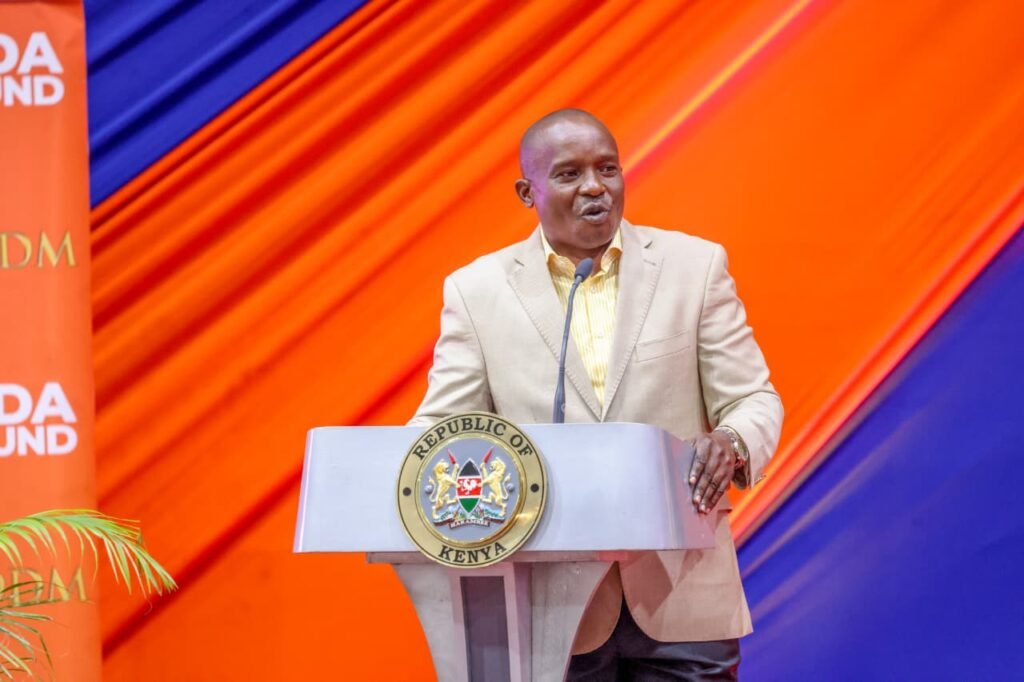
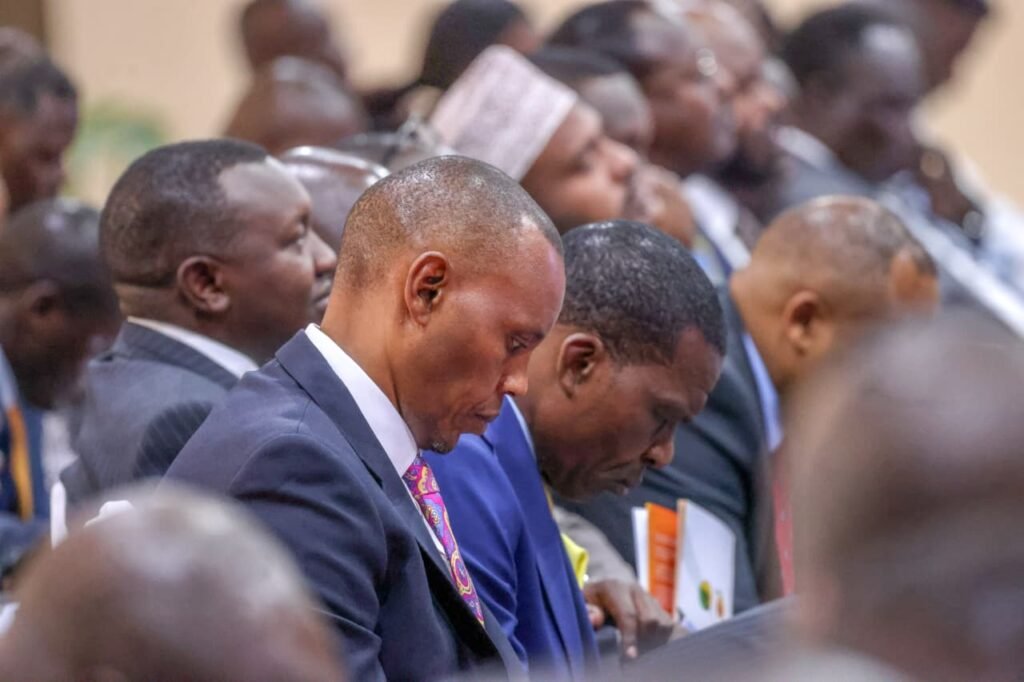
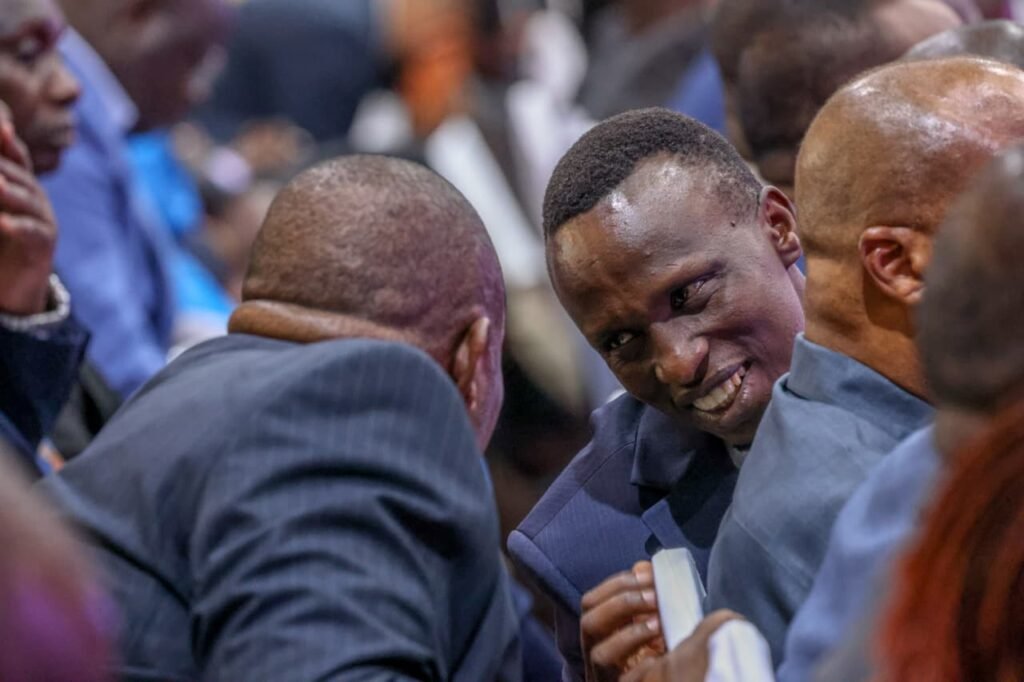
Speaking during a joint parliamentary meeting of UDA and ODM lawmakers at the Kenyatta International Convention Centre, Kindiki said the government took office in September twenty twenty two at a moment when the economy was battered by a series of global and domestic shocks.
Those pressures included the lingering effects of the COVID nineteen pandemic, supply chain disruptions triggered by the Russia–Ukraine war, and a devastating drought that ravaged agricultural production and strained the country’s finances.
GLOBAL TURMOIL
“When you were sworn into office on thirteen September twenty twenty two, Kenya’s economy was in bad shape due to a number of factors,” the Deputy President said.
He told lawmakers the combination of global turmoil and domestic shocks had pushed Kenya dangerously close to a sovereign debt crisis, placing it among a handful of African nations widely predicted to default.
“Kenya was among six African countries forecast to default on their sovereign debt, alongside Ethiopia, Chad, Ghana, Gambia and Zambia,” Kindiki said.
“But out of those six countries only Kenya survived. The other five eventually defaulted on their sovereign debt obligations.”
Kindiki credited aggressive economic stabilization measures introduced soon after the new administration took power, including steps to rebuild foreign exchange reserves, steady the Kenya shilling and restore investor confidence.
FOREX RESERVES
According to the Deputy President, Kenya’s foreign exchange reserves have jumped dramatically over the past three years.
“In twenty twenty two reserves stood at about 5.7 billion US dollars, equivalent to roughly two and a half months of import cover,” he said.
“Today the reserves have risen to 14.6 billion US dollars, equivalent to about 1.9 trillion Kenya shillings and representing between six and nearly seven months of import cover.”
Inflation, another major concern when the administration took office, has also cooled significantly.
Kindiki said inflation, which had surged to about 9.6 percent at the time, has now stabilized between roughly three point five percent and four point five percent over the past year.
That range sits comfortably within the Central Bank of Kenya’s target band of five percent, plus or minus two point five percent.
“We are currently below the Central Bank benchmark, with inflation at about four point three percent as of last month,” he noted.

The Deputy President argued that the improved macroeconomic environment is now easing pressure on the cost of living while creating a more predictable climate for investors and businesses.
“All these macroeconomic indicators point to a stronger economy and a better Kenya,” he said.
With the economy now stabilizing, Kindiki said the government is shifting its focus toward policies aimed directly at boosting household incomes.
“The next phase is about microeconomics — putting money into the pockets of citizens through job creation, enterprise growth and improved household incomes,” he told lawmakers.
He also pointed to reforms in the National Social Security Fund, saying new legislation has dramatically increased national savings.
TEA REFORMS
“For sixty years Kenya’s savings through NSSF stood at about 320 billion shillings,” he said.
“After reforms passed by Parliament two years ago, we have saved an additional 370 billion shillings in just two years.”
Total savings have now climbed to roughly 690 billion shillings and could reach one trillion shillings by next year.
Kindiki also highlighted reforms in the tea, coffee, dairy and sugar sectors, which he said are improving farmers’ earnings and boosting agricultural production across the country.
And he reserved praise for Parliament, arguing that lawmakers will ultimately be credited with helping deliver the economic transformation.
“History will be very kind to Members of Parliament,” he said.
“When the progress of this country is assessed, there will be a prominent chapter on the role played by the National Assembly and the Senate in delivering the flagship projects of this administration.”


