
The re-entry of Mike Mbuvi Sonko into Kenya’s political conversation, this time as an unlikely Ukambani factor, is reshaping long-held assumptions about the region’s voting behaviour.
Central to this comeback is the revival of the National Economic Development Party (NEDP), a little-known outfit Sonko has now taken over and installed himself as party leader. The move gives his populist brand a formal national platform and signals an ambition that goes beyond episodic activism to structured political influence.

By adopting NEDP, Sonko has avoided the time-consuming process of registering a new party while acquiring an official vehicle through which to mobilise supporters, nominate candidates and negotiate coalitions.
He has rebranded the party as pro-poor and anti-elite, positioning it as an alternative to Kenya’s dominant political formations. While the party’s policy architecture remains thin, its utility lies in its symbolism: Sonko is no longer merely a political personality, but the head of a national party seeking relevance across regions, with Ukambani emerging as a key testing ground.
SUSTAINED VISIBILITY
Sonko, the flamboyant former Nairobi governor whose political capital was built in the capital’s informal settlements, has in recent months cultivated sustained visibility in Machakos, Makueni and Kitui counties under the NEDP banner. Charity drives, courthouse appearances and pointed attacks on established leaders have been amplified through social media, giving the party an immediacy that more bureaucratic outfits struggle to achieve. What once appeared as political theatre increasingly looks like a calculated effort to fracture one of the country’s most predictable voting blocs.

Ukambani has historically voted as a near-monolith, guided by ethnic solidarity, church influence and a preference for leaders projecting sobriety and administrative order. Sonko, and by extension NEDP, represents a disruptive alternative: populist, confrontational and anti-establishment. That contrast is drawing attention, particularly among younger voters and economically marginalised groups who feel excluded from elite-driven negotiations in Nairobi.
CHANGING CALCULUS
The appeal is not ideological. Sonko’s politics, now channelled through NEDP, remains transactional and emotive rather than programmatic. In a region grappling with unemployment, drought stress and perceptions of political neglect, the promise of personal intervention and visibility carries weight. NEDP is being marketed less as a policy-driven institution and more as a vehicle for proximity to power through its leader.
The implications for regional voting are significant. Even a limited NEDP footprint in Ukambani could weaken the bargaining power of traditional regional leaders who have long delivered predictable margins to presidential candidates. Fragmentation dilutes that leverage.
Sonko does not need to dominate the region to alter its political utility; uncertainty alone changes the calculus.
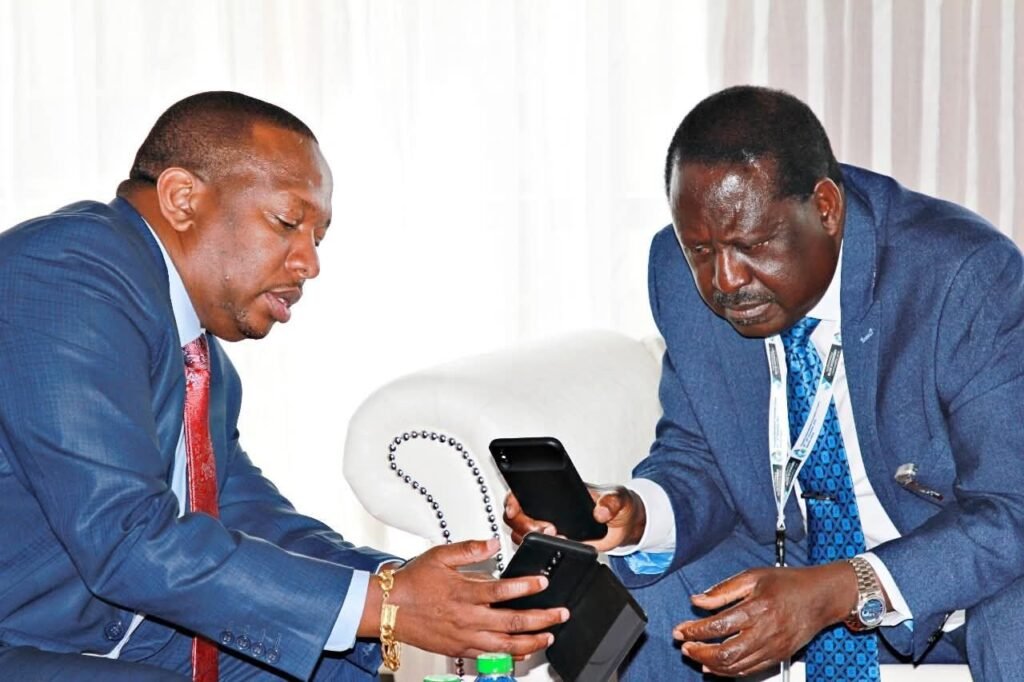
At the national level, this uncertainty complicates coalition arithmetic. Kenyan presidential contests are won through alliances, not isolated popularity. A Sonko-led NEDP presence in Ukambani introduces an unpredictable actor whose loyalty is fluid and whose politics resists conventional party discipline.
There are limits. Ukambani’s political culture still prizes collective decision-making through elders, clergy and established leaders. Sonko’s legal history and polarising reputation may constrain his reach, and NEDP remains organisationally shallow.
REGION IN TRANSITION
Yet the Sonko factor matters less for what it promises than for what it exposes: a region in transition. Ukambani is no longer a guaranteed bloc, and in that growing space of volatility, populist entrepreneurs with national party vehicles can thrive—forcing Kenya’s political centre to adjust.


