
The University of Nairobi’s (UoN) Faculty of Health Sciences is positioned to become a central hub for specialized regional medical training following a €55 million (approx. KSh 8.2 billion) healthcare initiative funded by the Government of France.
Co-implemented by Kenya’s Ministry of Health and the Kenya National Public Health Institute (KNPHI), the three-year project targets systemic gaps in head and neck oncology, digital data infrastructure, emergency preparedness, and community health networks across the country.
While structurally anchored within UoN’s Department of Dental Sciences, the program’s resources are designed to optimize clinical capacity and cross-disciplinary research across multiple specialized surgical and medical fields.
Strategic objectives and institutional resource allocation
The initiative introduces critical structural improvements to the university’s teaching facilities. Rather than operating in isolation, the funding framework mandates modern equipment procurement, clinical capacity building, and infrastructural updates that intersect across several key departments.
| Beneficiary Department | Core Intervention Focus | Expected Outcome |
| Dental Sciences | Advanced maxillofacial diagnostics, specialized equipment installation. | Enhanced experiential training and early detection protocols for oral pathologies. |
| ENT (Otolaryngology) | Integrated head and neck oncology training pipelines. | Reduced referral latency for upper respiratory and aerodigestive tract cancers. |
| Ophthalmology & Neurology | Specialized diagnostic gear and inter-departmental data nodes. | Streamlined management of complex neuro-ophthalmic and cranial conditions. |
| General Surgery | Advanced clinical training modules and modernized theatre infrastructure. | Increased throughput for specialized surgical interventions at teaching hospitals. |
Addressing the burden of head and neck oncology
A primary pillar of the three-year agreement is the aggressive strengthening of head and neck cancer care. In East Africa, malignancies of the oral cavity, pharynx, and larynx present severe public health challenges, frequently exacerbated by late-stage diagnoses.
Because initial symptoms routinely present within oral tissues, the Department of Dental Sciences serves as the frontline intercept point. Integrating international oncological training protocols and modern imaging infrastructure into UoN’s curriculum aims to significantly reduce diagnosis timelines, a vital metric for improving patient survival rates nationwide.
Furthermore, the initiative actively scales beyond academic centers to address foundational public health systems:
- Emergency Preparedness and Response: Standardizing emergency response timelines by equipping KNPHI and public health networks with modern logistical and communication assets.
- Health Data Management: Digitizing patient registries to build epidemiological tracking frameworks capable of identifying disease clusters in real time.
- Community Health Systems: Funding training frameworks for grassroots community health promoters to improve early-stage referral loops to tertiary facilities.
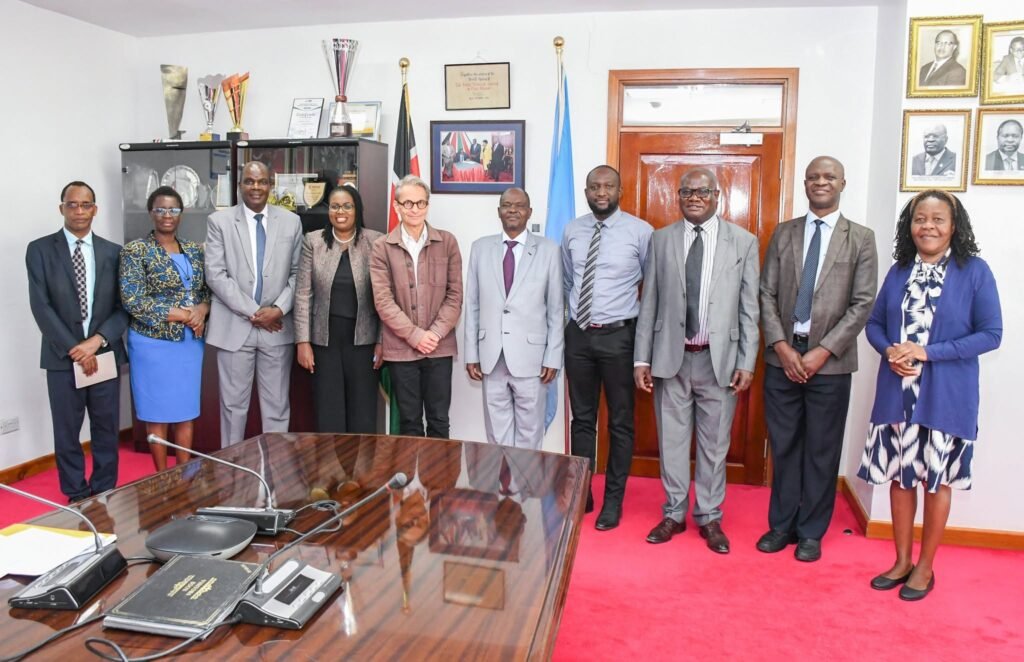
“This strategic partnership aligns precisely with our institutional mission to drive clinical excellence and research,” noted UoN Vice-Chancellor Prof. Ayub Gitau during a high-level briefing with French medical expert Dr. Olivia Weil and Ministry of Health delegates.
“By modernizing our clinical training infrastructure, we are directly expanding the capacity of the state to deliver on its commitments to Universal Health Coverage.”
The project enters its implementation phase this quarter, establishing a standardized framework for medical resource cooperation between Paris and Nairobi.


