



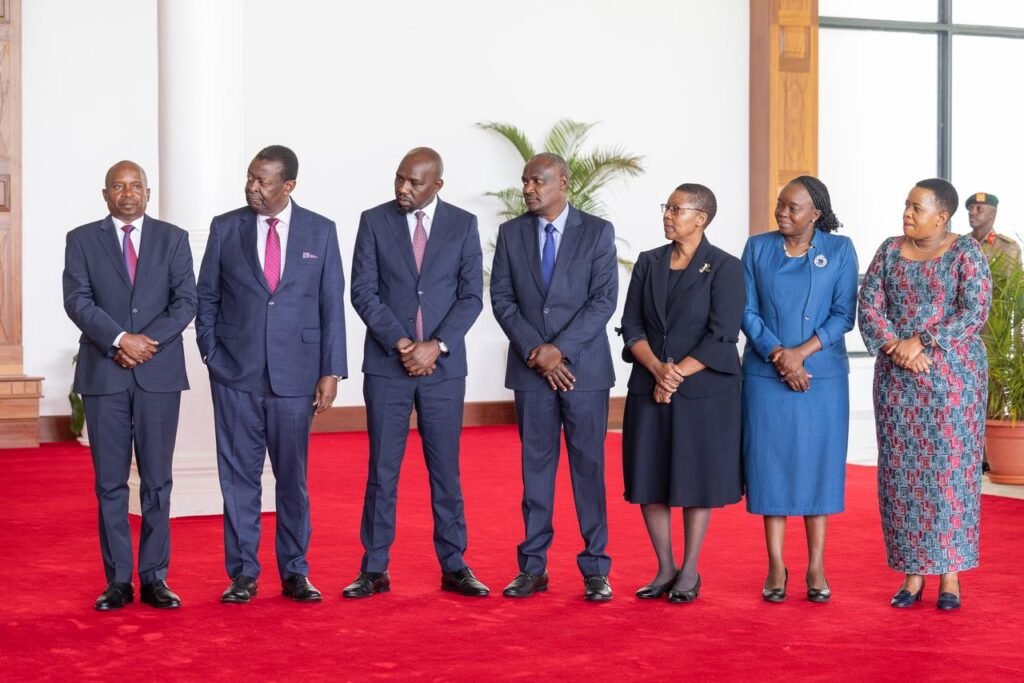
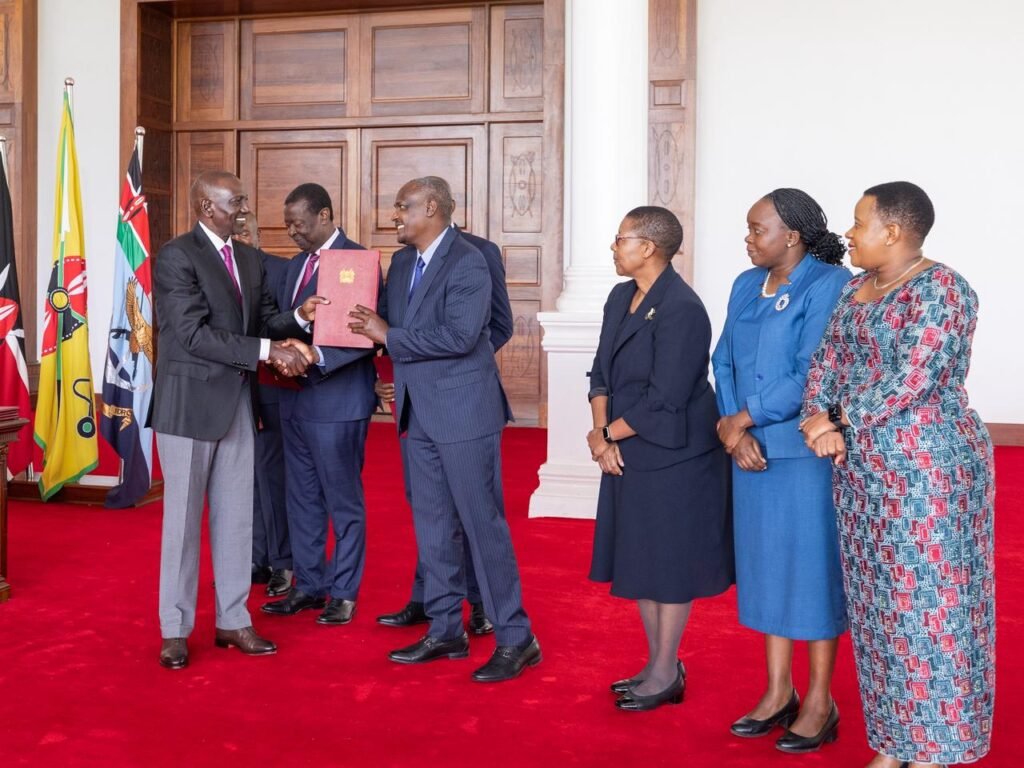
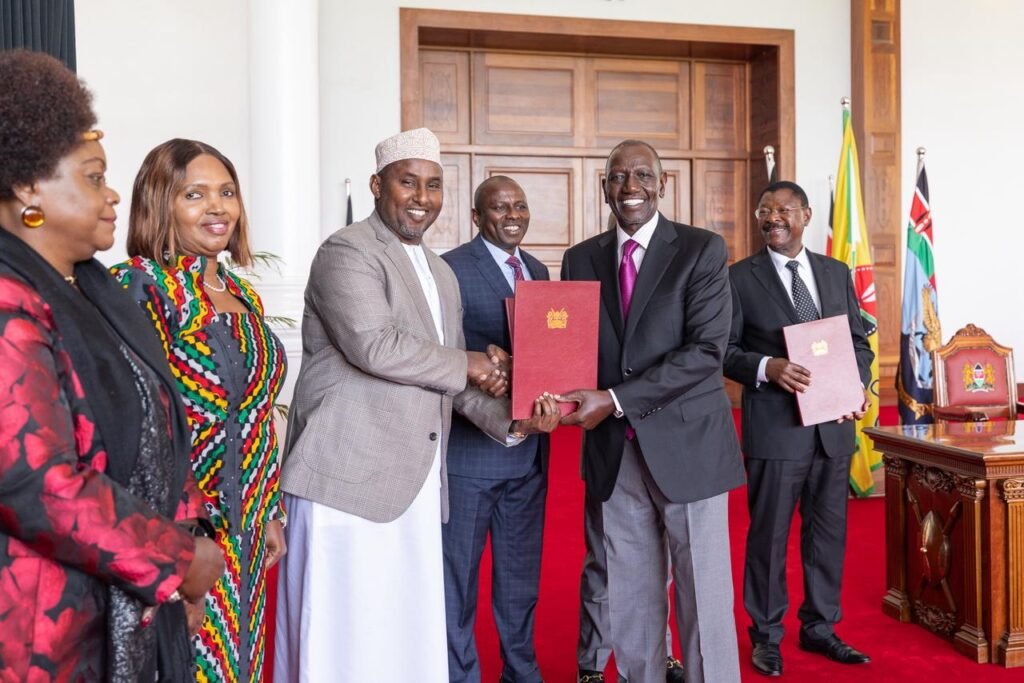
President William Ruto on Friday assented to three significant Bills into law during a ceremony held at State House Nairobi, marking the eighth presidential assent event of 2026.
The newly enacted laws include the National Disaster Risk Management Bill, 2023, the Forest Conservation and Management (Amendment) Bill, 2025, and the Equalisation Fund Appropriations Bill, 2025. The government says the laws are aimed at strengthening disaster preparedness, improving environmental governance, and accelerating development in marginalised regions across the country.
The signing ceremony was attended by senior government officials, including Deputy Chief of Staff in the Executive Office of the President Josphat Nanok, who outlined the impact the laws are expected to have on governance and public service delivery.
New Disaster Management Framework
One of the most notable laws signed by the President is the National Disaster Risk Management Bill, 2023, which establishes a comprehensive framework for handling disasters and emergencies in Kenya.
According to Nanok, the law creates the National Disaster Risk Management Authority alongside county disaster risk management committees to coordinate preparedness, response, recovery, and mitigation efforts during emergencies.
The legislation is expected to improve Kenya’s ability to respond to floods, droughts, fires, disease outbreaks, and other national emergencies that have increasingly affected communities in recent years.
“The law establishes a comprehensive legal and institutional framework for disaster risk management through the creation of the National Disaster Risk Management Authority and county disaster risk management committees,” Nanok said during the ceremony.
The new law also gives the President legal authority to declare a national state of disaster when necessary and direct emergency interventions, including evacuation efforts and resource mobilisation.
Government officials say the legislation will help streamline coordination between national and county governments during crises while reducing delays in emergency response.
Forest Conservation Reforms
President Ruto also signed the Forest Conservation and Management (Amendment) Bill, 2025, which seeks to strengthen environmental protection and sustainable forest management across the country.
The amendment introduces the Directorate of Forest Regulation, a new body tasked with enforcing compliance with forestry laws, licensing forest professionals, and ensuring adherence to national forest standards.
The government says the reforms are part of broader efforts to combat deforestation, restore degraded ecosystems, and support Kenya’s climate action commitments.
Officials noted that forests remain critical in addressing climate change, protecting water towers, preserving biodiversity, and supporting livelihoods for communities that depend on forest resources.
The law further encourages greater community participation in conservation programmes and aims to improve accountability in the management of forest resources.
“The Directorate will be responsible for enforcing compliance with the Act, licensing forest professionals, and promoting adherence to national forest standards,” Nanok stated.
The signing comes at a time when Kenya continues to intensify tree-growing campaigns and environmental restoration initiatives spearheaded by both national and county governments.
Sh16.2 Billion for Marginalised Counties
The third law signed by President Ruto was the Equalisation Fund Appropriations Bill, 2025, which provides for the allocation of Sh16.2 billion to marginalised counties.
The funds will be distributed to 34 counties identified by the Commission on Revenue Allocation (CRA) under its Second Policy on Marginalisation.
According to the government, the Equalisation Fund will finance critical infrastructure and development projects aimed at reducing disparities in historically underserved regions.
The projects are expected to focus on sectors such as water, roads, health services, electricity, and other essential public services.
Nanok said the funding would support implementation of priority projects across designated constituencies within the affected counties.
“The Fund will support the implementation of critical development projects across designated constituencies within these counties,” he said.
The Equalisation Fund is anchored under Article 204 of the Constitution and is intended to improve access to basic services in areas that have lagged behind in development for decades.
Government Pushes Reform Agenda
The latest assent underscores the Kenya Kwanza administration’s continued push for reforms in governance, environmental protection, and service delivery.
President Ruto’s administration has in recent months prioritised legislation targeting economic recovery, climate resilience, public sector reforms, and devolved development.
With the signing of the three Bills, the total number of laws assented to by the President in 2026 has now risen to eight.
Government officials say the legislative agenda reflects ongoing efforts to strengthen institutions, improve accountability, and support inclusive national development.
The new laws are expected to take effect following publication in the Kenya Gazette and subsequent implementation by relevant government agencies and county administrations.


