



Kenya’s effort to reshape how it finances development has taken a concrete step. The National Infrastructure Fund has begun investing its seed capital in government bonds, bringing the administration’s investment-led financing strategy into operation.
Chief executive James Mworia told Reuters on October 7 that purchases began in July, with full deployment of the Sh340 billion capital expected by June 2027. The bond portfolio is projected to generate about Sh42 billion annually.
At first glance, buying bonds may seem an unusual starting point for a fund associated with roads, water systems and other major infrastructure. Yet the approach has a clear financial rationale: establish an income-generating foundation from which larger investments can grow.
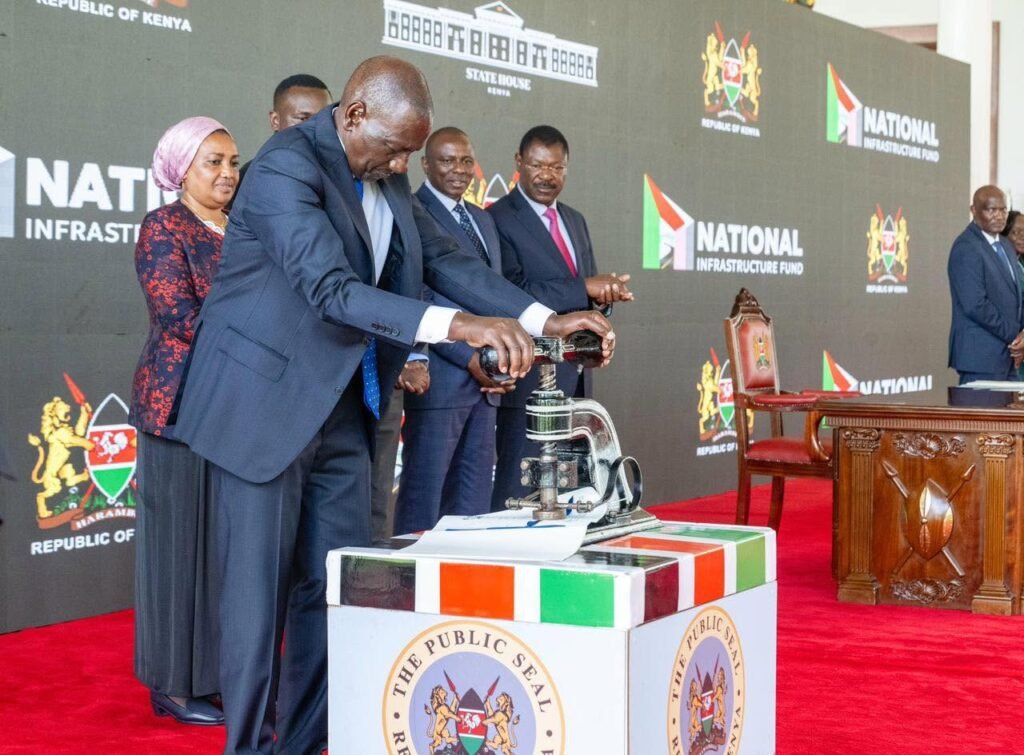
For President William Ruto’s administration, it is an opportunity to demonstrate how public capital can support development beyond the limits of the annual budget.
Building an income engine for development
A government bond is a loan to the State. Investors receive interest over an agreed period, with the principal repayable according to the bond’s terms.
For the infrastructure fund, holding these securities creates a source of income while capital awaits deployment into longer-term projects.
The projected Sh42 billion annual return represents approximately 12.4 per cent of the Sh340 billion starting capital. It is an expectation rather than income already earned; actual performance will depend on the securities purchased and the terms secured. Mworia has not disclosed how much has been invested so far.
The underlying idea is straightforward. A pool of public money can earn income and help support investment over time, extending its usefulness beyond a single spending decision.
Why the government is changing its approach
Infrastructure requires substantial investment long before its full economic benefits emerge. Roads connect producers to markets. Water infrastructure supports farming and industry. Reliable transport networks make businesses more competitive.
Financing these assets entirely through annual revenue and repeated borrowing places considerable pressure on public finances.
The Government Delivery Unit describes the National Infrastructure Fund as a structure intended to pool approved resources, including proceeds from the sale of government-owned enterprises, for infrastructure investment. Its stated purpose is to provide greater continuity in financing strategic projects while reducing reliance on short-term borrowing.
That is the strongest case for the reform: Kenya needs a financing system capable of sustaining development across successive budget cycles.
The National Infrastructure Fund operates alongside the Sovereign Wealth Fund discussed in our earlier analysis. The latest development concerns the infrastructure vehicle specifically.
Could businesses also benefit?
Mworia expects the bond purchases to ease liquidity constraints and encourage lending to businesses and households.
The potential benefit deserves attention, but it should be understood as an intended outcome. Banks with more available funds still make lending decisions based on credit risk, demand and commercial conditions.
The fund has not yet demonstrated that its purchases have increased private-sector lending.
There is also an important accounting distinction. Interest paid on government bonds remains an obligation of the Treasury. The fund’s earnings therefore cannot automatically be described as new wealth for the government as a whole.
The broader economic gain must come from how effectively those resources support productive investment.
The next test is delivery
Beginning investment is a meaningful milestone. The harder task is turning a financial portfolio into infrastructure that improves productivity and creates lasting public value.
That will require commercially sound projects, transparent investment decisions and clear reporting on costs and returns. Preserving capital must remain as important as announcing ambitious targets.
Kenya’s new financing approach offers a credible route towards more patient, investment-led development. Its success will ultimately be measured in the assets it delivers, the additional capital it attracts and the economic opportunities it creates for Kenyans.


