
Garissa Airstrip is undergoing a significant transformation under a phased upgrade programme backed by the national government, in a move aimed at converting the facility into a modern, fully operational regional aviation hub.

The multi-phase project is designed to enhance security, expand infrastructure, and boost the airstrip’s operational capacity, positioning Garissa as a key transport and economic gateway in northern Kenya.
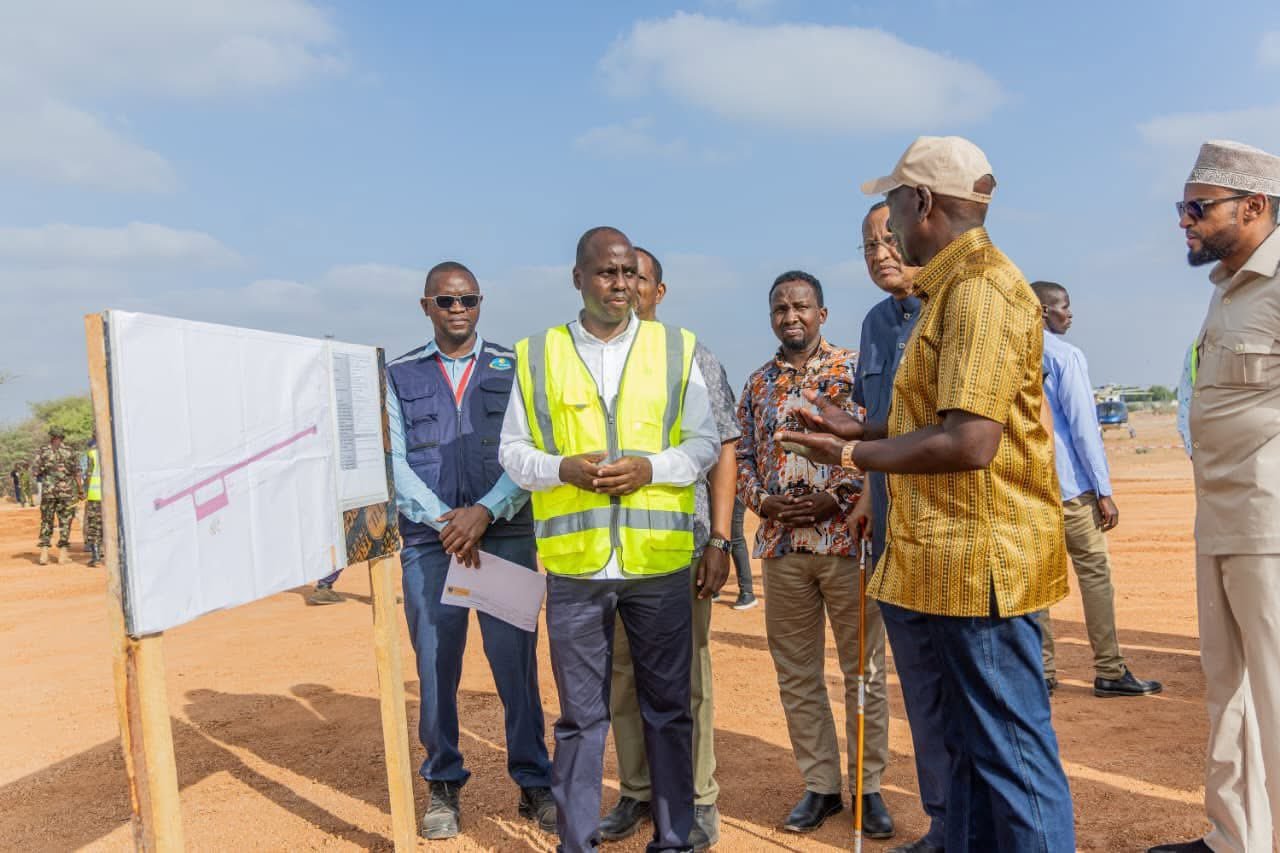
President William Ruto on Wednesday visited Garissa County for the NYOTA Plan disbursement and empowerment programme, where he also inspected the progress of the Garissa Airstrip upgrade.
“I am impressed by the progress in the upgrading of the Garissa Airstrip, which is both ahead of schedule and within budget,” President Ruto said during the visit.
He described the project as a transformative investment that will unlock greater economic opportunities across the region.
Phase One: Securing the facility
The first phase of the upgrade, implemented by the Ministry of Defence, focused on enhancing security at the airstrip.
This phase involved the construction of a full perimeter fence to secure the facility and align it with aviation safety standards. The fencing was critical in paving the way for subsequent infrastructure development and ensuring controlled access to the airfield.
Phase Two: New modern terminal at 85% completion
The second phase, spearheaded by the County Government of Garissa, is now approximately 85 percent complete.
This stage involves the construction of a new terminal building equipped with essential passenger and operational amenities. The facility will feature an arrival hall, Kenya Airports Authority (KAA) offices, a check-in waiting bay, a VIP lounge, designated prayer and wudu areas, retail shops, a search room, and expanded parking space.
Once operational, the new terminal is expected to significantly improve passenger experience while strengthening administrative and security functions at the airstrip.
Phase Three: Runway expansion to support larger aircraft
The third phase will focus on critical airside infrastructure improvements.
Key works include a 1.5-kilometre runway extension, rehabilitation of the taxiway, and apron upgrades. These works are expected to be completed by April, enabling the airstrip to accommodate larger aircraft and support daily commercial flights to Nairobi.

“The modernisation of this vital gateway into Northern Kenya will see the runway expanded and upgraded to accommodate larger and more aircraft, thereby boosting passenger traffic by over 200,000 annually,” President Ruto said.
The expansion is anticipated to drastically improve connectivity between Garissa and the capital, reducing travel time and opening up new economic opportunities.
Economic and strategic impact
Once complete, the upgraded airstrip is expected to boost trade, attract investment, and enhance service delivery across Garissa and the wider North Eastern region.
“Today I inspected Garissa Airstrip, a transformative investment set to unlock greater economic opportunities across the region,” the President added.
Improved aviation capacity will also strengthen emergency response capabilities, including medical evacuations and humanitarian relief operations, which are critical in the region.
The project complements other flagship developments in Garissa, including the Affordable Housing Programme and the Mikono Modern Market. Together, these initiatives are reshaping the town’s urban landscape, creating employment opportunities, and driving inclusive local economic growth.
Positioning Garissa as a regional frontier
By integrating modern transport infrastructure with residential and commercial expansion, Garissa is steadily positioning itself as a competitive regional frontier.
Enhanced air connectivity, improved urban infrastructure, and growing investment are expected to support better livelihoods, expanded business opportunities, and long-term socio-economic transformation.
The airstrip upgrade marks a strategic shift in regional infrastructure planning, signalling a broader effort to unlock northern Kenya’s economic potential through improved connectivity and public investment.


