
The Government of Kenya and the Nairobi City County Government have signed a KSh80 billion cooperation agreement aimed at upgrading infrastructure and improving service delivery in the capital.
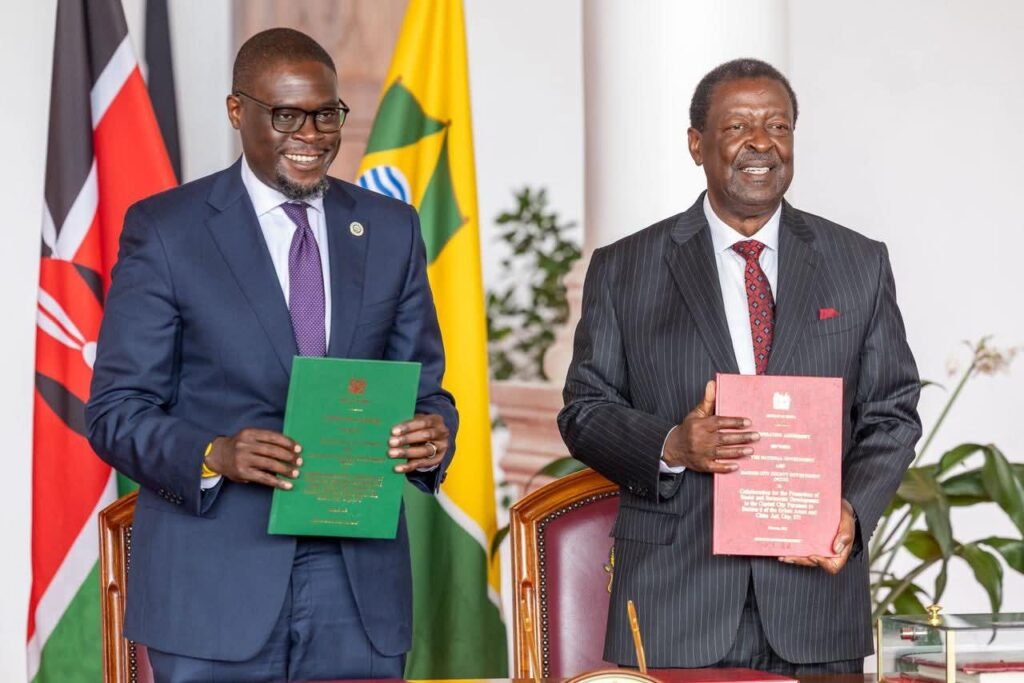
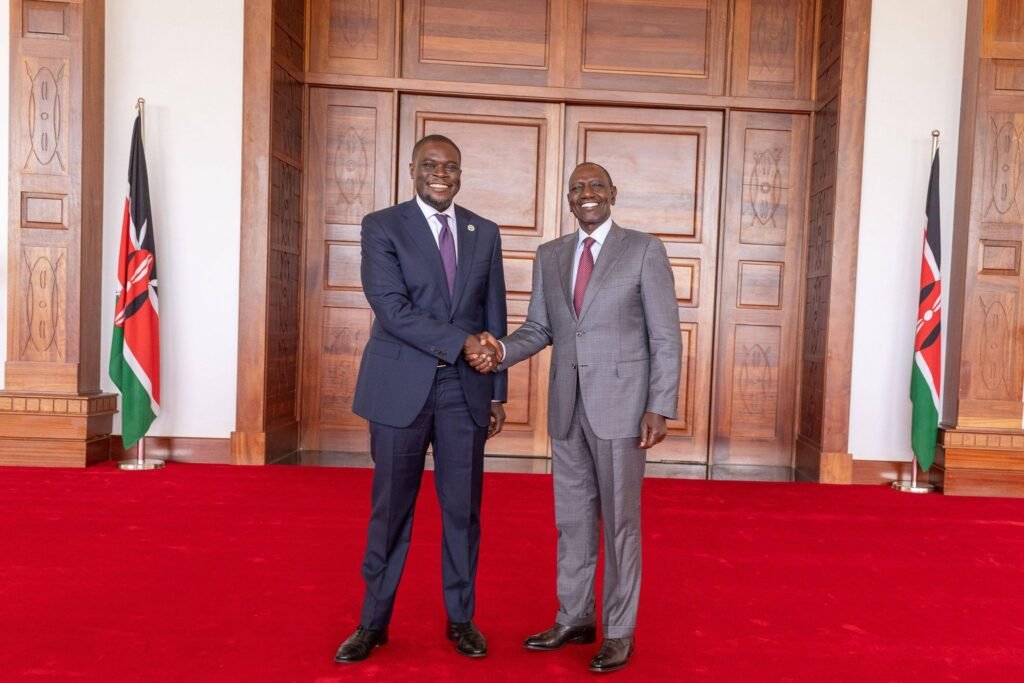
President William Ruto and Governor Johnson Sakaja described the deal as a major step toward making Nairobi more livable, secure and efficient for its 4.4 million residents.
Sakaja: “A Historical Cooperation Agreement”
Governor Sakaja termed the signing a milestone moment for the city.
“Today, I joined the President H.E William Ruto to sign a historical cooperation agreement with the National Government unlocking KSh 80 Billion for the city,” Sakaja said.
He was quick to address concerns about devolution and county autonomy.
“The cooperation Agreement does not transfer county functions nor weaken devolution. Instead, in true spirit of devolution, it is a lawful statutory collaboration expressly anchored on Section 6 of the Urban Areas and Cities Act, which provides a clear legal pathway for the National Government to work directly with Nairobi in recognition of its unique status as Kenya’s capital.”
According to the governor, the focus is firmly on delivery.
“This agreement will support critical priorities that directly affect daily lives including, roads and housing- infrastructure, modern waste management systems, improved water and sanitation services, street lighting and public safety,” he said.
He added: “I remain committed to service delivery, the resolve to build better a city than we found it and to capture the aspirations of our people.”
What the President announced
President Ruto framed the agreement as a transformative package for the capital.
“We have unveiled a KSh80 billion cooperation agreement between the National Government and the Nairobi City County Government to make the capital city more livable, secure, and efficient for the 4.4 million residents,” Ruto said.
He outlined how the money will be spent across sectors.
Lighting and Electricity
Under the agreement, KSh3.7 billion has been committed to complete 10,000 unfinished lights and install 40,000 new light points across the city.
Additionally, the National Government, through Kenya Power, will invest KSh1.5 billion in transformers and last-mile connections in informal settlements.
These interventions are expected to enhance security and improve electricity access in underserved areas.
Water and Sanitation
Water infrastructure will receive significant funding. KSh2.1 billion will be invested at the Ng’ethu Treatment Plant to stop daily losses of approximately 50 million litres.
Another KSh3 billion will fund the Gigiri–Shauri Moyo evacuation corridor to stabilise and extend supply to high-demand zones.
Sanitation projects include the construction of two parallel 27km trunk sewer lines along the Nairobi River Corridor and a new sewer plant capable of treating 60 million litres of wastewater per day. Additional funds will support last-mile connectivity and long-term expansion of the sewer network.
Roads, Drainage and Waste Management
KSh8.7 billion has been allocated to complete the upgrading of roads, bridges and drainage systems. Further funding is being mobilised for additional road kilometres under Phase Two beginning April 2026.
At ward level, a KSh5 billion roads programme will be complemented by KSh3.7 billion from the county government, alongside KSh1 billion dedicated to drainage improvements.
Waste management will also receive billions in funding, including the allocation of land for Material Recovery Facilities and investment in modern waste systems.
What It Means for Nairobi
The agreement represents one of the largest coordinated investments in Nairobi’s infrastructure in recent years. It combines national funding with county implementation, while leaders insist it remains within constitutional bounds.
If executed as planned, residents are expected to see improvements in street lighting, water supply, sanitation coverage, road conditions and public safety over the coming months and years.
For both the President and the Governor, the message is clear: the KSh80 billion pact is about accelerating development and positioning Nairobi as a globally respected African metropolis.

