
The Port of Lamu, once a quiet historical coastal town, is rapidly emerging as one of the most ambitious infrastructure projects in East Africa. Since it was commissioned in May 2021, the deep-water port has recorded significant growth in ship arrivals, cargo throughput and container traffic.
Developed as part of the Lamu Port–South Sudan–Ethiopia Transport (LAPSSET) Corridor, the port is designed to reduce congestion at the Port of Mombasa and position Kenya as a major regional logistics hub connecting East Africa to global shipping routes.
Government agencies including the Kenya Ports Authority (KPA) and the LAPSSET Corridor Development Authority (LCDA) say the port is already showing strong performance despite its slow start.
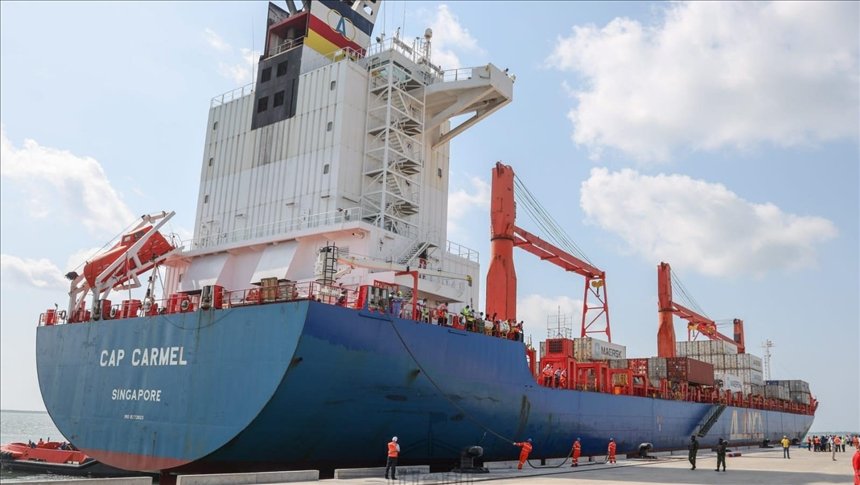
Rapid growth in ship arrivals and cargo volumes
Data from the Kenya Ports Authority shows that Lamu Port has experienced sharp growth in vessel arrivals and cargo throughput since operations began.
In 2021, when the first berth was commissioned, the port handled 12 ships. Activity slowed in 2022, with only four vessels calling at the port.
However, activity began to pick up in 2023, when 36 ships docked at the facility as transshipment services expanded. By 2024, the port had already recorded 20 vessel arrivals in the first half of the year.
The biggest surge came in 2025, when vessel arrivals jumped dramatically. By July 2025, the port had handled 116 ships, surpassing the total number recorded in all previous years combined.
Cargo throughput has also increased significantly. The port handled about 74,380 metric tonnes of cargo in 2024, but this jumped to 799,161 metric tonnes in 2025, representing a 974.4 percent increase.
Container traffic also rose sharply, reaching 55,687 TEUs (twenty-foot equivalent units) in 2025.
According to the LAPSSET Corridor Development Authority, this growth reflects increasing interest from global shipping lines using Lamu as a transshipment hub.
How Lamu compares to other regional ports
Lamu Port’s biggest competitive advantage is its deep-water design.
The port has a natural depth of 17.5 to 18 metres, making it significantly deeper than the Port of Mombasa, which has a depth of about 15 metres.
This allows Lamu to accommodate Post-Panamax vessels, which are some of the largest container ships in the world.
One example is the MV Nagoya Express, a container ship measuring about 335 metres in length, which is too large for some older berths in regional ports.
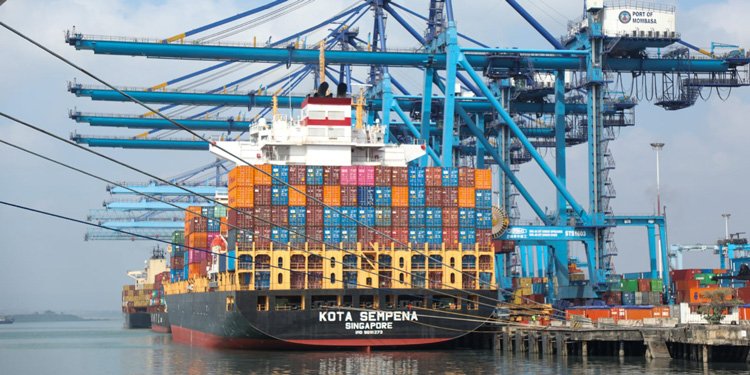
Despite this advantage, the Port of Mombasa remains the dominant gateway in East Africa. In 2025, Mombasa handled over 2.11 million TEUs, making it one of the busiest ports on the continent.
Other regional competitors include Dar es Salaam Port in Tanzania, Djibouti Port, and Salalah Port in Oman, which currently handle large volumes of transshipment cargo.
Lamu’s strategy is not necessarily to replace Mombasa but to complement it by handling larger vessels and new trade corridors, particularly for landlocked countries.
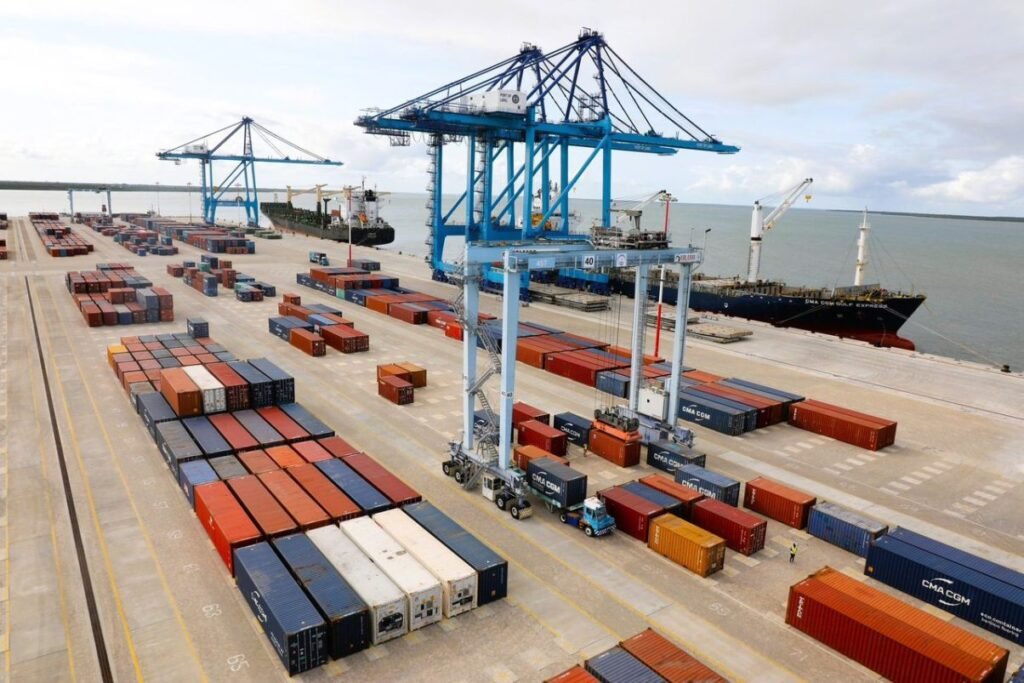
Strategic role in the LAPSSET corridor
Lamu Port is the anchor project of the LAPSSET Corridor, a multi-billion-dollar regional infrastructure initiative connecting Kenya with Ethiopia and South Sudan.
The corridor includes major investments in highways, railways, oil pipelines, airports and industrial zones.
Once fully developed, the corridor will provide a new transport route for goods moving between East Africa and global markets.
Plans are also underway for a 3,000-kilometre railway line linking Lamu to Addis Ababa and Juba, which could significantly boost cargo movement through the port.
The project is supported by several government institutions including the Ministry of Transport, the Kenya Ports Authority, and the LAPSSET Corridor Development Authority.
Future expansion and capacity targets
Currently, three berths at Lamu Port are operational.
However, the long-term master plan envisions between 23 and 32 berths, which would dramatically increase capacity.
Once fully developed, the port is expected to handle up to 23.9 million tonnes of cargo annually by 2030.
Kenya is also seeking private sector participation to help manage port facilities and improve operational efficiency.
Transport Cabinet Secretary Davis Chirchir confirmed in February 2026 that the port had been declared fully operational, signalling the government’s commitment to expanding its role in regional trade.
Challenges and social impact
Despite its rapid growth, the project has faced challenges.
Local communities, particularly fishermen in Lamu, have raised concerns about environmental impacts and loss of fishing grounds.
In a landmark ruling, courts ordered the government to compensate about 4,700 fishermen approximately $170 million for livelihoods affected by the construction of the port.
However, officials argue that the project will create thousands of jobs and stimulate economic growth in Kenya’s coastal region.
As infrastructure along the LAPSSET corridor continues to develop, analysts believe Lamu Port could eventually become one of the most strategic maritime gateways in Africa.


[…] growing relevance is grounded in its technical characteristics. Its natural deep-water design of 17.5 to 18 meters allows it to accommodate large Post-Panamax vessels that cannot easily access shallower ports such […]