
The winds of political change are blowing across the arid landscapes of North Eastern Kenya, and the 2027 election map is starting to look very different from what many analysts expected.
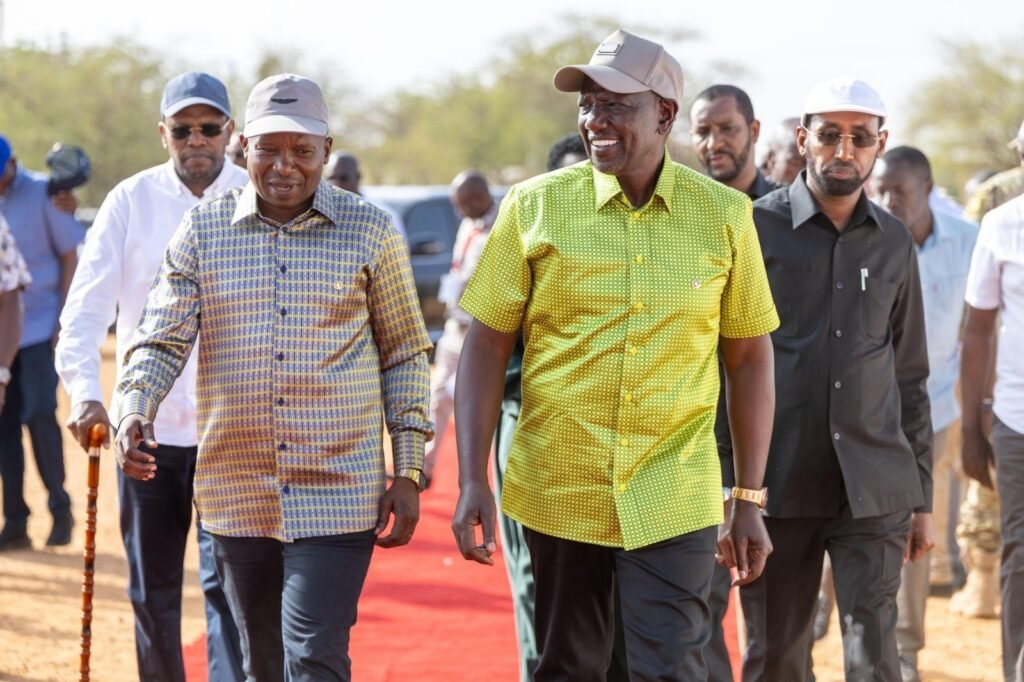
While traditional strongholds are still debating their next move, the North Eastern region has quietly emerged as a critical pillar of support for President William Ruto, a trend that could fundamentally shift the balance of power in the next general election.
The North Eastern Shift: A strategic realignment
Data from the latest TIFA research highlights a remarkable trend: North Eastern (Northern) Kenya now boasts the highest level of support for the ‘Broad-Based Government’ (BBG) at 58%. This is not a sudden fluke but the result of a deliberate, sustained charm offensive that most national media outlets have failed to fully capture.
While the “Linda Ground” and “Linda Mwananchi” factions within ODM battle for control in Nyanza and Nairobi, the President and his Deputy, Prof. Kithure Kindiki, have been working the ground in the North.
- Ruto’s Regional Dominance: When asked who they would like to win the 2027 presidential election, 48% of respondents in Northern Kenya chose William Ruto, his highest rating across all surveyed zones.
- Kindiki’s Rising Profile: Prof. Kithure Kindiki has emerged as the clear front-runner for Ruto’s 2027 running mate choice, with 59% of Ruto’s supporters nationally backing him. His frequent travels to the region, alongside the President, have solidified his image as a reliable partner in the North Eastern developmental agenda.
- The UDA Stronghold: In a significant departure from past political cycles, UDA is now the most popular party in Northern Kenya, commanding 39% support.
Beyond the surface: Why the North is turning
Most media reports focus on high-level political pacts, but the real story in North Eastern is about inclusivity and stability.
- Inclusivity and Unity: Supporters of the current administration cite “regional and communal inclusivity” (28%) and “national stability/unity” (41%) as the primary reasons for their backing.
- Ethnic Leadership: The perception of leadership is also shifting. While the Somali community historically looked to various regional kingpins, there is a growing acknowledgment of a unified political direction, with 51% now identifying a clear community leader, up from 39% last November. Among these leaders, Aden Duale remains a prominent figure, cited by 44% of those who acknowledge a community leader.
The 2027 Implications
The consolidation of the North Eastern vote creates a formidable “buffer zone” for the President, especially as he faces fragmented opposition in other regions. While candidates like Kalonzo Musyoka (19% national support) and Fred Matiang’i (14% national support) remain popular in their respective backyards, they have yet to make significant inroads into the North.
As the 2027 race crystallizes, the frequent “development-tour” visits by Ruto and Kindiki to the North are paying off. If this trend holds, the North Eastern region will no longer be just a “swing” territory but a decisive engine for the Kenya Kwanza re-election machine, proving that the road to State House may very well be paved through the Northern frontier.


 and DP Kithure Kindiki is redefining the 2027 election landscape. Learn why regional inclusivity and frequent leadership visits have turned this former swing territory into a UDA stronghold.)