
Deputy President Kithure Kindiki has emerged as the runaway favourite to deputise President William Ruto in the 2027 General Election, handing the Kenya Kwanza camp a major political boost amid growing turbulence within the opposition.
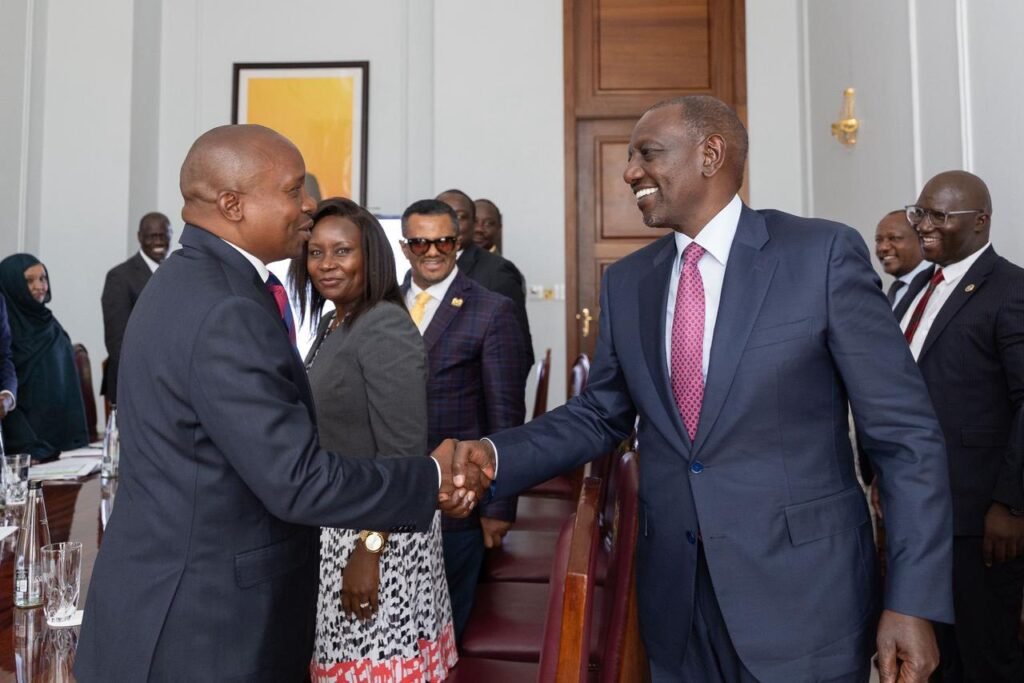
A new national survey by TIFA Research shows Kindiki enjoying overwhelming support among Ruto loyalists, dramatically outshining a crowded field of senior political heavyweights being floated for the deputy slot.
According to the poll, a staggering 59 per cent of respondents who support Ruto’s re-election said they would prefer Kindiki as the President’s running mate in 2027.
That figure leaves his rivals trailing far behind in what appears to be an early endorsement of continuity within the ruling camp.
Homa Bay Governor Gladys Wanga came a distant second with just 12 per cent support, while other names associated with the broad-based government arrangement barely registered.
Former Prime Minister Raila Odinga’s elder brother Oburu Odinga attracted three per cent, the same score posted by Mining Cabinet Secretary Hassan Joho. Prime Cabinet Secretary Musalia Mudavadi managed only two per cent, while National Assembly Speaker Moses Wetangula polled a paltry one per cent.
The findings are likely to strengthen Kindiki’s grip at the heart of government barely months after he stepped into the powerful office following the dramatic impeachment and removal of former Deputy President Rigathi Gachagua.
The TIFA survey paints a picture of a political base rallying firmly behind Kindiki as Ruto’s safest and most acceptable partner heading into what is shaping up to be a bruising 2027 battle.
“Kindiki is viewed as the most politically acceptable deputy option,” the report says, adding that voters appear to favour “continuity and stability within Ruto’s political camp.”
The poll, conducted between May 2 and May 11 through face-to-face interviews with 2,013 respondents across all 47 counties, comes at a time when Kenya’s political landscape is rapidly shifting.
While Ruto still leads the presidential race, the numbers suggest the contest remains fluid and deeply fragmented.
The President currently enjoys 24 per cent support nationally, ahead of Wiper leader Kalonzo Musyoka at 19 per cent, former Interior CS Fred Matiang’i at 14 per cent, Nairobi Senator Edwin Sifuna at 10 per cent and Gachagua at nine per cent.
But even as opposition figures scramble to consolidate support, the survey indicates Ruto supporters are already largely settled on who should stand beside him.
The numbers also expose the limited traction of leaders associated with the ODM-UDA broad-based arrangement in the deputy president debate.
Despite months of speculation about a possible political pact that could see ODM figures rewarded with top positions in a second Ruto administration, the poll suggests grassroots Kenya Kwanza supporters are not buying the idea.
Instead, they appear to be gravitating toward a familiar face viewed as loyal, steady and less politically risky.
The survey further reveals growing uncertainty around the future of the broad-based government itself.
More than half of Kenyans, 56 per cent, now oppose the arrangement between Ruto and the late former Prime Minister Raila Odinga, while only 30 per cent support it.
Within ODM, tensions are also boiling over, with the anti-establishment “Linda Mwananchi” faction led by Sifuna enjoying overwhelming backing among party supporters.
That internal rebellion, coupled with a fractured opposition field, may further strengthen Kindiki’s standing within Kenya Kwanza as Ruto moves to lock down his political base early.
The poll also underlines the challenge facing opposition leaders hoping to unseat Ruto next year.
TIFA found no single opposition candidate has emerged as the definitive challenger capable of consolidating anti-government votes, with support split across Kalonzo, Matiang’i, Gachagua and Sifuna.
For now, however, one thing appears increasingly clear: among Ruto’s supporters, the race for the deputy slot is not even close.
Kindiki is miles ahead of the pack.


