

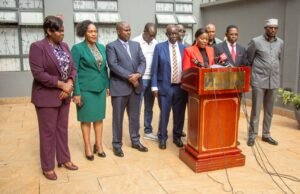

As Kenya’s 2027 political contest begins to take shape, a new political battle is emerging in Ukambani, where National Liberal Party (NLP) leader Augustus Kyalo Muli is seeking to challenge Wiper leader Kalonzo Musyoka’s long-standing influence over the region.
Muli’s strategy mirrors an emerging pattern in Kenyan politics: build an independent political vehicle, mobilise a regional base and use that support to negotiate for influence at the national level.
The approach has similarities with Edwin Sifuna’s Linda Mwananchi movement and Ndindi Nyoro’s decision to leave UDA and take charge of the People’s Party of Kenya (PPK).
The three politicians have taken different political paths, but their strategies share a common theme — creating political platforms outside established parties while seeking to convert generational and regional support into national bargaining power.
For Muli, the challenge is particularly significant because he is attempting to build an alternative political centre in a region where Kalonzo has remained the dominant political figure for nearly two decades.
Muli builds his own political vehicle
The NLP has presented itself as an alternative to both the Wiper establishment in Ukambani and President William Ruto’s administration.
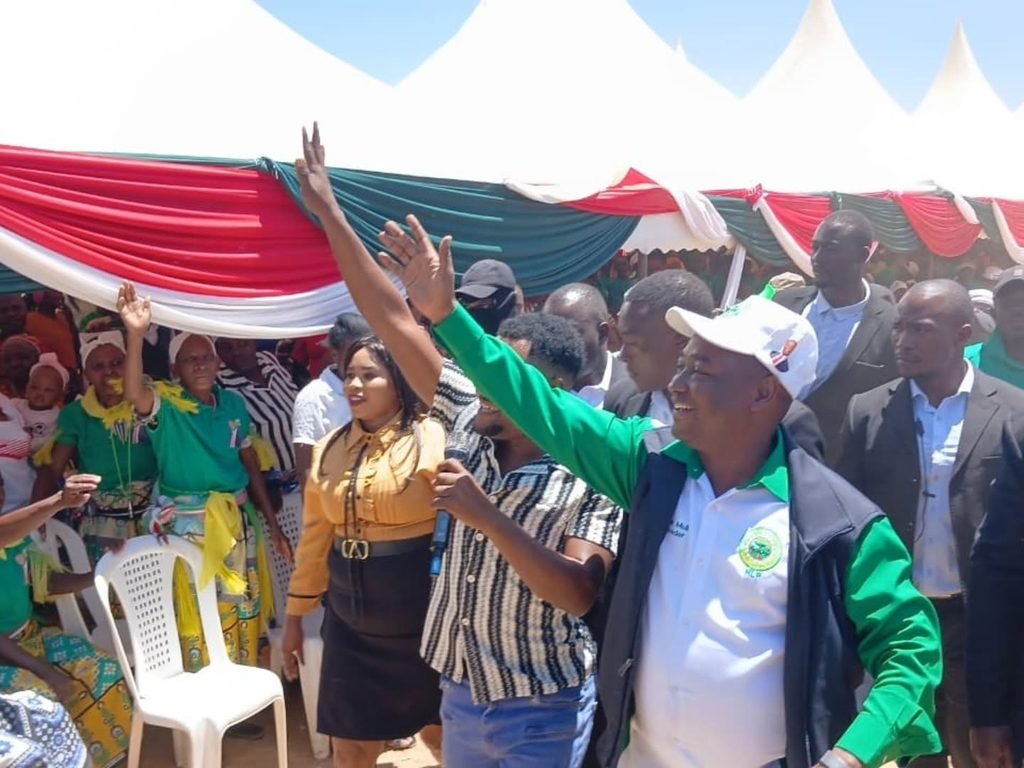
NLP Secretary-General Omondi K’Oyoo claims the party has more than 200,000 registered members in Ukambani, including about 130,000 in Kitui County, and nearly half a million nationally.
The figures are party claims and have not been independently verified.
Still, Muli’s political mobilisation has attracted attention.
On August 13, he addressed a large gathering at Kitui Stadium, with party officials estimating attendance at more than 6,000 people.
The size of the gathering became politically significant because Wiper had held its own event at the same venue days earlier, featuring Nairobi Senator Edwin Sifuna as a guest.
Muli is positioning the mobilisation as evidence that Ukambani voters may be increasingly open to alternatives to the established political order.
The ‘insurance policy’ strategy
Muli, who plans to contest the Kitui Central parliamentary seat in 2027, has described himself as an “insurance policy” for Ukambani.

His argument is that the region’s roughly two million voters have repeatedly been used to strengthen national political coalitions without receiving equivalent political benefits in return.
Rather than immediately backing a presidential candidate or national coalition, Muli is advocating for Ukambani to first negotiate collectively.
His proposed Ukambani Unity Pact 2027 is built around that idea — regional unity should come before deciding which national political formation to support.
The strategy represents a departure from the traditional model in which emerging regional politicians operate under an established political kingpin.
Muli has said NLP is prepared to work with either the government or opposition but wants the region to negotiate from a position of strength.
Why Sifuna and Nyoro matter
Muli’s approach has drawn comparisons with Sifuna and Nyoro because both have pursued political platforms outside traditional party structures.
Sifuna has used Linda Mwananchi to present himself as part of a new generation of political leaders, while Nyoro has positioned PPK as an alternative political vehicle after leaving UDA.
Nyoro’s move has also added to political fragmentation in Mt Kenya, where several leaders are competing for influence alongside former Deputy President Rigathi Gachagua.
In Ukambani, Muli is attempting a similar political realignment.
But his challenge is different.
While Sifuna has built his profile through the Senate and Nyoro through parliamentary and economic policy networks, Muli is relying heavily on grassroots mobilisation and local political structures.
Clan networks could become particularly important in this strategy, given their influence in Ukambani politics.
Kalonzo faces an internal challenge
Kalonzo Musyoka has remained one of the most influential political figures in Ukambani and has consistently played a major role in national coalition politics.
Muli’s emergence therefore represents a challenge from within the region rather than from an external political force.
The contest could become more significant if NLP succeeds in turning its current mobilisation into a permanent grassroots organisation.
The broader national political environment may also give Muli room to grow.
The opposition remains divided among several political groupings, with leaders including Gachagua, Kalonzo, Eugene Wamalwa and Justin Muturi appearing together on some platforms, while other leaders such as Fred Matiang’i, Martha Karua and Peter Munya have pursued separate political engagements.
Nyoro’s PPK has also joined the increasingly fluid opposition landscape.
With no definitive national coalition formula yet in place, regional parties have an opportunity to negotiate alliances based on their own interests.
October event could test Muli’s mobilisation
Muli’s next major political test could come on October 3, during the Anzauni Cultural Festival and his planned coronation as Chief of the Anzauni Chiefdom in Kitui.
Organisers expect the event to attract participants from across Kenya and the diaspora.
Beyond its cultural significance, the gathering could offer an indication of whether Muli can translate his current political visibility into sustained mass mobilisation.
That will be crucial for the NLP.
Political parties can make claims about membership and support, but elections ultimately test whether those networks can deliver votes.
Can Muli build a lasting political movement?
The central question is no longer simply whether Muli can attract crowds in Kitui.
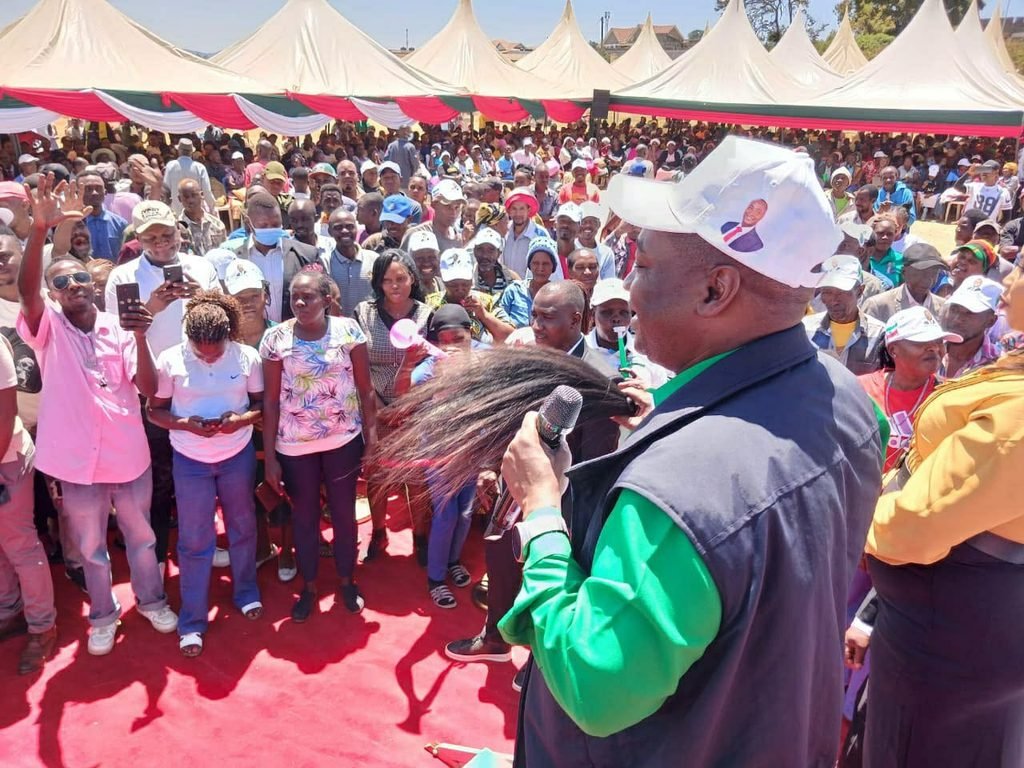
It is whether he can turn the growing interest around his political project into a durable organisation capable of challenging established political structures in Ukambani.
His strategy has three central elements: an independent party, regional mobilisation and a promise to negotiate nationally rather than automatically align with a presidential candidate.
That formula carries both opportunities and risks.
If NLP establishes a strong grassroots network before the 2027 election, Muli could emerge as a significant player in Ukambani politics and force established parties to reconsider how they approach the region.
But if the current mobilisation fails to develop into a broader political organisation, the movement could struggle to translate public rallies into electoral influence.
For now, Muli’s emergence has added another layer to the political contest in Ukambani.
Whether he can genuinely disrupt Kalonzo Musyoka’s dominance — or simply become another short-lived challenger — will ultimately be determined by how far his political machinery grows before the 2027 polls.


 leader Augustus Kyalo Muli)