


Deep beneath the surface of the Majira Affordable Housing Project in Chogoria, a team of geotechnical experts is carrying out critical investigations aimed at ensuring the planned housing units stand the test of time.
Leading the exercise is geotechnical engineer Muthoka Obadia, who says the ongoing drilling and soil testing will determine the suitability of the ground for high-rise construction before any foundation work begins.
“We are trying to investigate foundation conditions at this particular site,” said Obadia while supervising drilling operations. “The purpose is to determine where the foundation can safely be sited based on the type of buildings planned for this project.”
According to the engineer, the initial layers of soil at the site consist mainly of red clay, which is not ideal for supporting tall buildings.
Obadia noted that the team has already encountered solid rock beneath the clay layer, a promising sign for the project.
“This type of rock is very suitable for foundations of high-rise buildings. The project will eventually be laid on this rock foundation,” he said.
The investigation involves drilling boreholes to depths of up to 15 metres to establish the different underground strata and soil properties. The data collected is later analysed in laboratories before being handed over to structural engineers for foundation design.
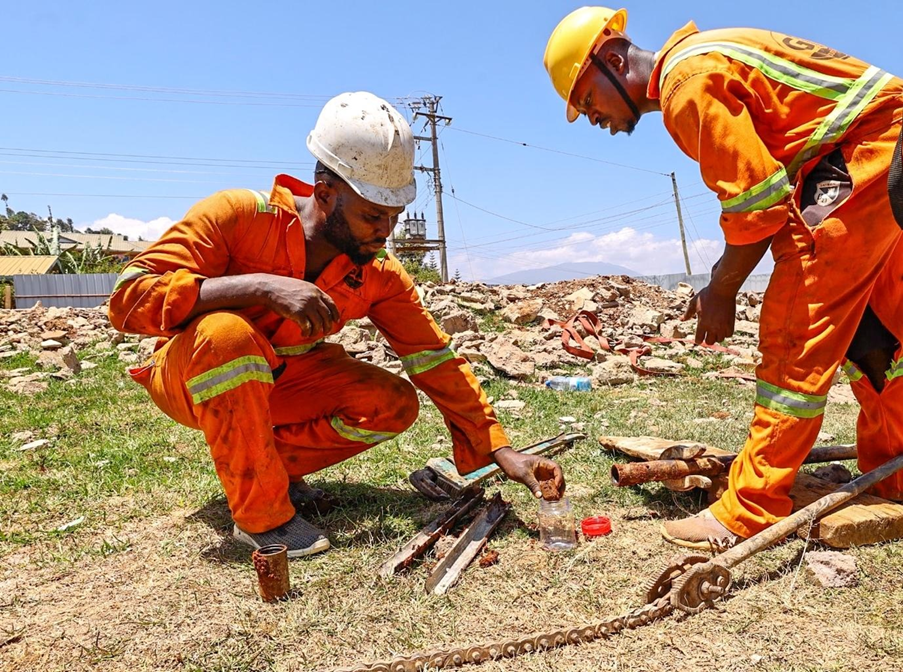
The geotechnical engineer emphasized that such investigations are mandatory in most government projects and play a major role in preventing structural failures.
“That is why it is very difficult to see government projects collapsing,” he said. “The government takes investigations very seriously before construction begins. Many private developers unfortunately skip these important steps because they think they are expensive.”
Obadiah warned that ignoring professional geotechnical advice often leads to disastrous consequences, including building collapses witnessed in some privately developed structures across the country.
“The foundation of a building may take about one-third of the total project cost, but geotechnical investigations themselves are not expensive,” he said. “Yet they are among the most important aspects of construction because if the foundation is questionable, the entire building becomes unsafe.”
Obadia, who served in government for about 30 years before retiring, said he continues to use his experience to support development projects and educate private developers on the importance of engaging professionals.
“There is the architect, the structural engineer, the quantity surveyor and also the geotechnical engineer. Developers should respect and involve all these professionals in the construction industry,” he said.
He further called for stricter enforcement of geotechnical requirements before building approvals are issued. Obadiah lauded the government for prioritizing professionalism and quality assurance in its projects.
“The affordable housing projects have given serious attention to professionalism. They engage trained and experienced personnel to ensure nothing is ignored,” he said.
The Majira Affordable Housing Project in Chogoria is among the government-backed housing initiatives aimed at expanding access to decent and affordable homes while also creating employment opportunities for professionals and local workers.


