
For more than 50 years, the Priestly Fraternity of Saint Pius X (SSPX) has stood at the centre of one of the fiercest internal battles in the Catholic Church.
To its followers, the Priestly Fraternity of Saint Pius X is the last great defender of authentic Catholic tradition, preserving the ancient Latin Mass and centuries-old teachings they believe have been diluted by modern reforms. To its critics, it is a movement that has challenged papal authority and resisted changes embraced by the wider Church since the 1960s.
As the Catholic Church grapples with declining attendance in parts of the West, growing secularism and renewed debates over doctrine and identity, the Priestly Fraternity of Saint Pius X is attracting fresh attention. Far from fading into history, the traditionalist fraternity is expanding its influence, raising an increasingly important question: could a movement once considered on the fringes help shape the future direction of the world’s largest Christian Church?
From a rebel archbishop to global movement
The story begins in 1970 with French Archbishop Marcel Lefebvre, a highly respected missionary bishop who became convinced that the reforms introduced after the Second Vatican Council (1962–1965) were taking the Church in the wrong direction.
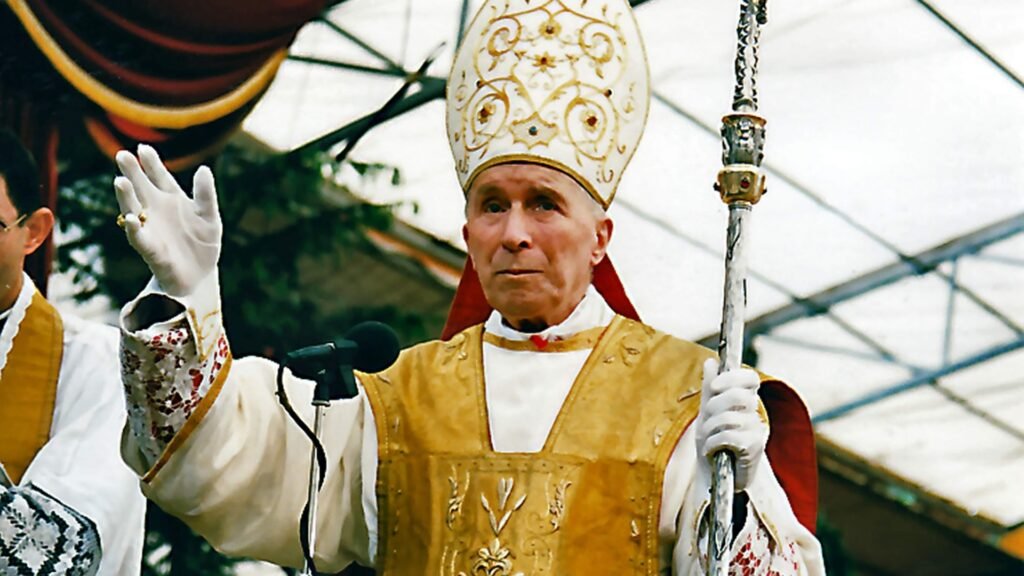
Known as Vatican II, the council sought to modernise the Church’s engagement with the world. The Mass was celebrated in local languages instead of Latin. Priests turned to face the congregation rather than the altar. Lay people assumed more active roles during worship, and the Church adopted a more open approach to dialogue with other Christian denominations and religions.
To many Catholics, the reforms were long overdue.
To Lefebvre, they represented a dangerous break with centuries of Catholic tradition.
His answer was simple: preserve the Church exactly as it had been.
The Latin Mass at the Heart of the Fight
The SSPX exists for one overriding purpose—to preserve what it calls the timeless traditions of the Catholic faith.
Its priests celebrate the Traditional Latin Mass, a form of worship dating back centuries before Vatican II. Supporters say the ancient liturgy is more reverent, more beautiful and more focused on God than the modern Mass celebrated in most Catholic parishes today.
But the disagreement goes far beyond language.
The fraternity believes Catholic doctrine is permanent and cannot be reshaped to accommodate changing social attitudes. It argues that the Church should adapt people to the Gospel—not adapt the Gospel to the world.
That philosophy has made the SSPX one of the most influential voices in the global traditionalist movement.
The Clash That Shook the Vatican
The greatest crisis came in 1988.
Fearing that his movement would die after his death, Archbishop Lefebvre consecrated four bishops without the approval of Pope John Paul II.
The Vatican declared the act schismatic and imposed excommunications.
It was one of the biggest confrontations between Rome and a Catholic movement in modern history.
In 2009, Pope Benedict XVI lifted the excommunications in an effort to promote reconciliation and open dialogue.
Today, the SSPX remains in what the Vatican describes as an “irregular canonical status.” It is neither fully outside nor fully integrated into the Church’s official structures. Despite that, recent popes have granted its priests certain faculties, including hearing confessions under specified conditions, reflecting continued efforts toward eventual reconciliation.
Why Is the SSPX Growing Now?
Perhaps the biggest surprise is that the movement has not faded away.
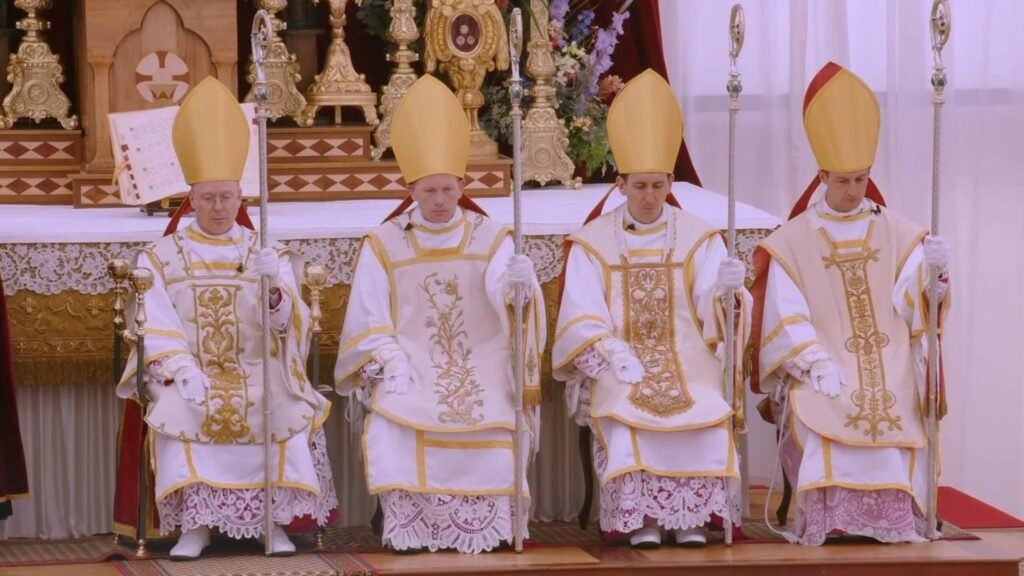
Instead, it is expanding.
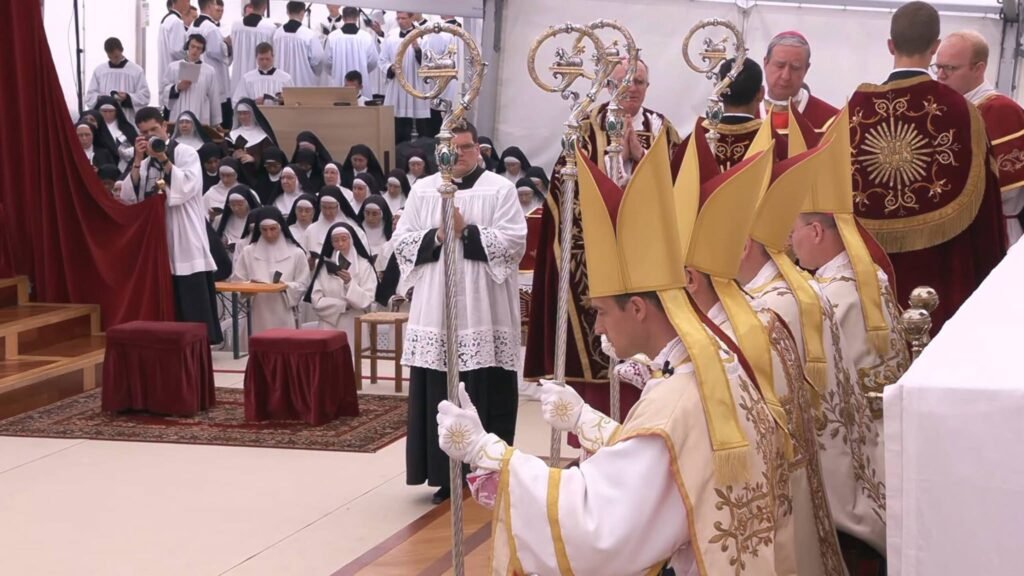
Across Europe, North America, Latin America and increasingly Africa, young Catholics are seeking out the Traditional Latin Mass.
Many belong to a generation that never experienced Vatican II yet finds itself attracted to the solemn rituals, silence, discipline and certainty of older Catholic worship.
Some say modern society feels increasingly unstable and morally confused.
For them, the SSPX offers something rare—clarity, continuity and permanence.
Winning Converts in the Digital Age
Ironically, a movement dedicated to preserving ancient traditions has mastered modern technology.
Latin Masses are livestreamed around the world.
Priests host popular podcasts.
Theology is debated on YouTube, X, Facebook and other social media platforms.
Online catechism classes connect believers across continents.
Instead of disappearing into history, the SSPX has built a global digital community that reaches far beyond the walls of its chapels.
More Than a Liturgical Dispute
The resurgence comes as the Catholic Church faces profound challenges.
Declining church attendance in parts of Europe and North America, fewer priestly vocations, debates over sexuality and gender, artificial intelligence, bioethics and the role of tradition have all intensified discussions about where Catholicism is heading.
Within those debates, the SSPX has become one of the clearest voices arguing that the answer lies not in further reform but in recovering the Church’s ancient foundations.
Could They Change Catholic History?
The SSPX is unlikely to replace or take over the Catholic Church, whose more than 1.4 billion members remain united under the Pope and the bishops in communion with Rome.
Yet influence is not measured only by numbers.
Over the past five decades, the fraternity has helped keep alive debates over the Latin Mass, doctrinal continuity, liturgical reverence and Catholic identity. Even many Catholics who disagree with its positions acknowledge that it has forced the wider Church to confront difficult questions about how much change is compatible with preserving timeless truths.
Whether those debates ultimately lead to greater reconciliation, renewed traditionalism or continued division remains uncertain.
What is certain is that the Priestly Fraternity of Saint Pius X is no longer a fringe curiosity. It has become a significant force in one of the defining conversations within modern Catholicism.
The Bigger Question
At its heart, the story of the SSPX is not simply about Latin or liturgy.
It is about one of the oldest questions confronting every great religion:
Can an ancient faith embrace the modern world without losing its soul?
For the Priestly Fraternity of Saint Pius X, the answer has never changed.
The Church should not reinvent itself to reflect society, it argues. Instead, society should rediscover the timeless truths the Church has preserved for two millennia.
Whether history remembers the SSPX as guardians of tradition, catalysts for renewal or perpetual dissenters, one thing is becoming increasingly clear.
Their battle is no longer just about the past.
It may help determine the future of the Catholic Church itself.


. Discover how this traditionalist movement is challenging modern Catholicism and shaping the Church.)