
1. Basic Identity
Official name: County Government of Kilifi
County code: 003
County headquarters: Kilifi Town
Region: Coast Region
Area: Approximately 12,245.9 square kilometres, according to county government data.
2019 population: 1,453,787 people, comprising 704,089 males, 749,673 females and 25 intersex persons, according to the Kenya National Bureau of Statistics (KNBS) and Kilifi County planning documents.
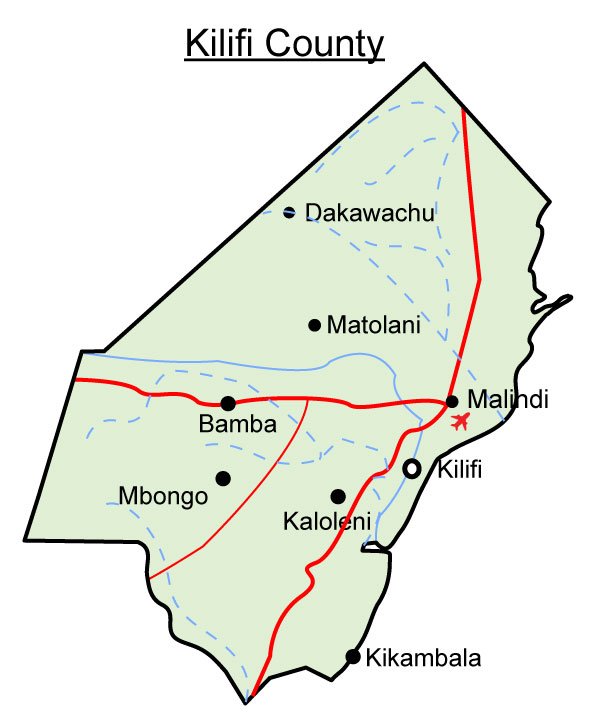
Kilifi County is located along Kenya’s Indian Ocean coastline and borders Tana River County to the north, Taita-Taveta County to the west, and Mombasa and Kwale counties to the south, while the Indian Ocean forms its eastern boundary.
The county is one of Kenya’s major coastal destinations and combines a long shoreline with agricultural hinterlands, fishing communities, tourism centres, forests, historical sites and rapidly growing urban settlements.
Kilifi Town serves as the county headquarters, while Malindi and Mtwapa are among its largest and most economically important urban centres. Other important towns and trading centres include Mariakani, Watamu, Kilifi, Ganze, Kaloleni and Gongoni.
Kilifi has a rich maritime and cultural history. The county is home to the Gede Ruins, an important archaeological site that provides evidence of the sophisticated Swahili civilisation and the historical Indian Ocean trading networks along the East African coast. The county government describes the region as having been connected to Indian Ocean trade for centuries.
The county is also known for Arabuko-Sokoke Forest, one of East Africa’s important remaining coastal forests, as well as beaches and marine ecosystems around Watamu, Malindi and Kilifi.
Kilifi’s economy combines agriculture, tourism, fishing, manufacturing, mining, construction, transport, trade and real estate. Its location between Mombasa and northern Kenya gives it an important position within the Coast region’s transport and economic network.
The county is also increasingly positioning itself as an investment and blue economy destination, with opportunities in tourism, agro-processing, fisheries, manufacturing, renewable energy and coastal enterprises.
2. Political and Administrative Structure
Kilifi County is divided into 7 parliamentary constituencies and 35 electoral wards. The county government also recognises seven sub-counties and 35 wards.
A. Kilifi North Constituency – 7 Wards
- Tezo
- Sokoni
- Kibarani
- Dabaso
- Watamu
- Matsangoni
- Mnarani
B. Kilifi South Constituency – 5 Wards
- Junju
- Mwarakaya
- Shimo la Tewa
- Chasimba
- Mtepeni
C. Kaloleni Constituency – 4 Wards
- Mariakani
- Kayafungo
- Kaloleni
- Mwanamwinga
D. Rabai Constituency – 4 Wards
- Mwawesa
- Ruruma
- Kambe/Ribe
- Rabai/Kisurutuni
E. Ganze Constituency – 4 Wards
- Ganze
- Bamba
- Jaribuni
- Sokoke
F. Malindi Constituency – 5 Wards
- Jilore
- Kakuyuni
- Ganda
- Malindi Town
- Shella
G. Magarini Constituency – 6 Wards
- Maarafa
- Magarini
- Gongoni
- Adu
- Garashi
- Sabaki
The county therefore has a total of 7 constituencies and 35 wards.
Administratively, the county government operates alongside the national government’s administrative structures.
The county executive is responsible for devolved functions including healthcare, agriculture, livestock development, fisheries, urban services, local infrastructure, trade development and other functions assigned to county governments under the Constitution.
National government functions, including security and national administration, are coordinated through the County Commissioner and the national administrative structure.
Kilifi’s administrative landscape is particularly diverse because it combines densely populated coastal towns with large rural areas in Ganze, Magarini, Kaloleni and other parts of the county.
3. Current Political Leadership

Kilifi Governor Gideon Mung’aro
| Position | Office Holder |
| Governor | Hon. Gideon Maitha Mung’aro |
| Deputy Governor | Hon. Flora Mbetsa Chibule |
| Senator | Hon. Stewart Madzayo |
| Woman Representative | Hon. Gertrude Mbeyu Mwanyanje |
Gideon Mung’aro was elected governor in the August 2022 General Election, succeeding Amason Kingi as the second governor of Kilifi County. The county government confirms that Mung’aro won the seat in 2022 and is serving his first five-year term.
Flora Mbetsa Chibule serves as deputy governor. She has been involved in county programmes covering education, agriculture, gender, inclusion and economic empowerment.
Senator Stewart Madzayo represents Kilifi County in the Senate. He also serves as the Senate Minority Leader and has frequently raised issues affecting Kilifi, including infrastructure, drought and coastal development.
Gertrude Mbeyu Mwanyanje is the elected Woman Representative for Kilifi County. Parliament lists her as a member of the 13th Parliament representing Kilifi County on an ODM ticket.
4. Members of Parliament
The National Assembly’s current records list the seven elected constituency
| Constituency | Member of Parliament | Party |
| Kilifi North | Owen Yaa Baya | UDA |
| Kilifi South | Richard Ken Chonga Kiti | ODM |
| Kaloleni | Paul Kahindi Katana | ODM |
| Rabai | Anthony Kenga Mupe | PAA |
| Ganze | Charo Kenneth Kazungu Tungule | PAA |
| Malindi | Amina Laura Mnyazi | ODM |
| Magarini | Harrison Garama Kombe | ODM |
representatives, including Owen Baya, Richard Ken Chonga Kiti, Paul Kahindi Katana, Anthony Kenga Mupe, Kenneth Kazungu Tungule and Amina Laura Mnyazi.
Kilifi’s parliamentary politics reflect a mixture of ODM, UDA and Pamoja African Alliance (PAA) influence.
ODM remains particularly influential in the county, while PAA has maintained a political base in parts of the Coast following the rise of former Kilifi governor Amason Kingi.
Political debates in Kilifi frequently centre on employment, land, tourism, agriculture, fishing, infrastructure, poverty, education and the distribution of development resources.
5. Economy and Gross County Product
Kilifi is one of the largest economies in Kenya’s Coast region.
The county’s economy is built around agriculture, manufacturing, transport, tourism, fishing, mining, construction, wholesale and retail trade, real estate and other services.
Kilifi’s Gross County Product
| Year | Gross County Product |
| 2019 | KSh 196.5 billion |
| 2020 | KSh 200.0 billion |
| 2021 | KSh 229.8 billion |
| 2022 | KSh 263.2 billion |
| 2023 | KSh 296.4 billion |
Source: KNBS Gross County Product 2024.
Kilifi’s nominal GCP increased from KSh 196.5 billion in 2019 to KSh 296.4 billion in 2023. The county accounted for about 2.1 per cent of Kenya’s Gross County Product on average over the five-year period.
At constant 2016 prices, Kilifi’s GCP rose from KSh 167.6 billion in 2019 to KSh 202.1 billion in 2023.
The county’s economy is particularly significant because agriculture remains important for employment and household livelihoods while manufacturing, transport, tourism and services generate substantial economic output.
The Economic Structure
Kilifi’s economy rests on several major pillars:
- Agriculture and agro-processing
- Tourism and hospitality
- Fishing and the blue economy
- Manufacturing
- Mining and quarrying
- Transport and logistics
- Wholesale and retail trade
- Real estate and construction
- Financial and business services
- Information and communication
Agriculture, forestry and fishing generated approximately KSh 59.9 billion in gross value at current prices in 2023, while manufacturing generated about KSh 53.7 billion and transport and storage approximately KSh 52.3 billion.
This structure makes Kilifi different from heavily urbanised Mombasa, where port and logistics activities dominate, because Kilifi combines a substantial rural agricultural economy with growing urban and industrial activity.
6. Agriculture: The Backbone of Kilifi’s Rural Economy
Agriculture remains one of the most important sources of livelihoods in Kilifi County.
The county’s diverse agro-ecological zones support food crops, cash crops, horticulture, livestock and tree-based agriculture.
Major crops include:
- Maize
- Cassava
- Cowpeas
- Coconut
- Cashew nuts
- Mangoes
- Sorghum
- Green grams
- Vegetables
- Fruits
- Sisal
Coconut and cashew production are particularly important in the coastal belt, while maize, cassava, cowpeas and other drought-tolerant crops are important in the hinterland.
The county government identifies crop production, livestock keeping, apiculture, tourism, fishing and industry among Kilifi’s key economic activities.
Agriculture is also increasingly linked to value addition. Coconut producers, for example, are being supported to develop products beyond raw agricultural produce. In April 2026, the Kenya Industrial Property Institute partnered with the county government to train coconut farmers and producers on intellectual property and product development.
Major Agricultural Activities
- Coconut farming
- Cashew nut production
- Mango farming
- Cassava production
- Maize farming
- Cowpea production
- Sorghum farming
- Horticulture
- Beekeeping
- Small-scale irrigation
Agriculture nevertheless faces significant challenges, including erratic rainfall, drought, limited irrigation, pests and diseases, inadequate access to markets, post-harvest losses and limited value addition.
The county’s development plans have therefore placed emphasis on agricultural value chains, climate-smart farming, irrigation, market access and investment in agro-processing.
The combination of agricultural land and proximity to major coastal markets gives Kilifi potential to expand food processing and agricultural exports.
7. Livestock and Fisheries
Livestock keeping is an important component of Kilifi’s rural economy, particularly in areas where crop production is constrained by rainfall variability.
Major Livestock Enterprises
- Cattle
- Goats
- Sheep
- Poultry
- Pigs
- Beekeeping
- Rabbits
- Donkeys
Goat keeping is particularly significant among rural households, while poultry provides income and food for many small-scale farmers.
Beekeeping also provides an alternative source of income and is suited to parts of the county where natural vegetation and forest ecosystems provide forage for bees.
Fisheries and the Blue Economy
Kilifi’s long coastline gives fisheries a central role in the local economy.
Artisanal fishing communities operate along the Indian Ocean, while fish traders, processors, boat operators and other businesses form part of the wider fisheries value chain.
Marine resources also support tourism and conservation activities around Watamu, Malindi and other coastal areas.
The county’s blue economy potential extends beyond fishing to marine tourism, aquaculture, seafood processing, mangrove conservation and other coastal enterprises.
Kilifi’s fisheries sector nevertheless faces challenges linked to declining fish stocks, climate change, illegal fishing practices, limited cold-storage facilities, inadequate landing infrastructure and limited access to finance.
Investment in modern fish landing sites, cold-chain infrastructure, value addition and sustainable fisheries management could increase the economic returns from the county’s marine resources.
8. Key Industries
Kilifi has a diverse industrial base that combines traditional coastal industries with newer manufacturing, mining, construction and tourism activities.
Major Industries Include
- Manufacturing
- Cement production
- Mining and quarrying
- Construction
- Food and beverage processing
- Agro-processing
- Tourism and hospitality
- Transport and logistics
- Wholesale and retail trade
- Real estate
- Fishing and seafood processing
- Financial services
- Information and communication
- Renewable energy
Manufacturing is one of the county’s largest economic activities. The sector includes cement, construction materials, food processing and other industrial production.
Mining and quarrying also contribute to the county economy. In particular, limestone and other mineral resources have supported industrial activity in parts of Kilifi.
The county’s 2025 Fiscal Strategy Paper identified mining and quarrying as an important component of the secondary sector, while the 2023 economic data placed manufacturing among the county’s largest contributors.
Tourism and Hospitality
Tourism remains one of Kilifi’s most recognisable economic sectors.
Major attractions include:
- Gede Ruins
- Watamu Marine National Park
- Malindi Marine National Park
- Arabuko-Sokoke Forest
- Watamu beaches
- Malindi beaches
- Kilifi Creek
- Mida Creek
- Mnarani ruins and heritage sites
- Coastal cultural attractions
Malindi and Watamu are particularly important tourism centres, attracting domestic and international visitors through beaches, marine activities, hotels, restaurants and historical attractions.
The tourism industry also supports thousands of indirect livelihoods in transport, food supply, entertainment, handicrafts, fishing and small businesses.
Manufacturing and Construction
Kilifi’s proximity to Mombasa and its road connections make it attractive for manufacturing and construction-related businesses.
The county is strategically positioned along the Mombasa-Malindi transport corridor, while areas such as Mariakani and Mtwapa benefit from their proximity to the Mombasa metropolitan economy.
The development of industrial and investment zones is expected to create additional opportunities for manufacturing, logistics and agro-processing.
Mining and Quarrying
Mining and quarrying are also significant economic activities in Kilifi.
Limestone, coral stone, sand and other construction materials support the building and manufacturing industries.
The sector has also generated debates around environmental protection, community benefits, land rights and the sharing of revenues from natural resources.
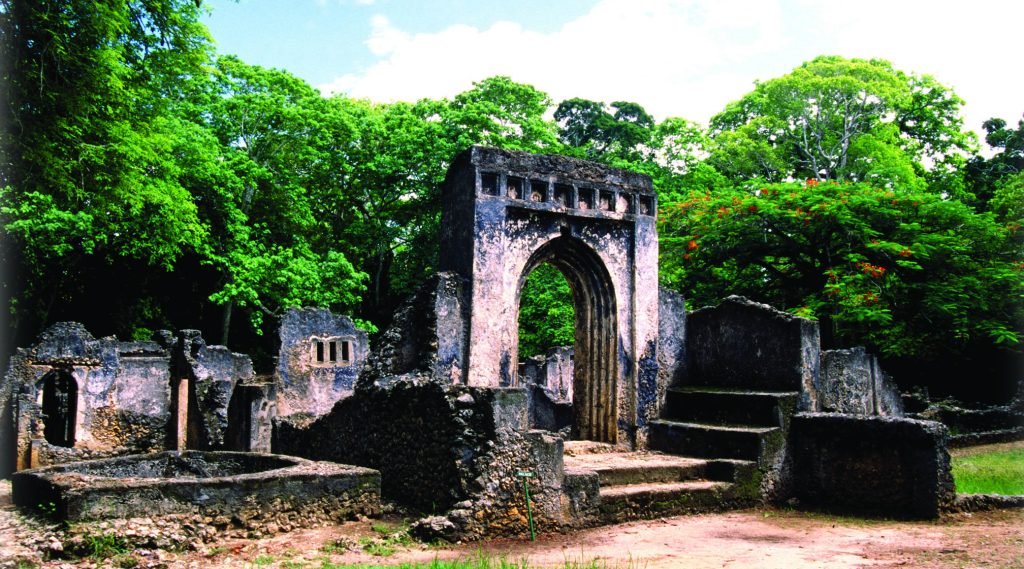
Gede Ruins, one of Kilifi County’s most important archaeological and cultural heritage sites.
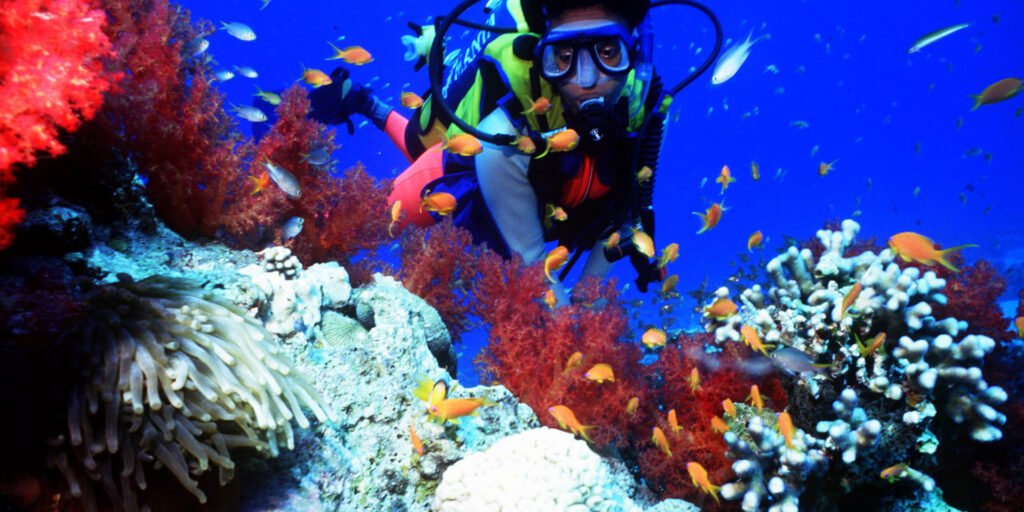
Watamu’s coastal and marine environment, a major tourism attraction in Kilifi County
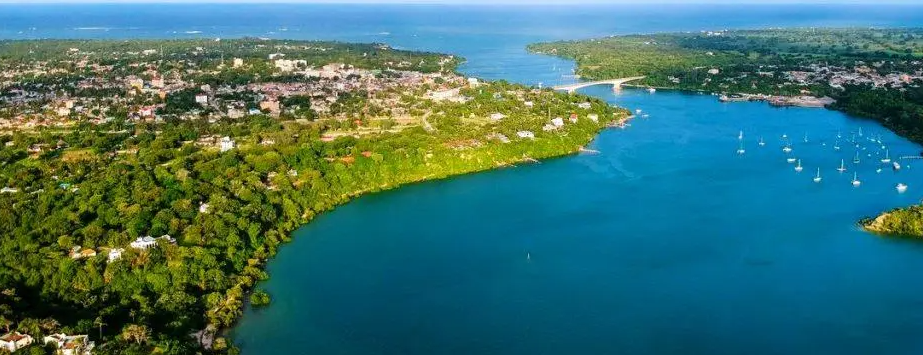
Kilifi Creek, an important coastal ecosystem and tourism destination.
9. Population
The 2019 Kenya Population and Housing Census recorded Kilifi County’s population at 1,453,787 people.
Population Composition
| Category | Population |
| Male | 704,089 |
| Female | 749,673 |
| Intersex | 25 |
| Total | 1,453,787 |
Source: KNBS, 2019 Kenya Population and Housing Census.
The county’s population was projected to rise to approximately 1.64 million in 2025 and about 1.70 million by 2027 under county planning projections.
Malindi was the most populous sub-county in the 2019 county profile, with 333,226 people, followed by Kilifi South, Kaloleni and Magarini.
Population distribution varies significantly across the county. Coastal and urban areas such as Malindi, Kilifi and Mtwapa have higher concentrations of people, while large parts of Ganze and Magarini are more sparsely populated.
Kilifi’s population is predominantly youthful, creating both a major economic opportunity and a challenge for employment, education, skills development and social services.
Rapid urbanisation has increased pressure on:
- Housing
- Water supply
- Sanitation
- Healthcare
- Roads
- Solid-waste management
- Employment
- Public land
- Education
The growth of Mtwapa, Kilifi Town and Malindi has also increased demand for urban planning and infrastructure.
At the same time, rural communities continue to face challenges linked to poverty, food insecurity, drought and limited access to basic services.
10. Education and School Enrolment
Kilifi has an extensive network of public and private educational institutions serving learners across its seven constituencies.
The county government is responsible for Early Childhood Development Education (ECDE) and vocational training, while primary and secondary education remain under the national government.
Education remains a major development priority because of Kilifi’s youthful population and the need to equip young people with skills for employment and entrepreneurship.
Education Priorities
The county has focused on:
- Expansion of ECDE centres
- Construction and improvement of classrooms
- Provision of learning materials
- Vocational training
- Scholarships and bursaries
- Support for vulnerable learners
- Digital learning
- Skills development
In April 2026, the county government announced full scholarships for more than 3,500 students joining national schools. Deputy Governor Flora Chibule said the programme covers full school fees and is intended to address barriers facing learners from disadvantaged households.
The county has also invested in vocational education as a pathway for young people who do not proceed directly to university or formal employment.
Higher Education
Kilifi has emerged as an important higher-education centre along the Coast.
Major institutions include:
- Pwani University
- Technical and Vocational Education and Training institutions
- Kenya Medical Training College – Kilifi
- Kenya Medical Training College – Malindi
- Various private colleges and vocational institutions
Pwani University is particularly important to the county’s education, research and innovation ecosystem.
The university has also become a platform for programmes linked to agriculture, marine resources, technology, health and coastal development.
The county faces continuing challenges around school dropout, transition, poverty and access to education in remote communities.
11. Health Infrastructure
Kilifi has a network of public and private health facilities serving residents across the county.
The county’s health system includes a referral hospital, sub-county hospitals, health centres, dispensaries and private facilities.
Major Referral Hospital
Kilifi County Referral Hospital
Kilifi County Referral Hospital is the county’s main public referral facility and provides specialised and general medical services to residents and patients referred from other facilities.
Its services include:
- Emergency care
- Maternity services
- Surgery
- Paediatric care
- Diagnostic services
- Outpatient services
- Specialist care
- Maternal and child health services
Kilifi is also home to the KEMRI-Wellcome Trust Research Programme, which has made the county an important centre for medical research, particularly in infectious diseases, malaria, child health and public health.
Major Public Health Facilities
- Kilifi County Referral Hospital
- Malindi Sub-County Hospital
- Mariakani Sub-County Hospital
- Ganze Sub-County Hospital
- Mtwapa Sub-County Hospital
- Kaloleni Sub-County Hospital
- Rabai health facilities
- Magarini health facilities
Research and Medical Training
The KEMRI-Wellcome Trust Research Programme in Kilifi has contributed significantly to health research and medical knowledge in Kenya and internationally.
The programme has conducted research on malaria, vaccines, infectious diseases, childhood illnesses and other public-health challenges.
The presence of research institutions has also strengthened Kilifi’s position as a health and scientific research centre.
Healthcare remains a major development priority because the county continues to face challenges involving maternal and child health, malaria, malnutrition, non-communicable diseases, staffing, medical supplies and access to facilities in remote communities.
12. History of County Political Leadership
Kilifi has played a major role in Coast regional politics since the introduction of devolved governments under Kenya’s 2010 Constitution.
The county has produced some of the Coast region’s most influential political figures and has often been an important battleground between ODM, PAA and national governing coalitions.
Governors
1. H.E. Amason Jeffah Kingi (2013–2022)
Amason Jeffah Kingi became Kilifi’s first elected governor after the 2013 General Election.
Before becoming governor, Kingi represented Magarini Constituency in Parliament and served in the national government as Minister for East African Community Affairs and later Minister for Fisheries Development.
As governor, he served two consecutive terms from 2013 to 2022.
His administration focused on establishing the county government structures created under devolution and expanding investments in healthcare, education, water, roads, agriculture and tourism.
Kingi also became an important figure in Coast regional politics through the establishment of the Pamoja African Alliance (PAA), a party that sought to strengthen the political bargaining power of the Coast region.
After leaving the governor’s office in 2022, Kingi was elected Speaker of the Senate, making him one of the most prominent political figures associated with Kilifi.
2. H.E. Gideon Maitha Mung’aro (2022–Present)
Gideon Mung’aro was elected Kilifi governor in the August 2022 General Election on an ODM ticket.
He defeated former Malindi MP Aisha Jumwa in the gubernatorial race.
Before becoming governor, Mung’aro served as Member of Parliament for Kilifi North and later held positions in the national government.
His administration has prioritised:
- Healthcare
- Agriculture
- Water and sanitation
- Youth employment
- Tourism
- Infrastructure
- Investment promotion
- Digitalisation
- Revenue collection
- Industrial development
The administration has also sought to position Kilifi as an investment destination, particularly in agriculture, manufacturing, tourism and the blue economy.
Political Significance
Kilifi remains one of the most politically influential counties in the Coast region.
Its political debates are closely linked to:
- Employment
- Land
- Tourism
- Agriculture
- Fishing
- Infrastructure
- Devolution
- Poverty
- Coastal political representation
- Natural-resource management
The county has historically been a stronghold for ODM, although PAA and UDA have also developed significant political influence.
Kilifi’s political importance increased further after Amason Kingi became Senate Speaker in 2022, giving the county a direct link to one of the country’s most senior constitutional offices.
14. Key Personalities Associated with Kilifi
Kilifi has produced and nurtured influential personalities in politics, public service, music, culture and the creative industries.
The county’s strong Mijikenda heritage, Swahili culture, tourism industry and growing urban centres have provided a distinctive environment for political and cultural figures.
Politics and Governance
Amason Jeffah Kingi
Amason Kingi is the former governor of Kilifi and the first person to occupy the county’s gubernatorial office after devolution. He served as governor from 2013 to 2022 before becoming Speaker of the Senate. (Wikipedia)
Kingi remains one of the most influential political figures associated with Kilifi and the wider Coast region.
Aisha Jumwa
Aisha Jumwa is a prominent Kenyan politician who has represented Malindi and later served in the national government. She was born in Takaungu in Kilifi County and has remained an influential figure in Coast politics. (Malindians)
Her political career has included service as Malindi Member of Parliament and national government appointments.
Music and Cultural Arts
Katoi Wa Tabaka
Katoi Wa Tabaka, also known as Katoi Mathias Pato, is a musician and cultural promoter associated with Malindi and Marafa in Kilifi County.
His music combines contemporary sounds with traditional Mijikenda music and has been used to promote coastal culture and heritage.
Katoi has also worked with the Mijikenda Jazz Band and promoted the preservation of traditional instruments, music and cultural narratives.
His work represents the growing role of Kilifi’s creative sector in preserving local culture while connecting it with international audiences.
Public Service and Emerging Leadership
Fikirini Jacobs Katoi Kahindi
Fikirini Jacobs Katoi Kahindi is a public servant from Kilifi who has worked in the county government and parliamentary service. Parliament records show that he was born in Kilifi County and served as Director of the Governor’s Delivery Unit in the Kilifi County Government before being nominated for national public service.
Kilifi’s Cultural Influence
Kilifi’s personalities reflect the county’s wider identity as a meeting point between traditional Mijikenda culture, Swahili coastal heritage, tourism and modern creative industries.
From political leadership to music and cultural preservation, people associated with Kilifi continue to shape conversations about the Coast region’s identity, development and place in Kenya’s national story.
15. Kilifi County at a Glance
Kilifi is one of Kenya’s most geographically and economically diverse coastal counties.
Its economic identity rests on six major pillars:
- Agriculture and agro-processing
- Tourism and hospitality
- Fishing and the blue economy
- Manufacturing
- Mining and quarrying
- Transport, trade and services
The county combines a long Indian Ocean coastline with extensive agricultural hinterlands, making it different from highly urbanised Mombasa.
Its strategic location between Mombasa and northern Kenya gives it an important role in regional transport and commerce.
Malindi and Watamu provide major tourism and marine attractions, while Kilifi Town functions as the county administrative centre. Mtwapa and Mariakani have developed strong links to the Mombasa metropolitan economy.
Agriculture remains central to rural livelihoods, with crops such as coconut, cashew nuts, cassava, maize, cowpeas and mangoes supporting thousands of households.
At the same time, manufacturing, mining, construction, tourism and transport have expanded the county’s economic base.
Kilifi’s major development challenges include poverty, youth unemployment, food insecurity, drought, inadequate infrastructure, access to healthcare, education gaps, land pressures and environmental degradation.
The county also faces the challenge of ensuring that tourism, mining, fishing and other natural-resource activities generate greater benefits for local communities.
With its beaches, forests, archaeological sites, agricultural land, marine resources and growing urban centres, Kilifi has significant potential to become one of Kenya’s leading investment, tourism and blue-economy destinations.
Kilifi therefore represents a unique combination of coastal heritage, rural livelihoods, tourism, industry and emerging urban development, making it one of Kenya’s most strategically important counties.
16. References
- Kenya National Bureau of Statistics (KNBS). 2019 Kenya Population and Housing Census. Nairobi: KNBS.
KNBS official website - Kenya National Bureau of Statistics (KNBS). Gross County Product 2024.
(Kenya National Bureau of Statistics) - County Government of Kilifi. County Integrated Development Plan 2023–2027.
(Maarifa Centre) - County Government of Kilifi. Annual Development Plan and County Fiscal Strategy Papers.
(County Government of Kilifi) - County Government of Kilifi. Official County Government Website.
County Government of Kilifi - State Department for Devolution. County Information.
(Devolution) - Parliament of Kenya. Members of the National Assembly.
(Parliament of Kenya) - Parliament of Kenya. Members of the Senate.
(Parliament of Kenya) - Independent Electoral and Boundaries Commission (IEBC). Electoral Boundaries and Ward Information.
IEBC official website - Kilifi County Assembly. County Assembly Information and Proceedings.
Kilifi County Assembly - Council of Governors – Kenya. Maarifa Centre and County Information.
Council of Governors Maarifa Centre - Commission on Revenue Allocation (CRA). County Fact Sheets and County Economic Data.
Commission on Revenue Allocation - Ministry of Health, Kenya. Health Sector Information.
Ministry of Health Kenya - Kenya Medical Research Institute (KEMRI). Research and Health Programmes.
KEMRI official website - Pwani University. University and Academic Information.
Pwani University - Kenya Tourism Board. Coastal Tourism Information.
Kenya Tourism Board - Kenya Wildlife Service. Marine Parks, Conservation and Wildlife Information.
Kenya Wildlife Service - National Museums of Kenya. Gede Ruins and Coastal Heritage.
National Museums of Kenya - State Department for Mining. Mining Activities and Regulatory Information in Kilifi.
(Mining Kenya) - Kenya Industrial Property Institute (KIPI). Coconut Producers Training in Kilifi County.
(KIPI) - Kenya News Agency. Kilifi County Education and Scholarship Programmes.
(Kenya News) - The Standard. Kilifi political and development coverage.
(The Standard) - People Daily. Profiles and coverage of coastal artists and cultural activities.
(People Daily) - Music In Africa. Katoi Wa Tabaka and the Mijikenda Jazz Band.
(Music In Africa) - Kenya Yearbook Editorial Board. Governance and leadership profiles.
(Kenya Yearbook) - National Government Constituencies Development Fund (NG-CDF). Rabai Constituency Information.
(rabai.ngcdf.go.ke) - National Government Constituencies Development Fund (NG-CDF). Magarini Constituency Information.
(magarini.ngcdf.go.ke) - County Government of Kilifi. Official County Portal and Public Services.
(County Government of Kilifi)


