
1. Basic Identity
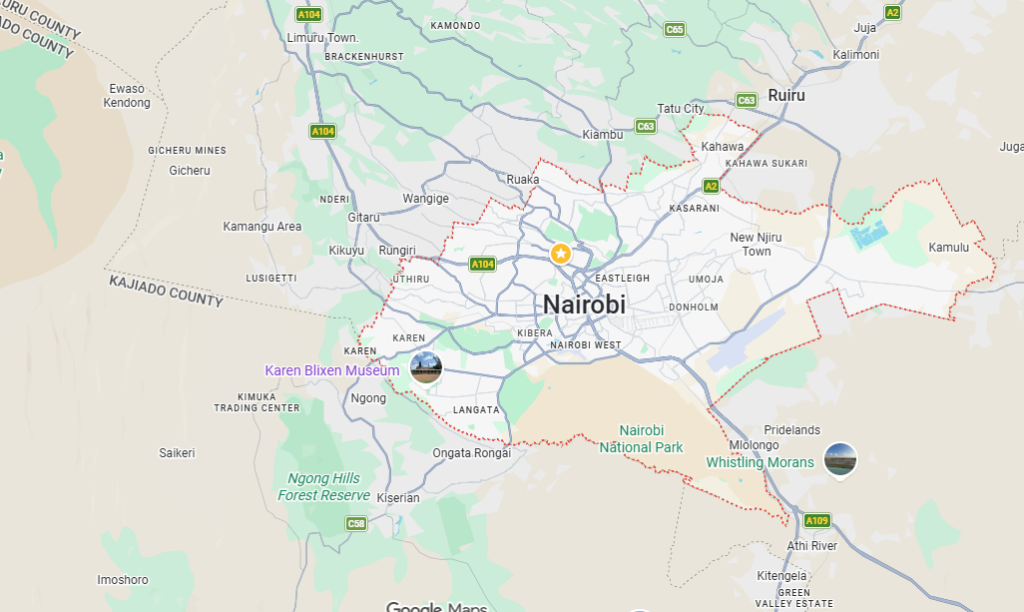
Official name: Nairobi City County / County Government of Nairobi
County code: 047
County headquarters: City Hall, Nairobi
Region: Nairobi Region (formerly Nairobi Province)
Area: 696.1 square kilometres according to the 2019 Kenya Population and Housing Census.
2019 population: 4,397,073 people comprising 2,192,452 males, 2,204,376 females and 245 intersex persons, according to the Kenya National Bureau of Statistics (KNBS).
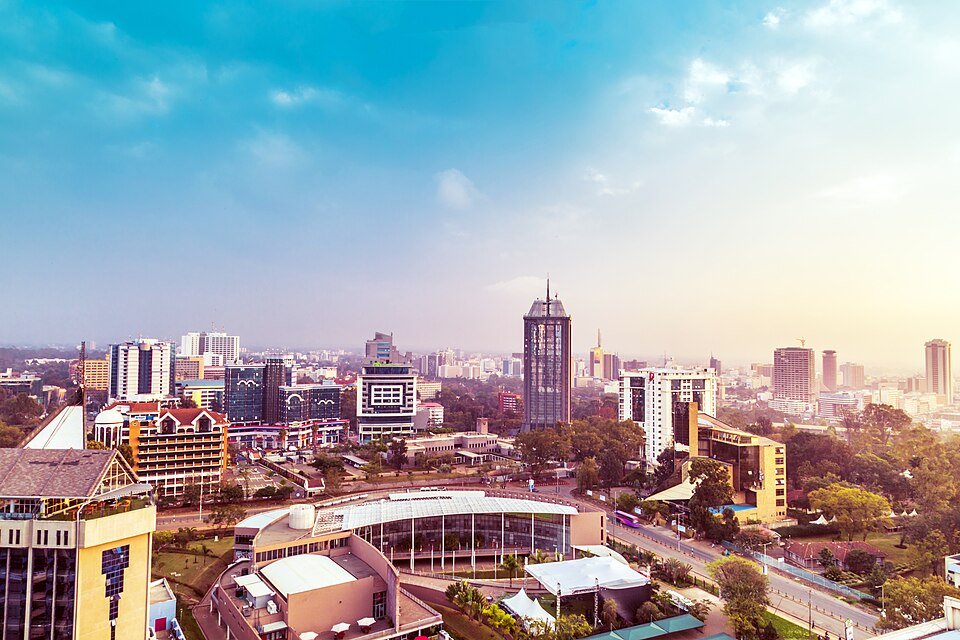
Nairobi is Kenya’s capital city and the country’s political, economic and financial centre. It is also East Africa’s largest commercial hub and one of Africa’s fastest-growing metropolitan economies. As Kenya’s only city-county, Nairobi hosts the headquarters of the national government, Parliament, the Supreme Court, hundreds of multinational corporations, diplomatic missions and regional offices of international organisations.
The county is unique globally for being the only capital city with a fully-fledged national park located within its boundaries. It is also home to the United Nations Office at Nairobi (UNON), making it the only city in Africa hosting a UN headquarters.
Nairobi’s identity is shaped by its multicultural population, extensive transport networks, thriving technology sector—popularly branded the “Silicon Savannah”—and its role as Kenya’s principal centre for commerce, innovation, education and culture.
2. Political and Administrative Structure
Nairobi City County has 17 parliamentary constituencies and 85 electoral wards, the highest number of wards of any county in Kenya.
A. Westlands Constituency – 5 Wards
- Kitisuru
- Parklands/Highridge
- Karura
- Kangemi
- Mountain View
B. Dagoretti North Constituency – 5 Wards
- Kilimani
- Kawangware
- Gatina
- Kileleshwa
- Kabiro
C. Dagoretti South Constituency – 5 Wards
- Mutuini
- Ngando
- Riruta
- Uthiru/Ruthimitu
- Waithaka
D. Lang’ata Constituency – 5 Wards
- Karen
- Nairobi West
- Mugumo-ini
- South C
- Nyayo Highrise
E. Kibra Constituency – 5 Wards
- Laini Saba
- Lindi
- Makina
- Woodley/Kenyatta Golf Course
- Sarang’ombe
F. Roysambu Constituency – 5 Wards
- Githurai
- Kahawa West
- Zimmerman
- Roysambu
- Kahawa West
G. Kasarani Constituency – 5 Wards
- Clay City
- Mwiki
- Kasarani
- Njiru
- Ruai
H. Ruaraka Constituency – 5 Wards
- Baba Dogo
- Utalii
- Mathare North
- Lucky Summer
- Korogocho
I. Embakasi South Constituency – 5 Wards
- Imara Daima
- Kwa Njenga
- Kwa Reuben
- Pipeline
- Kware
J. Embakasi North Constituency – 5 Wards
- Kariobangi North
- Dandora Area I
- Dandora Area II
- Dandora Area III
- Dandora Area IV
K. Embakasi Central Constituency – 5 Wards
- Kayole North
- Kayole Central
- Kayole South
- Komarock
- Matopeni/Spring Valley
L. Embakasi East Constituency – 5 Wards
- Upper Savanna
- Lower Savanna
- Embakasi
- Utawala
- Mihang’o
M. Embakasi West Constituency – 5 Wards
- Umoja I
- Umoja II
- Mowlem
- Kariobangi South
- Innercore
N. Makadara Constituency – 5 Wards
- Maringo/Hamza
- Viwandani
- Harambee
- Makongeni
- Kaloleni
O. Kamukunji Constituency – 5 Wards
- Pumwani
- Eastleigh North
- Eastleigh South
- Airbase
- California
P. Starehe Constituency – 5 Wards
- Nairobi Central
- Ngara
- Pangani
- Ziwani/Kariokor
- Landimawe
Q. Mathare Constituency – 5 Wards
- Hospital
- Mabatini
- Huruma
- Ngei
- Mlango Kubwa
Total: 17 constituencies and 85 wards.
Nairobi has a unique administrative arrangement because, besides the county government, the national government administers the city through sub-counties, divisions, locations and sub-locations headed by Regional Commissioners, County Commissioners, Deputy County Commissioners, Chiefs and Assistant Chiefs. This dual governance structure reflects Nairobi’s role as Kenya’s capital and seat of national government.
3. Current Political Leadership
| Position | Office Holder |
|---|---|
| Governor | Hon. Johnson Sakaja Johnson |
| Deputy Governor | Hon. James Muchiri |
| Senator | Hon. Edwin Sifuna |
| Woman Representative | Hon. Esther Passaris |
Johnson Sakaja was elected Governor during the August 2022 General Election on a United Democratic Alliance (UDA) ticket and assumed office on 25 August 2022. His administration has prioritised urban infrastructure, school feeding programmes, digitisation of county services and improved waste management.
Senator Edwin Sifuna represents Nairobi County in the Senate while Esther Passaris serves as the elected Woman Representative in the National Assembly.
4. Members of Parliament
| Constituency | Member of Parliament | Party |
|---|---|---|
| Westlands | Tim Wanyonyi Wetang’ula | ODM |
| Dagoretti North | Beatrice Elachi | ODM |
| Dagoretti South | John Kiarie | UDA |
| Lang’ata | Phelix Odiwuor (Jalang’o) | ODM |
| Kibra | Peter Orero | ODM |
| Roysambu | Augustine Mwafrika Kamande | UDA |
| Kasarani | Ronald Karauri | Independent |
| Ruaraka | TJ Kajwang’ | ODM |
| Embakasi South | Julius Mawathe | Wiper |
| Embakasi North | James Gakuya | UDA |
| Embakasi Central | Benjamin Gathiru (Major Donk) | UDA |
| Embakasi East | Babu Owino | ODM |
| Embakasi West | Mark Mwenje | Jubilee |
| Makadara | George Aladwa | ODM |
| Kamukunji | Yusuf Hassan | Jubilee |
| Starehe | Amos Mwago | Jubilee |
| Mathare | Anthony Oluoch | ODM |
Nairobi’s parliamentary delegation reflects the city’s political diversity. Unlike many counties that overwhelmingly support one political coalition, Nairobi consistently elects leaders from multiple parties, making it one of Kenya’s most competitive electoral battlegrounds.
5. Economy and Gross County Product
Nairobi is Kenya’s undisputed economic powerhouse and the largest metropolitan economy in East Africa. According to the Kenya National Bureau of Statistics (KNBS) Gross County Product (GCP) Series, the county consistently accounts for more than one-quarter of Kenya’s total economic output, making it the country’s most productive county by a significant margin.
Nairobi’s Gross County Product (Nominal)
| Year | Gross County Product |
|---|---|
| 2019 | KSh 2.84 trillion |
| 2020 | KSh 3.02 trillion |
| 2021 | KSh 3.39 trillion |
| 2022 | KSh 3.78 trillion |
| 2023 | KSh 4.19 trillion |
Source: KNBS Gross County Product 2025 Series
The 2023 GCP estimates show Nairobi contributed approximately 27.5% of Kenya’s Gross Domestic Product, underlining its dominance in finance, commerce, manufacturing, transport and professional services.
The economic structure
Unlike most counties where agriculture remains the leading economic activity, Nairobi’s economy is overwhelmingly service-driven.
Its economy rests on six major pillars:
- Financial and insurance services
- Wholesale and retail trade
- Information and Communication Technology (ICT)
- Manufacturing
- Transport and logistics
- Real estate and construction
The county hosts the headquarters of nearly all major Kenyan banks, insurance companies, listed firms at the Nairobi Securities Exchange (NSE), regional headquarters of multinational corporations and numerous United Nations agencies.
Nairobi has also emerged as Africa’s leading innovation ecosystem, earning the nickname “Silicon Savannah” due to its vibrant technology start-up scene, digital innovation hubs and fintech ecosystem led by mobile money platforms such as M-Pesa.
The county remains Kenya’s largest employment centre, attracting workers and entrepreneurs from every region of the country.
6. Agriculture: Kenya’s Urban Farming Capital
Although Nairobi is Kenya’s most urbanised county, agriculture remains an important economic activity, particularly in peri-urban areas.
Urban agriculture has expanded significantly as households seek food security and supplementary income.
Major agricultural activities
- Urban horticulture
- Greenhouse farming
- Vertical sack farming
- Hydroponic vegetable production
- Mushroom farming
- Ornamental flower production
- Fruit farming
- Kitchen gardens
Vegetables such as sukuma wiki (kale), spinach, tomatoes, onions and indigenous vegetables are widely grown in areas including Ruai, Njiru, Kasarani, Karen and Dagoretti.
Urban agriculture also supports schools, institutions and informal settlements through community gardens and rooftop farming initiatives.
Although its contribution to Nairobi’s GDP is relatively small, agriculture plays a critical role in food security and nutrition.
7. Livestock
Livestock farming in Nairobi is characterised by intensive commercial production rather than extensive grazing.
The county has developed sophisticated value chains for milk, poultry, pork and eggs, supported by ready urban markets.
Major livestock enterprises include:
- Dairy cattle (zero-grazing systems)
- Commercial poultry farming
- Pig farming
- Rabbit farming
- Fish farming
- Goat keeping
- Beekeeping
Commercial poultry farms located in Ruai, Kasarani and Njiru supply eggs and broiler meat to supermarkets, hotels and restaurants across the city.
Peri-urban dairy farming is common in Karen, Dagoretti, Lang’ata and parts of Embakasi, where farmers use improved breeds and zero-grazing systems.
Small-scale aquaculture projects have also expanded, particularly through recirculating aquaculture systems and fish ponds established under county and national government programmes.
8. Key Industries
Nairobi hosts the highest concentration of industries in Kenya.
The county’s industrial landscape ranges from heavy manufacturing to high-end financial services and cutting-edge technology.
Major industries include:
- Financial services
- Banking
- Insurance
- ICT and software development
- Manufacturing
- Food and beverage processing
- Pharmaceuticals
- Construction
- Real estate
- Textile and apparel manufacturing
- Printing and publishing
- Logistics and warehousing
- Tourism and hospitality
- Professional and business services
- Media and creative industries
The Industrial Area, established during the colonial era, remains Kenya’s largest manufacturing zone and accommodates hundreds of factories producing cement, steel, plastics, chemicals, processed foods, beverages, pharmaceuticals and consumer goods.
The county also hosts several Export Processing Zones (EPZs), technology parks and innovation hubs including iHub, Nairobi Garage and Konza-related innovation linkages.
As Kenya’s financial capital, Nairobi is home to the Central Bank of Kenya, Nairobi Securities Exchange, Capital Markets Authority and headquarters of nearly all commercial banks.
9. Population
The 2019 Kenya Population and Housing Census recorded Nairobi’s population at 4,397,073 people, making it Kenya’s most populous county.
Population composition:
| Category | Population |
|---|---|
| Male | 2,192,452 |
| Female | 2,204,376 |
| Intersex | 245 |
| Total | 4,397,073 |
The county has a population density exceeding 6,300 persons per square kilometre, the highest in Kenya.
During working hours, Nairobi’s daytime population is estimated to exceed 5.5 million due to commuters travelling daily from Kiambu, Machakos and Kajiado counties.
Nairobi’s population is exceptionally diverse, representing every ethnic community in Kenya as well as large expatriate populations from across Africa, Asia, Europe and North America.
Rapid urbanisation has created significant opportunities but also challenges including housing shortages, traffic congestion, waste management, informal settlements and pressure on public infrastructure.
10. Education and School Enrolment
Nairobi possesses Kenya’s largest concentration of educational institutions, ranging from early childhood centres to internationally recognised universities.
The county consistently records high school enrolment levels owing to its urban setting and extensive educational infrastructure.
School enrolment
According to KIPPRA and KNBS:
| Indicator | Estimate |
|---|---|
| Net Primary Enrolment | 91–94% |
| Primary to Secondary Transition | 78–84% |
| Secondary Enrolment | Approximately 80% |
The county government has strengthened education through:
- ECDE expansion
- Construction of new classrooms
- School feeding programmes
- Digital learning initiatives
- Bursary programmes
One of the flagship initiatives is the Dishi na County School Feeding Programme, which provides subsidised meals to thousands of learners attending public primary schools in informal settlements.
Higher education
Nairobi is Kenya’s premier university city.
Major institutions include:
- University of Nairobi
- Kenyatta University
- Technical University of Kenya
- Strathmore University
- Daystar University
- United States International University–Africa (USIU)
- Africa Nazarene University
- Multimedia University
- Kenya School of Government
- Kenya Medical Training College (KMTC)
The county also hosts numerous TVET institutions, research centres and professional colleges.
11. Health Infrastructure
Nairobi is Kenya’s leading healthcare hub and serves patients from across the country and the wider East African region.
National Referral Hospitals
- Kenyatta National Hospital (Level 6)
- Kenyatta University Teaching, Referral and Research Hospital (Level 6)
These facilities provide highly specialised services including:
- Cardiac surgery
- Neurosurgery
- Oncology
- Renal medicine
- Organ transplantation
- Intensive care
- Trauma care
Major County Hospitals
- Mama Lucy Kibaki Hospital
- Mbagathi Hospital
- Pumwani Maternity Hospital
- Mutuini Hospital
- Mama Margaret Uhuru Hospital
- Kibra Hospital
- Dagoretti Hospital
Major Private Hospitals
- Aga Khan University Hospital
- Nairobi Hospital
- MP Shah Hospital
- Karen Hospital
- Gertrude’s Children’s Hospital
- Mater Hospital
Nairobi also hosts the headquarters of the Ministry of Health, the Kenya Medical Research Institute (KEMRI) and numerous international health organisations, reinforcing its status as Kenya’s medical capital.
12. History of County Political Leadership
Since the introduction of devolution under Kenya’s 2010 Constitution, Nairobi has experienced one of the most turbulent political histories among Kenya’s 47 counties. Unlike many counties that have enjoyed relatively stable transitions, Nairobi has witnessed impeachments, court battles, the temporary transfer of county functions to the national government, and rapid changes in leadership.
Governors
1. Dr. Evans Kidero (2013–2017)
Dr. Evans Kidero became Nairobi’s first governor following the inaugural county elections held in March 2013. A former Managing Director of Mumias Sugar Company, he oversaw the transition from the defunct Nairobi City Council to the new devolved county government.
His administration focused on rebuilding county institutions, improving revenue collection, modernising health services and initiating urban infrastructure projects. However, it also faced criticism over traffic congestion, waste management and service delivery challenges associated with a rapidly growing city.
2. Mike Mbuvi Sonko (2017–2020)
Mike Sonko was elected Nairobi’s second governor in 2017 after defeating Evans Kidero.
His tenure was characterised by highly publicised welfare programmes, emergency medical assistance and visible engagement with residents. However, it was equally marked by persistent conflicts with the County Assembly, corruption allegations and management disputes.
In December 2020, the Senate upheld his impeachment on charges including gross misconduct, abuse of office and violations of the Constitution, making him one of Kenya’s first governors to be removed from office through impeachment.
Nairobi Metropolitan Services (2020–2022)
Following a Deed of Transfer signed between Governor Sonko and the National Government in February 2020, several critical county functions—including health services, transport, planning and public works—were transferred to the Nairobi Metropolitan Services (NMS).
NMS was headed by Lieutenant General Mohamed Badi, who supervised major infrastructure projects, road rehabilitation, market construction, hospital upgrades, public space regeneration and improvements in waste management.
Although NMS was not an elected county government, it played a significant role in Nairobi’s administration until its mandate expired in 2022.
3. Ann Kananu Mwenda (2021–2022)
Ann Kananu became Nairobi’s third governor after a prolonged legal process following Sonko’s impeachment.
She became the first woman to serve as Governor of Nairobi City County, although her administration operated alongside the Nairobi Metropolitan Services for much of its tenure.
Her administration focused on restoring county operations and preparing for the transition back to a fully elected county government.
4. Johnson Sakaja Johnson (2022–Present)
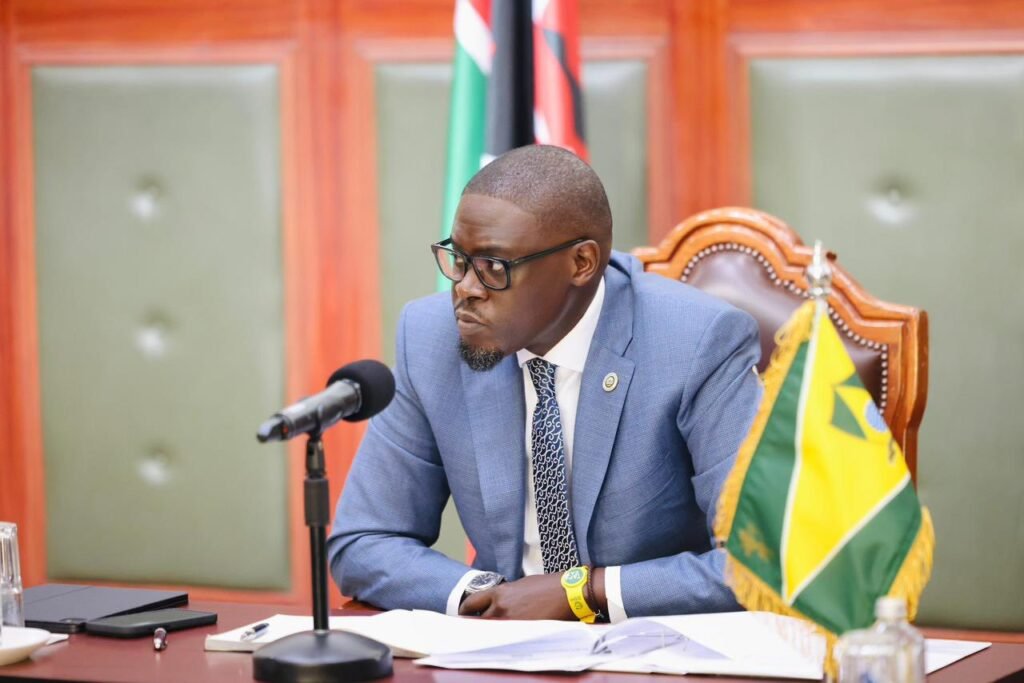
Johnson Sakaja was elected Nairobi’s fourth governor during the 2022 General Election.
His administration has prioritised:
- Urban regeneration
- Affordable housing partnerships
- Digitisation of county services
- School feeding programmes
- Revenue enhancement
- Modernisation of markets
- Improved waste management
- Public transport reforms
One of his flagship initiatives is the Dishi na County School Feeding Programme, which has significantly expanded access to subsidised meals for learners in public schools.
Senators
| Period | Senator |
|---|---|
| 2013–2017 | Gideon Mbuvi Sonko |
| 2017–2022 | Johnson Sakaja |
| 2022–Present | Edwin Sifuna |
Edwin Sifuna currently serves as Nairobi Senator and is also the Secretary-General of the Orange Democratic Movement (ODM), making him one of Kenya’s most prominent opposition figures.
Women Representatives
| Period | Woman Representative |
|---|---|
| 2013–Present | Esther Passaris |
Esther Passaris has represented Nairobi since the position was first established under the 2010 Constitution. She is known nationally for championing women’s rights, social protection and legislation addressing gender-based violence.
13. Nairobi’s Political and Social “Quirks”
Few counties encapsulate Kenya’s political, economic and cultural diversity as vividly as Nairobi. The county possesses several distinctive characteristics that set it apart from the rest of the country.
1. Kenya’s Only City-County
Nairobi is the only county that is simultaneously Kenya’s capital city, county government and principal metropolitan area. It hosts all three arms of the national government as well as diplomatic missions, regional organisations and international institutions.
2. Africa’s UN Capital
Nairobi is the only city in Africa hosting a United Nations headquarters.
The United Nations Office at Nairobi (UNON), together with UN Environment Programme (UNEP) and UN-Habitat, makes Nairobi one of only four official UN headquarters worldwide, alongside New York, Geneva and Vienna.
3. The “Silicon Savannah”
Nairobi has emerged as Africa’s leading technology and innovation ecosystem.
Global technology firms including Google, Microsoft, IBM, Visa, Oracle, Cisco and numerous start-ups have established regional headquarters in the city, supported by innovation hubs such as iHub and Nairobi Garage.
4. A National Park Inside a Capital City
Nairobi National Park is the world’s only national park bordering the skyline of a major capital city.
Visitors can observe lions, rhinos, giraffes, buffaloes and cheetahs against the backdrop of Nairobi’s skyscrapers—a combination found nowhere else in the world.
5. Kenya’s Political Battleground
No county better reflects Kenya’s national political landscape than Nairobi.
The city’s ethnically and socially diverse population means elections are fiercely contested, with parliamentary seats frequently divided among multiple political parties.
As a result, Nairobi is often regarded as Kenya’s premier political swing county.
6. The City That Never Sleeps
Nairobi’s economy operates around the clock.
Financial markets, transport services, manufacturing plants, entertainment venues, logistics companies and international businesses function continuously, reinforcing Nairobi’s status as East Africa’s commercial capital.
14. Main Annual and Recurring Events
Nairobi International Trade Fair
Organised annually by the Agricultural Society of Kenya (ASK), the Nairobi International Trade Fair is Kenya’s largest agricultural and industrial exhibition. It attracts exhibitors from across Africa and showcases innovations in agriculture, manufacturing, technology and commerce.
Nairobi City Marathon
Launched in 2022, the Nairobi City Marathon is Africa’s first marathon run largely along an expressway. The event attracts elite international athletes, amateur runners and thousands of spectators.
Nairobi Restaurant Week
This annual culinary festival highlights Nairobi’s vibrant food scene by offering curated menus across participating restaurants. It has become one of the city’s leading lifestyle events.
Koroga Festival
Koroga Festival celebrates Kenyan music, cuisine and culture, featuring performances by local and international artists alongside food vendors and cultural exhibitions.
Blankets & Wine
One of East Africa’s best-known music festivals, Blankets & Wine promotes African music, fashion, art and creative entrepreneurship.
Nairobi Fashion Week
The event showcases Kenyan and African designers while promoting Nairobi’s growing fashion industry.
Safari Rally Kenya
Although the World Rally Championship stages extend beyond Nairobi, the capital serves as the ceremonial host city, drawing thousands of local and international motorsport enthusiasts.
15. Tourism: What Makes Nairobi Different?
1. Nairobi National Park
Located only a few kilometres from the Central Business District, Nairobi National Park is the world’s only wildlife park bordering a capital city.
The park is renowned for its black rhino sanctuary, lions, cheetahs, giraffes, buffaloes and over 400 bird species.
Why it stands out: Visitors can photograph wild animals against Nairobi’s iconic skyline.
2. David Sheldrick Wildlife Trust
The David Sheldrick Wildlife Trust operates one of the world’s most successful elephant orphan rescue and rehabilitation programmes.
Why it stands out: It offers visitors a rare opportunity to observe orphaned elephants being rehabilitated before their eventual release into the wild.
3. Giraffe Centre
Situated in Karen, the Giraffe Centre was established to conserve the endangered Rothschild’s giraffe.
Why it stands out: Visitors can hand-feed giraffes from elevated platforms while learning about conservation.
4. Nairobi National Museum
The museum houses Kenya’s most comprehensive collections covering archaeology, ethnography, natural history, geology and art.
Why it stands out: It preserves globally significant human evolution discoveries associated with the Leakey family.
5. Karura Forest
Karura Forest is one of Africa’s largest protected urban forests.
Why it stands out: It offers walking trails, cycling routes, caves, waterfalls and rich biodiversity within minutes of Nairobi’s city centre.
6. Bomas of Kenya
Bomas of Kenya celebrates the country’s cultural diversity through traditional architecture, music and dance performances.
Why it stands out: It provides visitors with an immersive introduction to Kenya’s more than 40 ethnic communities.
7. Nairobi Railway Museum
The museum preserves the history of the Kenya-Uganda Railway and East Africa’s railway heritage.
Why it stands out: It showcases vintage locomotives and tells the story of the railway that gave birth to Nairobi.
8. Uhuru Park
Located in the heart of the city, Uhuru Park is one of Nairobi’s most recognisable public spaces.
Why it stands out: It has hosted major national celebrations, political rallies and public gatherings since independence.
16. Key Personalities from Nairobi
Tom Mboya
One of Kenya’s foremost independence leaders and the country’s first Minister for Economic Planning after independence. His vision helped shape modern Nairobi, and his statue stands along Moi Avenue in the city centre.
Prof. Wangari Maathai
The first African woman to receive the Nobel Peace Prize (2004), Prof. Maathai founded the Green Belt Movement and championed environmental conservation, democracy and women’s rights. Her campaigns helped save Karura Forest and Uhuru Park from development.
Richard Leakey
The internationally acclaimed conservationist and paleoanthropologist headed the Kenya Wildlife Service and contributed significantly to global understanding of human evolution through discoveries made in Kenya.
Eliud Kipchoge
Widely regarded as the greatest marathon runner in history, Kipchoge trained extensively in Kenya and made global headlines after becoming the first person to complete the marathon distance in under two hours during the INEOS 1:59 Challenge.
Larry Madowo
An award-winning journalist and CNN International correspondent, Larry Madowo began his media career in Nairobi before becoming one of Africa’s most recognised international broadcasters.
Ngũgĩ wa Thiong’o
One of Africa’s most celebrated authors and literary scholars, Ngũgĩ’s work on decolonisation, language and African literature has earned worldwide recognition. Nairobi has featured prominently in many of his writings.
Chris Kirubi
The late businessman and industrialist was among Kenya’s most influential entrepreneurs, with major investments in manufacturing, media, real estate and finance headquartered in Nairobi.
Dedan Kimathi
Although born in Nyeri, Field Marshal Dedan Kimathi remains one of Nairobi’s most celebrated freedom heroes. His monument along Kimathi Street commemorates his leadership during the Mau Mau struggle for independence.
17. The Nairobi Paradox
Nairobi is Kenya’s smallest county by area but by far its largest economic engine, generating more than a quarter of the country’s Gross County Product. It serves as the headquarters of the national government, hundreds of multinational corporations, regional financial institutions and the United Nations’ headquarters in Africa.
Its strengths include:
- Kenya’s largest county economy valued at over KSh4.19 trillion.
- East Africa’s leading financial and commercial hub.
- Headquarters of UNEP and UN-Habitat.
- The region’s largest concentration of universities, hospitals and research institutions.
- A thriving technology ecosystem known as the Silicon Savannah.
- The world’s only capital city with a national park within its boundaries.
Yet Nairobi also illustrates one of Kenya’s greatest development contradictions. Alongside world-class business districts such as Upper Hill, Westlands and Kilimani are some of Africa’s largest informal settlements, including Kibera, Mathare and Mukuru. The county combines immense wealth creation with persistent challenges related to housing, traffic congestion, waste management, unemployment and inequality.
The defining question for Nairobi over the coming decade is how to sustain rapid economic growth while creating a more inclusive, efficient and liveable city for its expanding population.


