
Nairobi’s Central Business District (CBD) is undergoing one of its most ambitious urban renewal programmes in recent years, with extensive upgrades to pedestrian walkways, roads and public spaces steadily transforming the face of Kenya’s capital.
The ongoing works, spearheaded by the Nairobi City County Government under Governor Johnson Sakaja, have turned several sections of the city centre into active construction zones as contractors work to modernise ageing infrastructure and improve mobility for residents, workers and visitors.
Among the latest projects is the rehabilitation of Kimathi Street, which joins a growing list of roads and pedestrian corridors earmarked for upgrades under the county’s wider plan to create a cleaner, safer and more attractive city.
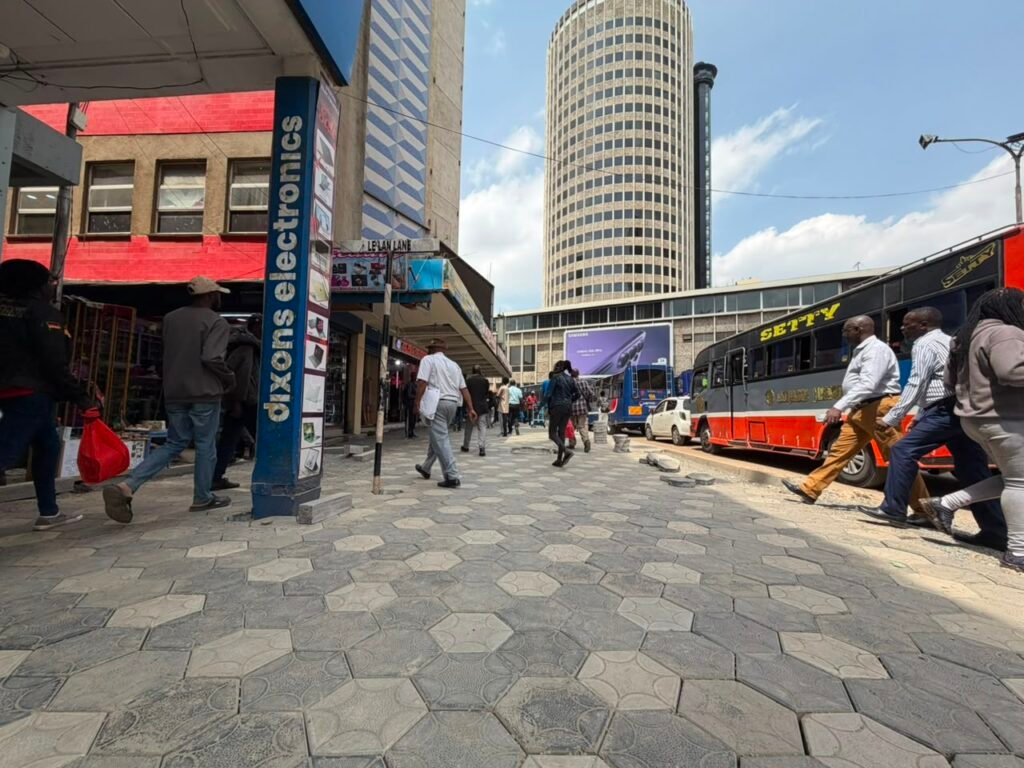
Newly upgraded pedestrian walkways along Haile Selassie Avenue in Nairobi’s CBD as part of Governor Johnson Sakaja’s urban renewal programme. Photo: Nairobi City County.
Key CBD Corridors Already Showing Results
Several sections of the CBD have already witnessed visible improvements, including areas around Ambassador, Taifa Lane, the National Archives, Moi Avenue and Haile Selassie Avenue.
One of the standout projects has been the transformation of Haile Selassie Avenue, where modern tiled walkways have replaced dusty and worn-out pedestrian paths. The improvements have enhanced movement for thousands of commuters and traders accessing Wakulima Market, Muthurwa Market, the Easy Coach terminus and nearby commercial centres.
Residents say the changes have improved both comfort and safety for pedestrians navigating some of the city’s busiest corridors.
“The city looks much better. The upgraded walkways have made movement easier and more comfortable for pedestrians. We hope the programme continues across more parts of Nairobi,” said city resident Edward Ichigo.
Mary Wanjiku, another Nairobi resident, noted that the ongoing works are helping the capital move closer to the standards seen in leading global cities.
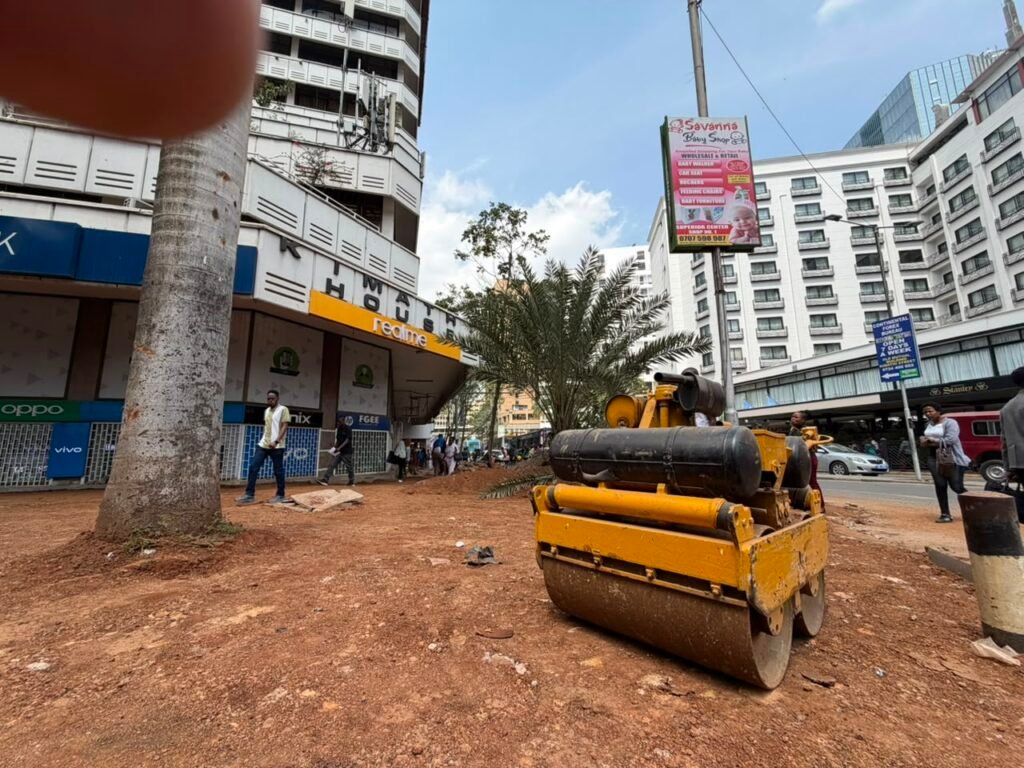
Construction works continue on walkways and public spaces within Nairobi’s Central Business District to improve accessibility and urban aesthetics. Photo: Nairobi City County.
Beyond Roads and Walkways
County officials say the current upgrades are only the first phase of a broader urban transformation strategy.
Upcoming works will include the installation of public benches, landscaped flower beds, modern street lighting and smart waste bins aimed at improving the overall appearance and functionality of public spaces.
Governor Sakaja said the initiative is designed not only to improve infrastructure but also to enhance the everyday experience of city residents.
“A street is more than just concrete and tarmac. Lighting, greenery, flowers and public amenities all contribute to creating a welcoming environment. We want Nairobians to enjoy their city and take pride in it,” Sakaja said.

Governor Johnson Sakaja inspects ongoing road and walkway rehabilitation projects designed to transform Nairobi into a cleaner and more pedestrian-friendly city. Photo: Nairobi City County.
Vision for a Modern Capital
According to the county government, the restoration programme is being implemented in phases across the CBD, with additional improvements planned along major corridors including Kimathi Street, Moi Avenue and the Nation Centre area.
The projects are expected to improve accessibility, enhance security through better lighting, and support economic activity by creating a more welcoming environment for businesses, investors and tourists.
Officials believe the upgraded infrastructure will boost foot traffic, improve urban mobility and contribute to Nairobi’s competitiveness as a regional business hub.
Building a Cleaner and Greener Nairobi
As construction progresses, Nairobi residents are increasingly witnessing tangible changes in the city’s landscape.
County leaders say the long-term goal is to restore Nairobi’s status as a world-class African capital through investments in modern infrastructure, public amenities and sustainable urban development.
With several projects already completed and others advancing steadily, the transformation of the CBD signals a new chapter in the city’s efforts to create a cleaner, greener and more accessible urban environment for millions of residents and visitors.

 is undergoing one of its most ambitious urban renewal programmes in recent years, with extensive upgrades to pedestrian walkways, roads and public spaces steadily transforming the face of Kenya’s capital.)