
Graduates from Technical and Vocational Education and Training (TVET) institutions will no longer wear traditional academic gowns during graduation ceremonies following a new directive by the government.
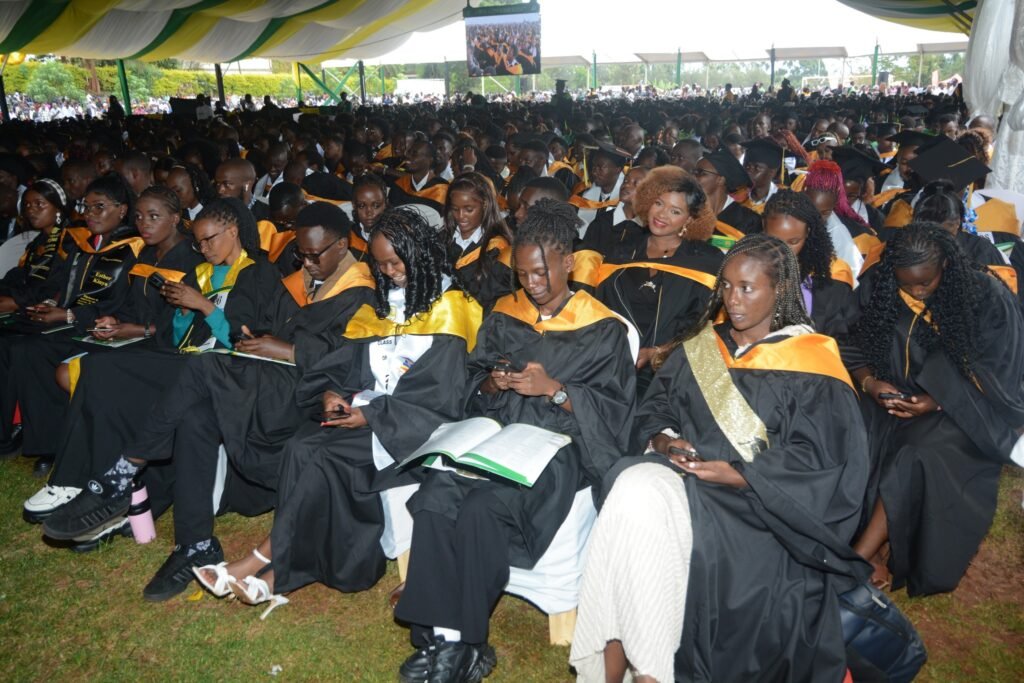
Principal Secretary in the State Department for TVET, Dr Esther Muoria, has instructed all institutions to design and adopt attire that reflects the specific technical disciplines pursued by trainees.
Shift to discipline-based graduation attire
Speaking during the 6th graduation ceremony at Nyeri National Polytechnic, Dr Muoria said the move is aimed at ensuring graduates are easily identifiable by their area of specialization.
Under the new directive, trainees will graduate in professional work attire aligned with their courses. For instance, mechanics will wear overalls, while culinary students will don chef uniforms.
“Going forward, we are not going to be graduating our graduates in gowns like we have been doing. Gowns are academic and we are technical,” said Dr Muoria.
She noted that the long-standing practice of wearing gowns—borrowed from universities—does not reflect the practical and skills-oriented nature of TVET training.
According to the PS, the change will help promote the visibility of technical skills and better communicate the value of vocational training to the public.
Government ramps up support for TVET sector
The directive comes as the government intensifies efforts to strengthen the TVET sector amid a sharp rise in student enrolment.
Dr Muoria revealed that the number of TVET trainees has grown significantly from 350,000 in 2022 to 850,000 currently.
To bridge the gap, the government plans to recruit 1,000 additional trainers this year and continue upgrading infrastructure and training equipment across institutions.
She added that the retooling of trainers under the Competency-Based Education and Training (CBET) framework is ongoing at the Kenya School of TVET.

“The Kenya School of TVET has received an overflow of applications from trainers seeking CBET training. We have now allowed them to enroll in other reputable institutions to ensure all trainers are up to speed,” she said.
Institutions urged to embrace self-reliance
At the same time, the PS challenged TVET institutions to reduce reliance on government funding by exploring alternative revenue streams.
She pointed out that limited public resources must be shared across multiple sectors, urging institutions to adopt cost-saving measures such as solar energy and rainwater harvesting.
Dr Muoria also called on TVETs to fully utilise their internal capacity, especially in construction and production.
“We have already directed that buildings in our institutions be constructed by staff and students in Civil and Building departments. There is no reason to outsource what we can do ourselves,” she said.
She emphasized that leveraging in-house skills will not only cut costs but also reinforce practical learning among trainees.
A total of 2,500 graduands were awarded certificates and diplomas in various technical and artisan courses during the ceremony.


