
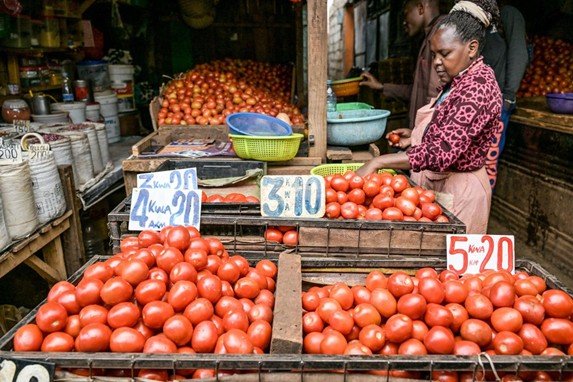
Tomatoes, a staple in Kenyan households, have become significantly more expensive, with some retailing between Sh25 and Sh30 each in various parts of the country.
What was once an everyday kitchen essential is now placing pressure on household budgets, reflecting a broader disruption in the food supply chain.
Heavy Rains and Flooding Hit Production
The current surge in prices is largely attributed to ongoing heavy rains across the country, which have disrupted farming activities.
Excess rainfall has damaged crops, with tomatoes being particularly vulnerable to waterlogging and disease. In many regions, farms have been flooded, leading to rotting produce and reduced harvests.
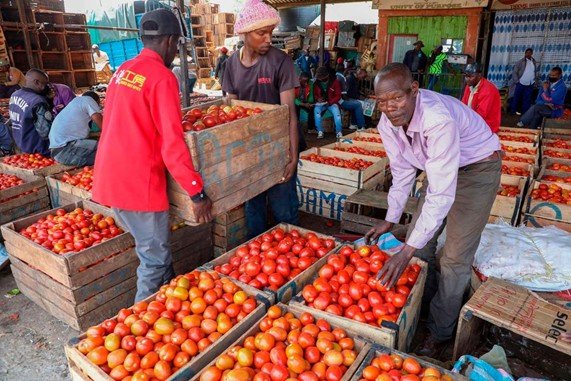
Fresh tomatoes displayed in a local market as prices surge due to reduced supply.
Supply Shortages Push Prices Higher
With production affected, the supply of tomatoes to markets has dropped sharply, triggering a steady rise in prices.
Recent data indicates that tomato prices increased from about Sh99.60 per kilogram in March to approximately Sh108.60 in April 2026.
At the wholesale level, the situation is even more pronounced, with a crate of tomatoes rising from about Sh6,000–Sh8,000 to as high as Sh17,000–Sh18,000.
Transport Challenges Add to Costs
Flooded roads and damaged infrastructure have made it difficult to transport produce from farms to urban markets.
In many cases, delays and increased transport costs are passed on to consumers, further inflating retail prices.
Even where tomatoes are available in rural areas, getting them into towns like Nairobi has become more challenging.
Seasonal Patterns Behind the Price Cycle
The current spike is also linked to earlier market trends. At the beginning of the year, an oversupply of tomatoes caused prices to drop sharply, forcing some farmers to incur losses.
As a result, many reduced planting in subsequent cycles. Now, combined with adverse weather conditions, that decision has led to a significant shortage.
A Recurring Problem
Experts note that the fluctuation in tomato prices is not new but follows a recurring cycle driven by seasonal production patterns, weather shocks and structural gaps in storage and distribution.
Without improved farming practices, better infrastructure and more stable supply systems, such price swings are likely to continue affecting both farmers and consumers.


