
In a move that offers temporary breathing room for Kenyan households and businesses, the Central Bank of Kenya (CBK) has decided to retain its benchmark lending rate—the Central Bank Rate (CBR)—at 8.75 per cent.
The decision was announced following a high-stakes Monetary Policy Committee (MPC) meeting on Tuesday, chaired by CBK Governor Dr. Kamau Thugge. It marks a delicate balancing act by the regulator to support domestic economic recovery while shielding Kenyans from a brutal wave of imported inflation triggered by the ongoing conflict between the US, Israel, and Iran.
For thousands of Kenyans tracking the “CBK benchmark lending rate” online, the stability means one crucial thing: commercial banks are unlikely to raise interest rates on existing and new loans in the immediate term.
The Middle East War threatens Kenyan pockets
The geopolitical shadow looming over Kenya’s economy cannot be ignored. The escalating conflict in the Middle East has disrupted cargo traffic through the critical Strait of Hormuz—a strategic maritime bottleneck through which a third of the world’s global oil supply flows.

These disruptions have caused global oil and transportation costs to spike, filtering directly down to Kenyan fuel pumps.
According to the MPC, Kenya’s overall inflation jumped significantly to 6.7 per cent in May 2026, up from 5.6 per cent in April. This rise is heavily driven by non-core inflation (fuel and gas costs), which skyrocketed to 16 per cent from 13.4 per cent over the same period.
Despite the alarming jump, the CBK chose to hold the benchmark rate steady. The committee noted that the inflation shock is largely “transitory” (temporary) and expected to calm down as long as the conflict does not escalate further. Holding the rate at 8.75 per cent ensures that the government doesn’t unnecessarily choke economic growth while fighting temporary external shocks.
What does this mean for your loans and the cost of living?
When the CBK adjusts the benchmark lending rate, commercial banks typically follow suit.
Encouragingly, previous monetary easing strategies by the CBK have yielded positive results over the past year. Average commercial bank lending rates actually fell to 14.5 per cent in May 2026 from a high of 17.2 per cent in late 2024. This trend has catalyzed private sector credit growth, which grew by 9.3 per cent in May compared to 7.1 per cent in April.
By maintaining the CBR at 8.75 per cent, the CBK ensures that:
Borrowers are protected: Commercial banks will not have an immediate justification to raise your loan repayment premiums.
Credit remains accessible: Businesses can continue tapping into credit lines to manage operating costs.
Banking sector stability: The asset quality in local banks is improving, with the non-performing loans (NPLs) ratio dropping to 15.3 per cent in May from 17.6 per cent last August.
Fuel subsidies and economic downgrades
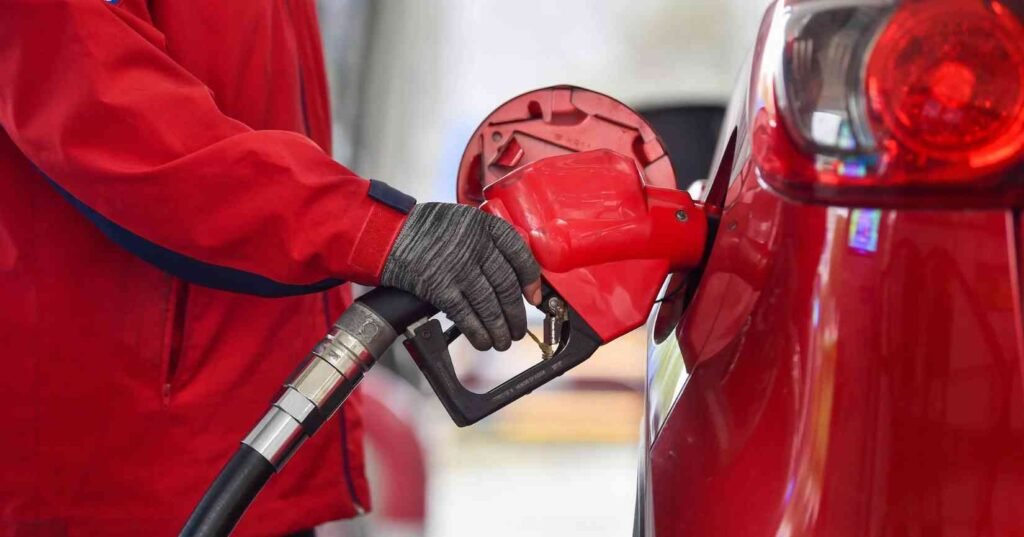
To prevent fuel prices from completely spiraling out of control due to the Iran conflict, the Kenyan government has actively intervened. State cushions—including temporary fuel subsidies and a VAT reduction to 8 per cent—have kept pump prices in Nairobi at Sh214.25 for a litre of Petrol, Sh232.86 for Diesel, and Sh191.38 for Kerosene. Without these interventions, inflation could have easily breached the government’s upper target ceiling of 7.5 per cent.
However, global headwinds have forced the CBK to adjust its broader economic outlook. The regulator revised Kenya’s projected GDP growth for 2026 downward to 4.9 per cent, from an initial estimate of 5.3 per cent. This reflects the reality of a cooling global economy, which is projected to slow to 3.1 per cent this year.
Despite the macroeconomic squeeze, the CBK remains optimistic. Local business leaders and CEOs surveyed by the bank reported robust optimism for the next 12 months, citing a stable Kenya Shilling, infrastructure investments, and favorable weather conditions expected to boost agricultural output.
Looking ahead
The CBK has made it clear that it is keeping a watchful eye on global oil markets. If Middle East tensions boil over further and push domestic inflation past the 7.5 per cent threshold, the regulator will not hesitate to tighten the screws in its next meeting scheduled for August 2026.
For now, Kenyan borrowers can breathe a sigh of relief as the benchmark lending rate holds its ground.


 has retained its benchmark lending rate at 8.75% despite rising fuel inflation driven by the Middle East war. Find out what this means for your bank loans.)