


1. Basic Identity
Official Designation: County Government of Wajir.
County Number: 008.
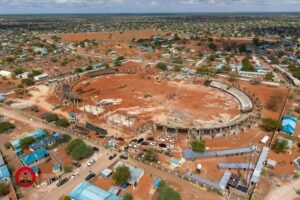
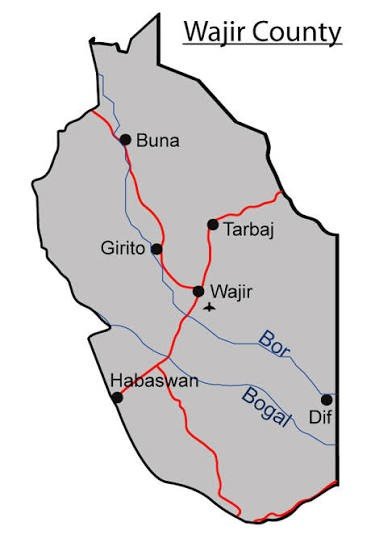
Headquarters: Wajir Municipality, which serves as the administrative and commercial centre of the county.
Geographical Location: Wajir County is located in the former North Eastern Province of Kenya. It borders several counties and also lies close to Kenya’s international borders with Somalia and Ethiopia, giving it an important strategic position in northern Kenya.
Area: The county covers approximately 56,773.1 square kilometres, making it one of the largest counties in Kenya by geographical area.
Wajir is predominantly arid and semi-arid, with extensive pastoral areas and relatively low population density. Its physical environment has strongly influenced settlement patterns, economic activities, access to services and development priorities.
The county’s large geographical size, limited rainfall and dispersed settlements make the provision of roads, water, healthcare and education particularly challenging.
2. Political Units: Constituencies and Wards
Wajir County is divided into 6 constituencies and 30 electoral wards.
Wajir North Constituency
Wajir North has 7 wards:
- Gurar
- Bute
- Korondile
- Malkagufu
- Batalu
- Danaba
- Godoma
Bute is one of the important settlements in the northern part of the county and is also associated with localized agricultural activities.
Wajir South Constituency
Wajir South has 7 wards:
- Benane
- Burder
- Dadaja Bulla
- Habaswein
- Lagboghol South
- Ibrahim Ure
- Diif
The constituency covers a large predominantly pastoral area, with Habaswein serving as one of its important population and administrative centres.
Wajir East Constituency
Wajir East has 4 wards:
- Wagberi
- Township
- Barwago
- Khorof/Harar
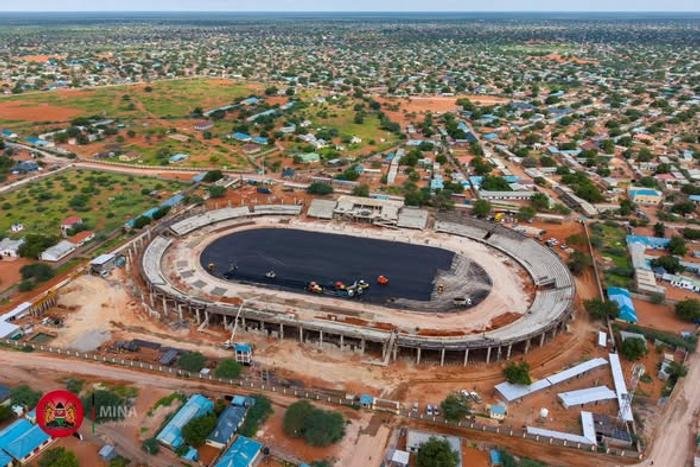
The constituency contains Wajir town, the county’s main administrative, commercial and service centre.
Wajir West Constituency
Wajir West has 5 wards:
- Arbajahan
- Hadado/Athibohol
- Ademasajide
- Ganyure
- Wagalla
The constituency includes areas associated with pastoralism, settlement expansion and important historical events in Wajir’s history.
Tarbaj Constituency
Tarbaj has 4 wards:
- Elben
- Sarman
- Tarbaj
- Wargadud
Tarbaj is predominantly rural and pastoral, with livestock production forming an important part of household livelihoods.
Eldas Constituency
Eldas has 4 wards:
- Eldas
- Della
- Lakoley South/Basir
- Elnur/Tula Tula
Eldas is located in the western part of Wajir and has strong connections to pastoral production and livestock trade.
For national government administrative purposes, Wajir is further divided into 15 administrative sub-counties and 31 divisions.
3. Elected Political Leadership
The current political leadership is associated with the 2022 General Election cycle.
County Executive Leadership

Governor: H.E. Ahmed Abdullahi (Jiir)
Ahmed Abdullahi is the Governor of Wajir County. He previously served as the county’s first governor from 2013 to 2017 and returned to office following the 2022 elections.
His administration has been involved in county development programmes covering infrastructure, healthcare, water, agriculture, livestock, education and public-sector service delivery.
Senatorial Leadership
Senator: Hon. Mohamed Abass Sheikh
The Senator represents Wajir County in the Senate of Kenya, where the county’s interests are represented in matters concerning devolution, legislation, oversight and allocation of resources to counties.
Women’s Representative
Women Representative: Hon. Jehow Fatuma Abdi
The Women Representative represents Wajir County in the National Assembly and focuses on issues affecting women, children, vulnerable households and broader community development.
Members of Parliament
Wajir County has six constituencies, each represented by a Member of Parliament.
- Wajir South: Hon. Adow Aden Mohammed
- Tarbaj: Hon. Barre Hussein Abdi
- Wajir West: Hon. Farah Yussuf Mohamed
- Eldas: Hon. Keynan Wehliye Adan
- Wajir East: Hon. Mohamed Aden Daudi
- Wajir North: Hon. Saney Ibrahim Abdi
The MPs represent constituency interests in the National Assembly, including legislation, national government oversight and constituency-level development programmes.
4. Gross County Product
Wajir’s economy remains relatively small in relation to its very large geographical area and population needs.
According to the Gross County Product information cited in Wajir County’s fiscal planning documents, the county’s nominal Gross County Product is approximately KSh 76.43 billion.
Wajir contributes approximately 0.5 percent of Kenya’s national Gross Value Added.
GCP Per Capita
Wajir’s estimated Gross County Product per capita is approximately KSh 85,600, compared with a national average of more than KSh 309,460.
The relatively low per-capita output reflects the county’s economic structure, high dependence on pastoralism, dispersed settlements, limited industrialisation and relatively low levels of formal economic activity.
Nevertheless, Wajir has recorded periods of comparatively strong economic growth. Available county economic assessments have placed its recent growth momentum in the range of approximately 4.8 to 5.2 percent, although annual performance varies according to drought conditions, livestock production, public investment and other factors.
5. Economy Brief
Wajir’s economy is strongly influenced by its arid climate, pastoral traditions, livestock markets, trade and public-sector expenditure.
Unlike counties with large manufacturing or plantation-agriculture sectors, Wajir’s economy is heavily dependent on activities adapted to dryland conditions.
Livestock and Agriculture
Livestock production is one of the foundations of the county economy.
Camels, cattle, goats and sheep provide households with food, income, transport and a form of wealth accumulation. Livestock are traded through local markets and transported to other parts of Kenya.
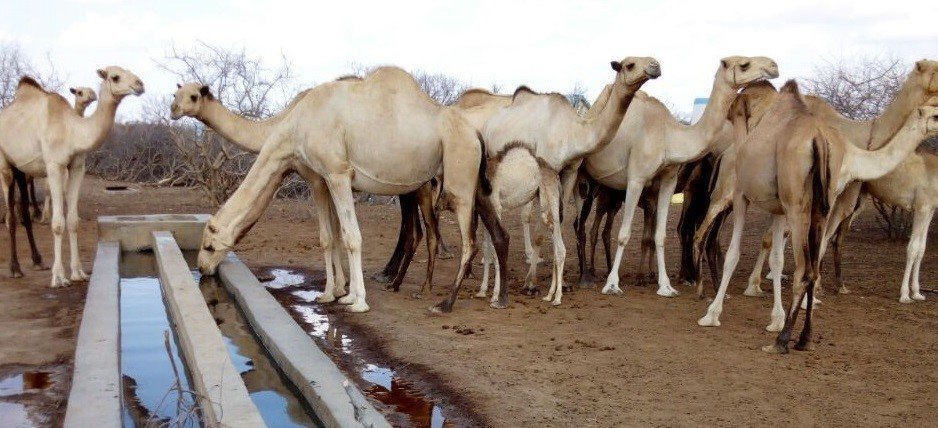
Camel Herds and Pastoralism in Wajir
Agriculture exists on a much smaller scale because of limited and unreliable rainfall. Where water is available, communities undertake small-scale irrigation and drought-resistant crop production.
Trade and Services
The service sector is also important to Wajir’s economy.
Retail shops, transport businesses, hotels, restaurants, financial services, telecommunications, government institutions and other services are concentrated particularly in Wajir town and other major trading centres.
Public-sector expenditure has a particularly important economic role because government institutions are major employers and purchasers of goods and services.
Livestock Markets
Livestock markets provide an important connection between rural pastoral households and urban consumers.
The livestock value chain creates employment for traders, transporters, brokers, veterinary service providers, slaughterhouse workers and other businesses.
Cross-Border and Regional Trade
Wajir’s location near Somalia and Ethiopia gives it potential for regional commerce.
The county is strategically positioned along routes linking northern Kenya with neighbouring countries and therefore has opportunities in logistics, transportation, wholesale trade and cross-border commerce.
6. Main Crops and Livestock
Livestock Production
Livestock is the most important traditional economic activity in Wajir.
The county’s dry environment makes animals such as camels, goats and sheep particularly important because they are relatively well adapted to arid conditions.
Major livestock species include:
- Camels
- Cattle
- Goats
- Sheep
- Donkeys
- Poultry
Camels
Camels are especially important in Wajir.
They are well adapted to prolonged dry conditions and can survive in environments where other livestock may experience greater difficulties.
Camel milk is an important food and commercial product, while camel meat is also consumed and traded.
Camel keeping therefore provides both food security and household income, particularly during periods of drought.
Cattle
Cattle are also widely kept, particularly for meat production.
However, cattle are more vulnerable to prolonged drought than camels because they require greater quantities of water and pasture.
Goats and Sheep
Goats and sheep are important because they reproduce relatively quickly and can provide households with income when animals are sold.
They are commonly traded through livestock markets and are also important during cultural and religious occasions.
Main Crops
Crop production is constrained by low and unpredictable rainfall.
Where conditions permit, farmers grow:
- Sorghum
- Maize
- Cowpeas
- Drought-resistant fruits
- Vegetables
Small-scale irrigation and water harvesting can expand crop production in areas where reliable water is available.
Bute, in Wajir North, is among the areas associated with localized agricultural activity.
7. Key Industries
Wajir does not have a large conventional manufacturing sector. Its industries are instead closely connected to livestock, trade, transport, public services and natural-resource-based commerce.
Livestock Value Chain
The livestock industry includes:
- Livestock markets
- Animal transportation
- Livestock aggregation
- Slaughterhouses
- Meat trading
- Veterinary services
- Hide and skin activities
- Camel milk production
The sector has considerable potential for further value addition, particularly through modern abattoirs, meat processing, cold storage and camel-milk processing.
Aviation and Logistics
Wajir International Airport is an important strategic infrastructure facility.
The airport provides air connectivity between Wajir and other parts of Kenya and supports government operations, humanitarian activities, security operations, business travel and movement of goods and people.
Its location also gives Wajir potential to develop as a regional logistics and transport centre.
Retail and Hospitality
Wajir town has a growing service economy involving:
- Retail businesses
- Hotels
- Restaurants
- Transport services
- Financial institutions
- Telecommunications
- Wholesale trade
Natural-Resource-Based Trade
The county also participates in trade associated with products such as miraa (khat) and other commodities transported through northern Kenya.
County revenue collection from trade and cess activities provides an additional source of local government revenue.
8. Population
According to the 2019 Kenya Population and Housing Census, Wajir County had a population of approximately 781,263 people.
The county has one of the lowest population densities in Kenya because of its very large land area.
Population Density
Population density is approximately 14 people per square kilometre.
This low density reflects the county’s extensive rangelands and the traditionally mobile nature of pastoral communities.
Population Growth
The county has recorded relatively rapid population growth, with an estimated average annual growth rate of approximately 3.7 percent in the cited county profile data.
Population growth increases demand for:
- Schools
- Hospitals
- Water
- Housing
- Roads
- Employment
- Markets
- Social protection services
The challenge is particularly significant because settlements are widely dispersed.
9. Quirks and Unique Attributes
Wajir possesses several characteristics that make it distinctive among Kenyan counties.
The Ora Shallow Wells
One of Wajir’s most distinctive historical features is its network of traditional shallow wells.
The development of Wajir town was closely associated with access to these water sources. For generations, the wells provided essential water for pastoral communities and their livestock.
They helped transform the area into an important oasis and settlement within an otherwise arid environment.
The Wajir Peace Model
Wajir is internationally recognised for its community-based approach to peacebuilding and conflict resolution.
The Wajir Peace and Development Committee, established in the 1990s, brought together women, elders, religious leaders, professionals and other community representatives to address conflict.
The Wajir peace model subsequently became an important example of how traditional community structures and formal peacebuilding mechanisms can work together.
Community-Based Development
Wajir has also developed a reputation for community participation in local development initiatives.
Community mobilisation has been used in areas including infrastructure, education, peacebuilding and local development.
Arid Environment
Another defining characteristic is the county’s ability to sustain large pastoral populations in a highly arid environment.
The adaptation of pastoral communities to drought, mobility and livestock-based livelihoods is an important feature of Wajir’s social and economic identity.
10. Main Annual Events
Wajir’s annual events reflect its Islamic, pastoral, cultural and national identity.
Madaraka Day Celebrations
Wajir has hosted major national celebrations, including Madaraka Day, helping to bring national attention to northern Kenya.
Such events provide an opportunity to showcase the county’s culture, economic potential and development priorities.
Camel Racing
Camel racing is one of the most distinctive cultural and sporting activities associated with northern Kenya.
Camel-related events provide opportunities for cultural exchange, entertainment, tourism promotion and livestock marketing.
Cultural Events
Cultural exhibitions may feature:
- Traditional clothing
- Somali cultural practices
- Food
- Music
- Dance
- Camel-related activities
- Traditional crafts
These events can also support local businesses and promote cultural cohesion.
Islamic Religious Celebrations
Because the county has a predominantly Muslim population, Eid-ul-Fitr and Eid-ul-Adha are major annual occasions.
These celebrations have both religious and economic significance, with increased demand for food, livestock, clothing, transport and retail goods.
11. School Enrolment Rates
Education in Wajir has historically faced significant challenges.
The county’s education outcomes have been affected by poverty, pastoral mobility, long distances to schools, inadequate infrastructure, teacher shortages and cultural and socioeconomic factors.
Historical Education Baseline
Historical studies cited by UNICEF and education-sector sources indicate that Wajir has recorded some of the lowest education participation rates in Kenya.
Secondary school net enrolment has historically been reported at approximately 14.2 percent, illustrating the substantial education gap that existed in the county.
Expansion of School Infrastructure
Since independence, the county has experienced a significant increase in the number of schools.
From having only a small number of secondary schools in the early post-independence period, Wajir has expanded to more than 90 secondary schools and approximately 350 primary schools, according to the county information provided.
This expansion has increased access to formal education across the county.
Early Childhood Education
Early Childhood Development Education (ECDE) has also received increased attention.
County-supported school feeding programmes have helped encourage enrolment and attendance, particularly among children from vulnerable households.
Continuing Challenges
Despite progress, the county still faces challenges involving:
- School attendance
- Teacher shortages
- Long distances to schools
- Pastoral mobility
- Transition from primary to secondary education
- Household poverty
- Inadequate learning facilities
Education investment remains important for developing Wajir’s human capital and reducing long-term socioeconomic inequalities.
12. Key Health Facilities
Healthcare delivery in Wajir has expanded considerably since the introduction of devolution.
Wajir County Referral Hospital
Wajir County Referral Hospital is the principal referral facility in the county.
It provides relatively advanced medical services and serves patients referred from lower-level facilities.
Its services include areas such as:
- Emergency care
- Maternity services
- Surgery
- Diagnostic services
- Outpatient services
- Inpatient care
- Specialist referrals
Sub-County Hospitals
Important facilities include hospitals and health facilities serving:
- Habaswein
- Bute
- Tarbaj
- Other sub-county and local administrative centres
These facilities help reduce the distance residents have to travel to Wajir town for medical treatment.
Expansion of Health Facilities
According to the information provided, Wajir has expanded its healthcare network to more than 174 registered medical facilities.
The expansion has improved geographical access to healthcare compared with the pre-devolution period.
Major Health Challenges
The county continues to experience challenges associated with:
- Long distances to health facilities
- Shortages of specialised medical personnel
- Maternal and child health
- Malnutrition
- Communicable diseases
- Water and sanitation
- Drought-related health risks
- Emergency referral challenges
Strengthening primary healthcare, ambulance services, maternal health and specialist referral systems remains important.
13. History of Leadership: Governors
The establishment of county governments under the 2010 Constitution fundamentally changed political and administrative leadership in Wajir.
First Governor: Ahmed Abdullahi (2013–2017)
Ahmed Abdullahi (Jiir) became Wajir’s first governor following the 2013 General Election.
His administration was responsible for establishing the initial institutional structures of the new County Government of Wajir.
The first administration had to establish county departments, systems of budgeting, public participation, service delivery and county-level planning under devolution.
Second Governor: Mohamed Abdi Mohamud (2017–2022)
Mohamed Abdi Mohamud succeeded Ahmed Abdullahi after the 2017 elections.
His administration faced political and administrative challenges, including disputes that eventually resulted in an impeachment process.
The leadership transition became an important episode in Wajir’s post-devolution political history.
Third Governor: Ahmed Abdullahi (2022–Present)
Ahmed Abdullahi returned to the governorship after winning the 2022 General Election.
His second period in office has focused on strengthening county institutions and improving development expenditure and service delivery.
His administration has continued to prioritise sectors such as:
- Healthcare
- Water
- Roads
- Livestock
- Agriculture
- Education
- Urban development
The history of Wajir’s governors therefore reflects both the opportunities and political challenges that have accompanied the implementation of devolution in the county.
14. Main Tourism Attractions and Why They Stand Out
Wajir’s tourism potential differs considerably from Kenya’s traditional safari and beach destinations.
Its attractions are particularly associated with history, culture, archaeology, wildlife, water and the unique experience of the northern arid environment.
Lake Yahud
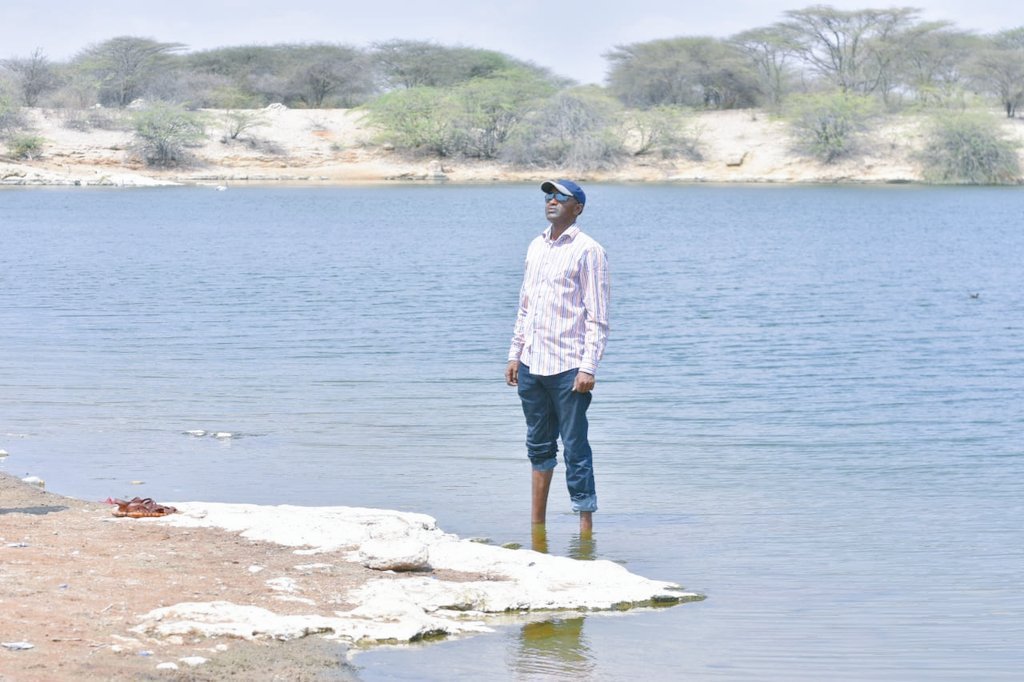
Lake Yahud is a seasonal water body located near Wajir town.
The lake is particularly distinctive because it appears as a water-rich ecosystem within an otherwise predominantly dry landscape.
During favourable periods, it can attract birds and other wildlife, making it potentially valuable for birdwatching and nature-based tourism.
Wajir Museum
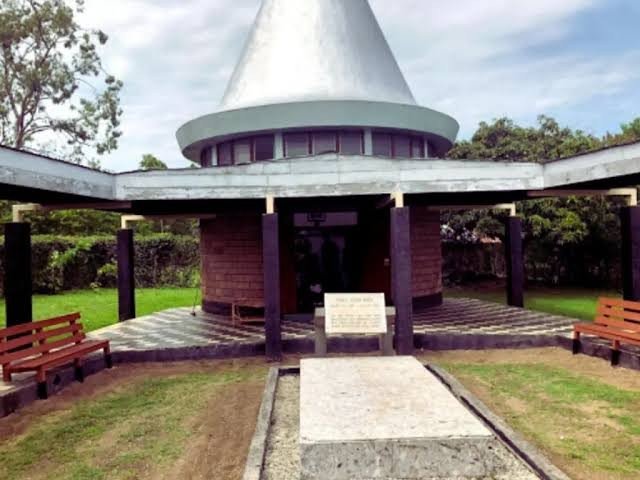
The Wajir Museum preserves and presents aspects of the cultural and historical heritage of northern Kenya.
It provides visitors with an opportunity to learn about the region’s traditional lifestyles, material culture, archaeology and historical development.
The museum is particularly important because much of Wajir’s history is connected to pastoral communities, trade routes and the wider Northern Frontier region.
World War II Historical Sites
Wajir contains remnants of World War II-era military infrastructure, including defensive positions, bunkers and related structures.
These sites are reminders of Wajir’s strategic importance during the colonial period and provide opportunities for historical and heritage tourism.
Wagalla Massacre Memorial Site
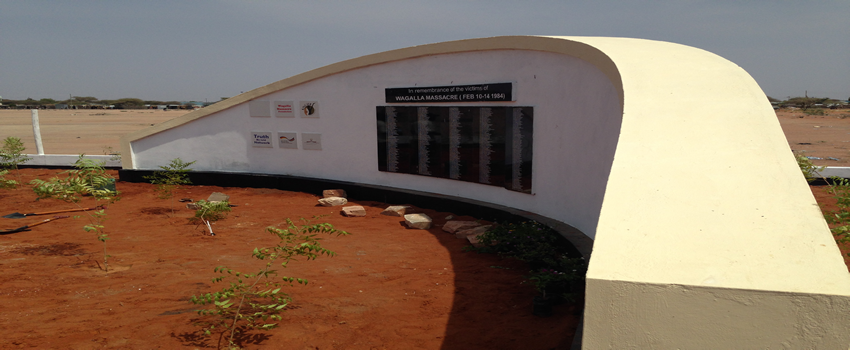
The Wagalla Massacre Memorial Site is one of the most significant historical sites in Wajir.
The site commemorates victims of the 1984 Wagalla massacre, one of the darkest episodes in Kenya’s post-independence history.
It has significance beyond tourism because it provides a place for historical remembrance, human-rights education, reconciliation and public reflection.
Wajir’s Pastoral and Cultural Landscape
The county’s pastoral way of life itself represents a potential tourism asset.
Visitors can experience:
- Camel culture
- Pastoral traditions
- Traditional foods
- Local markets
- Cultural performances
- Traditional crafts
- Islamic cultural heritage
With responsible community-based tourism, these activities could generate income while helping preserve local traditions.
Tourism Development Challenges
Wajir’s tourism industry remains relatively underdeveloped because of:
- Limited tourism infrastructure
- Long travel distances
- Poor road connectivity in some areas
- Limited accommodation
- Limited destination marketing
- Security perceptions
- Insufficient visitor facilities
Tourism Opportunities
There is potential for investment in:
- Cultural tourism
- Heritage tourism
- Camel tourism
- Eco-tourism
- Birdwatching
- Community-based tourism
- Historical tourism
- Desert and adventure tourism
- Research tourism
15. Key Personalities Associated with Wajir
Wajir has produced and been associated with political leaders, diplomats, legislators, peace activists and community leaders who have influenced both county and national affairs.
Amb. Mohamed Abdi Mohamud
Mohamed Abdi Mohamud is a prominent political and public figure from Wajir.
He served as the second Governor of Wajir County from 2017 to 2022 and had previous experience in national public administration and diplomacy.
His career reflects the movement of northern Kenyan leaders between national government, diplomatic service and devolved county administration.
Hon. Keynan Wehliye Adan
Keynan Wehliye Adan is one of the most prominent long-serving politicians associated with Wajir.
He has represented the region in Parliament over several terms and has played an important role in national political affairs.
His long parliamentary career has made him one of the better-known political figures from northern Kenya.
Dekha Ibrahim Abdi
Dekha Ibrahim Abdi is perhaps Wajir’s most internationally recognised peacebuilding personality.
She was a renowned peace activist and community leader who played an important role in the development of the Wajir peacebuilding model.
Her work demonstrated how women, elders and community organisations could participate directly in resolving conflicts.
She received the Right Livelihood Award, often described as the Alternative Nobel Prize, for her contribution to peacebuilding.
Her legacy continues to influence discussions on community-based peacebuilding, women’s leadership and conflict resolution.
H.E. Ahmed Abdullahi
Ahmed Abdullahi (Jiir) is a prominent political figure who has served as governor during two separate periods.
He was the first Governor of Wajir County (2013–2017) and returned as governor after the 2022 elections.
His political career has been closely associated with the development of county government and the implementation of devolution in Wajir.
Community and Religious Leaders
Beyond elected politicians, Wajir’s social development has historically depended heavily on clan elders, religious leaders, women leaders, peace activists and community organisations.
These groups have played important roles in peacebuilding, dispute resolution, humanitarian response, social mobilisation and management of shared resources.
16. Wajir County at a Glance
Wajir County is one of Kenya’s largest and most geographically distinctive counties.
Its identity is strongly shaped by its arid environment, pastoral economy, Somali cultural heritage, Islamic traditions, livestock markets and strategic location near Somalia and Ethiopia.
The county’s major economic sectors include:
- Livestock and pastoralism
- Trade and retail
- Public services
- Transport and logistics
- Agriculture
- Livestock processing
- Tourism and cultural heritage
Its most important natural and economic asset is its livestock economy, particularly camel, cattle, goat and sheep production.
At the same time, the county has significant opportunities in livestock value addition, camel milk processing, meat processing, regional trade, logistics, renewable energy, irrigation and tourism.
Wajir’s development, however, continues to be constrained by aridity, recurrent drought, water scarcity, dispersed settlements, poverty, infrastructure gaps and limited access to specialised education and healthcare.
The county’s experience with community-based peacebuilding is one of its most important intangible assets. The Wajir Peace and Development Committee demonstrated that locally rooted institutions can make a significant contribution to conflict prevention and social stability.
Overall, Wajir’s combination of vast rangelands, livestock resources, strategic location, cultural heritage, community peacebuilding traditions and emerging service-sector economy gives it considerable long-term development potential.
17. References
- County Government of Wajir. Official County Government Website and Wajir Municipal Information.
https://wajir.go.ke/ - County Government of Wajir. Wajir County Fiscal Strategy Paper 2026.
https://wajirassembly.go.ke/wp-content/uploads/2026/04/Wajir-County-Fiscal-Strategy-paper-2026-Approved.pdf - Kenya National Bureau of Statistics (KNBS). 2019 Kenya Population and Housing Census.
https://www.knbs.or.ke/ - Kenya National Bureau of Statistics (KNBS). Gross County Product Reports.
https://www.knbs.or.ke/ - KIPPRA. County Economic and Development Studies.
https://repository.kippra.or.ke/ - Infotrak Research and Consulting. Wajir County Profile.
https://countytrak.infotrakresearch.com/wajir-county/ - Mzalendo Trust. Wajir County Parliamentary and Political Information.
https://mzalendo.com/mps-performance/counties/wajir/ - Trackminster. Wajir County Political Leadership Information.
https://www.trackminster.com/counties/wajir - Open County. Wajir County Information and Revenue Profile.
https://opencounty.org/county.php?cid=8 - County Government of Wajir. County Development and Administrative Information.
https://wajir.go.ke/ - Kenya National Bureau of Statistics (KNBS). Economic Survey.
https://www.knbs.or.ke/ - Ministry of Education, Kenya. Education Statistics and Policy Information.
https://www.education.go.ke/ - UNICEF Kenya. Education and Child Development Information.
https://www.unicef.org/kenya/ - Ministry of Health, Kenya. Health Sector Information and County Health Data.
https://www.health.go.ke/ - Kenya Medical Practitioners and Dentists Council (KMPDC). Health Facilities and Regulatory Information.
https://kmpdc.go.ke/ - Kenya News Agency. Wajir County Tourism and Development Information.
https://www.kenyanews.go.ke/unveiling-wajir-countys-potential/ - Council of Governors – Kenya. County Government and Devolution Information.
https://maarifa.cog.go.ke/ - Kenya Wildlife Service. Wildlife and Conservation Information.
https://www.kws.go.ke/ - Wajir County Assembly. County Fiscal and Development Documents.
https://wajirassembly.go.ke/ - Parliament of Kenya. Members of Parliament and Senate Information.
https://www.parliament.go.ke/


