
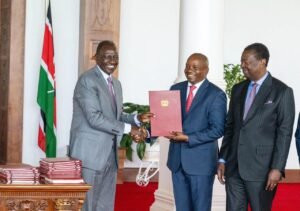
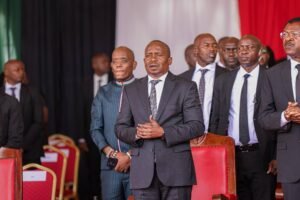
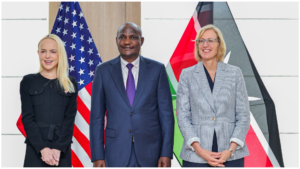
President William Ruto has signed into law the Supplementary Appropriation Bill (No. 2 of 2024/25), approving major adjustments to the national budget aimed at addressing fiscal pressures while safeguarding key government priorities.
The President assented to the bill at State House Nairobi on Tuesday, paving the way for a revised spending plan that cuts overall expenditure by KSh145.7 billion.
The reductions largely affect the Executive, which accounts for KSh139.8 billion of the cuts, while Parliament and the Judiciary will see their allocations reduced by KSh3.7 billion and KSh2.1 billion respectively.
Education, health and security protected
Despite the austerity measures, the government has maintained funding for critical sectors, particularly education, healthcare and security.
Under the new law, KSh18.7 billion has been retained to facilitate the confirmation of Junior Secondary School (JSS) intern teachers into permanent and pensionable terms, a move expected to stabilize the education sector and address staffing gaps under the Competency-Based Curriculum.
An additional KSh3.7 billion has also been allocated to support medical internship programmes, ensuring continuity in training and deployment of healthcare workers across the country.
Security has also received a boost, with the National Police Service set to benefit from an extra KSh7.5 billion to enhance operations and strengthen public safety.
Focus on reducing deficit and debt pressure
The revised budget outlines measures aimed at reducing the country’s fiscal deficit to 5.7 per cent of Gross Domestic Product (GDP), signaling the government’s commitment to restoring economic stability amid rising debt concerns.
Part of the reallocation will support agricultural subsidies and drought mitigation programmes, as the government moves to cushion vulnerable communities and sustain food production in the face of climate-related challenges.
The supplementary budget comes at a time when the administration is pushing broader reforms to streamline spending and improve efficiency in public finance management.
Wider reforms and spending controls
The budget adjustments align with ongoing government plans to restructure public institutions and cut unnecessary expenditure. These include proposals to reduce the number of state corporations with overlapping mandates and scale down advisory roles within government.
The changes are expected to ensure that essential public services remain funded even as the government tightens its spending to manage economic pressures.
The new law now authorizes the National Treasury to implement the revised allocations across ministries, departments and agencies for the remainder of the 2024/25 financial year.


