
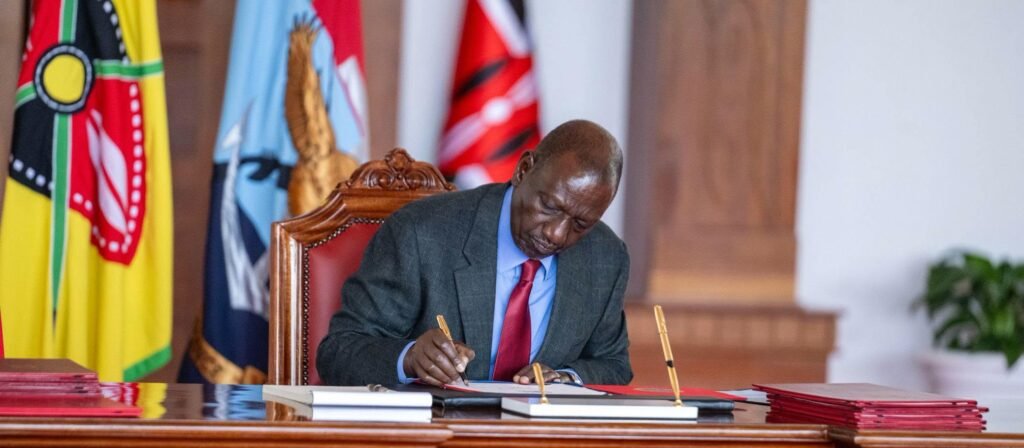
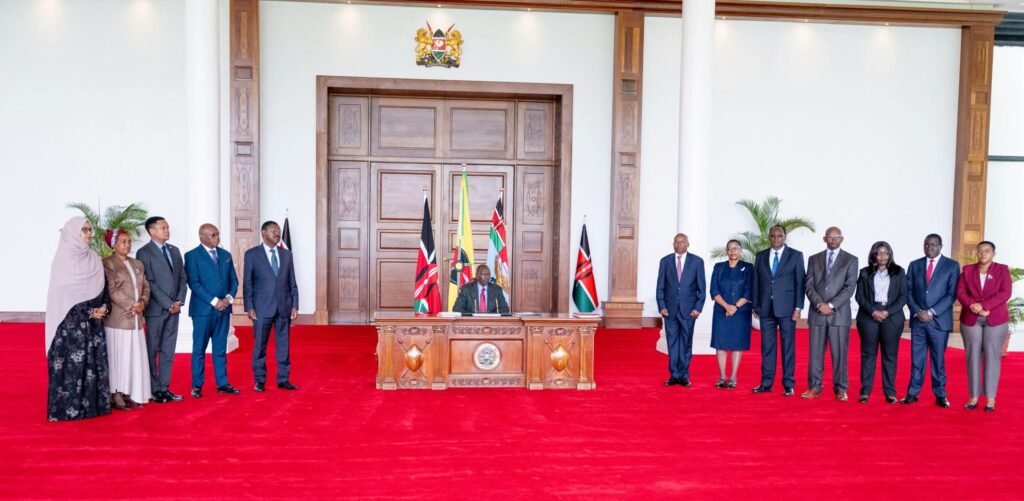
President William Ruto has signed the Central Bank of Kenya (Amendment) Act, 2026 into law, ushering in far-reaching reforms aimed at strengthening financial stability, improving banking sector oversight and modernising Kenya’s monetary policy framework.
The new law establishes a clear legal distinction between the Central Bank of Kenya’s routine monetary policy operations and Emergency Liquidity Assistance (ELA), a move President Ruto said will better prepare the country to respond to financial crises while protecting taxpayers and maintaining confidence in the banking sector.
“The new law strengthens the Central Bank’s capacity to safeguard financial stability, improve banking oversight and modernise Kenya’s monetary policy framework,” President Ruto said after assenting to the legislation.
How the new law changes emergency support for banks
One of the most significant reforms introduces a separate legal framework governing Emergency Liquidity Assistance.
Under the amended law, emergency financial support can only be extended to banks that satisfy strict conditions relating to solvency, long-term viability and systemic importance.
President Ruto said the reforms distinguish ordinary liquidity management from extraordinary interventions during periods of financial distress.
“The new framework improves Kenya’s preparedness to respond to financial crises while protecting taxpayers and the banking sector,” the President said.
The changes are expected to ensure that emergency public resources are only used when necessary and under clearly defined legal safeguards.
CBK receives expanded financial stability mandate
While maintaining price stability as its primary objective, the amended law formally elevates financial system stability and sound banking regulation as secondary mandates of the Central Bank.
President Ruto said the legislation formally recognises the CBK’s broader responsibility in promoting the resilience, integrity and proper functioning of Kenya’s financial system.
“The reforms strengthen the Central Bank’s role in safeguarding the integrity, resilience and proper functioning of Kenya’s financial system,” he said.
Parliament to vet Deputy Governors
The legislation also introduces governance reforms by requiring nominees for the position of Deputy Governor to undergo vetting and approval by the National Assembly before appointment.
Previously, parliamentary approval primarily applied to the Governor.
According to President Ruto, the amendment aligns the appointment process for the Deputy Governors with that of the Governor while strengthening parliamentary oversight of the country’s monetary authority.
CBK training institute receives legal backing
The Act further grants statutory recognition to the Central Bank of Kenya Institute of Monetary Studies, providing a formal legal basis for its training and research mandate.
It also creates a framework for collaboration between the CBK and national, regional and international institutions to enhance knowledge sharing, professional development and cross-border cooperation.
President Ruto said the reforms are intended to strengthen institutional capacity and position Kenya’s financial sector to meet emerging global challenges.
Gold reserves and deposit protection updated
The legislation also updates the law by replacing references to the defunct Deposit Protection Fund Board with the Kenya Deposit Insurance Corporation, aligning the Act with Kenya’s current deposit protection framework.
In addition, the amended law clarifies the Central Bank’s authority to hold and transact in gold and other precious metals as part of its reserve management strategy.
President Ruto said the reforms will support Kenya’s growing mining sector while aligning the country with international best practice.
“The amendment expands legal clarity on the Central Bank’s authority to deal in gold and other precious metals as part of reserve management,” he said.
Parliamentary pensions law also signed
Alongside the banking reforms, President Ruto also assented to the Parliamentary Pensions (Amendment) Act, 2023, introducing reforms that align the parliamentary pension framework with the 2010 Constitution.
The updated legislation formally recognises both the National Assembly and the Senate in administering parliamentary pensions, ensuring senators receive benefits under the same legal framework as Members of the National Assembly.
“The reforms align the parliamentary pension framework with the Constitution and recognise Kenya’s bicameral Parliament,” President Ruto said.
Key changes under the Parliamentary Pensions law
The amended Act introduces several constitutional and governance reforms, including:
| Reform | What changes |
|---|---|
| Definition of a child | Raised from under 16 years to under 18 years to align with the Constitution. |
| Pension eligibility | Senators are formally included in the parliamentary pension framework alongside Members of the National Assembly. |
| Pension committees | The Parliamentary Pensions Management Committee and Appeals Committee will now include representatives from both Houses of Parliament. |
| Gratuity payments | Legislators who serve for less than five years will continue to receive gratuity, preserving existing public service pension policy. |
President Ruto said the reforms modernise Kenya’s legal framework while ensuring that both financial governance and parliamentary administration reflect the constitutional changes introduced under the 2010 Constitution.


 Act, 2026 into law, introducing sweeping banking reforms, stronger financial oversight, emergency liquidity safeguards and enhanced governance at the CBK.)