
For decades, Nairobi was primarily known as East Africa’s commercial, diplomatic and transportation hub. Today, however, the Kenyan capital is increasingly gaining international recognition for something entirely different: technology and innovation.
Often referred to as the “Silicon Savannah,” Nairobi has become one of Africa’s most dynamic startup ecosystems, attracting entrepreneurs, software developers, venture capitalists and multinational technology companies seeking to tap into the continent’s rapidly growing digital economy. What was once viewed as a traditional business centre is now shaping conversations about the future of technology in Africa.
The comparison to California’s Silicon Valley is not merely symbolic. Nairobi has established itself as a city where groundbreaking ideas are developed, funded and scaled, creating solutions that are influencing not only Kenya but the entire continent.

M-Pesa and the Birth of the Silicon Savannah
The story of Nairobi’s transformation cannot be told without mentioning M-Pesa, the mobile money platform launched by Safaricom in 2007.
At a time when millions of Kenyans lacked access to formal banking services, M-Pesa provided a simple yet revolutionary solution that allowed people to send, receive and store money using their mobile phones. The innovation fundamentally transformed financial inclusion and became a model studied by governments, universities and technology firms around the world.
More importantly, M-Pesa demonstrated that world-changing innovation could emerge from Africa. It challenged the long-held perception that transformative technology could only be developed in places such as Silicon Valley, London or Beijing.
The success of M-Pesa inspired a new generation of entrepreneurs who saw technology not merely as a business opportunity but as a tool for solving real societal challenges.
A Magnet for Global Technology Giants
As Nairobi’s reputation grew, some of the world’s largest technology companies began establishing a stronger presence in Kenya.
Google selected Nairobi as the location for its first product development centre in Africa, while Microsoft expanded its cloud computing and artificial intelligence operations in the city. IBM, Cisco, Amazon Web Services and other global technology firms have also invested heavily in Kenya, creating research centres, innovation hubs and training programmes.
Their presence has helped position Nairobi as a gateway to the African technology market. These companies are not only bringing capital into the country but are also helping develop local talent through partnerships with universities, coding academies and startup accelerators.
The growing concentration of global technology firms has strengthened Nairobi’s status as a regional innovation powerhouse and increased investor confidence in the city’s startup ecosystem.
Billions Flowing Into Kenya’s Startup Ecosystem
Investment has been one of the strongest indicators of Nairobi’s growing influence in the global technology landscape.
Over the past several years, Kenya has consistently ranked among Africa’s top destinations for venture capital funding, competing closely with Nigeria, Egypt and South Africa. Startups based in Nairobi have attracted hundreds of millions of dollars in investments across sectors including financial technology, agriculture, healthcare, logistics, climate technology and artificial intelligence.
Companies such as Twiga Foods, M-KOPA, Sendy and BRCK have demonstrated that businesses built in Nairobi can attract international funding while expanding beyond Kenya’s borders.
The steady flow of venture capital has enabled entrepreneurs to scale innovative solutions, create jobs and strengthen the country’s digital economy.

Innovation Hubs Driving Entrepreneurship
Another reason Nairobi is frequently compared to Silicon Valley is the strength of its innovation ecosystem.
Across the city, technology hubs, incubators and co-working spaces have become centres of creativity and collaboration. Institutions such as iHub, Nairobi Garage, Nailab and the Kenya Climate Innovation Center have helped thousands of entrepreneurs transform ideas into viable businesses.
These hubs provide access to mentorship, networking opportunities, funding connections and technical support. For many startups, they serve as the first stepping stone from concept development to commercial success.
The collaborative nature of these spaces has fostered a culture of innovation that continues to attract young entrepreneurs from across East Africa.
A Young Population Fueling Digital Growth
Nairobi’s rise has also been driven by demographics.
Kenya has one of the youngest populations in the world, with millions of digitally connected young people embracing mobile technology, online commerce, digital payments and artificial intelligence tools.
This youthful population represents both a market and a workforce. Startups have access to tech-savvy consumers willing to adopt new products, while companies can recruit talented developers, engineers and innovators capable of building solutions for local and global markets.
The widespread adoption of smartphones and internet services has further accelerated digital transformation, creating fertile ground for innovation.
Government Investments Supporting the Tech Revolution
Government support has played a significant role in Nairobi’s emergence as a technology hub.
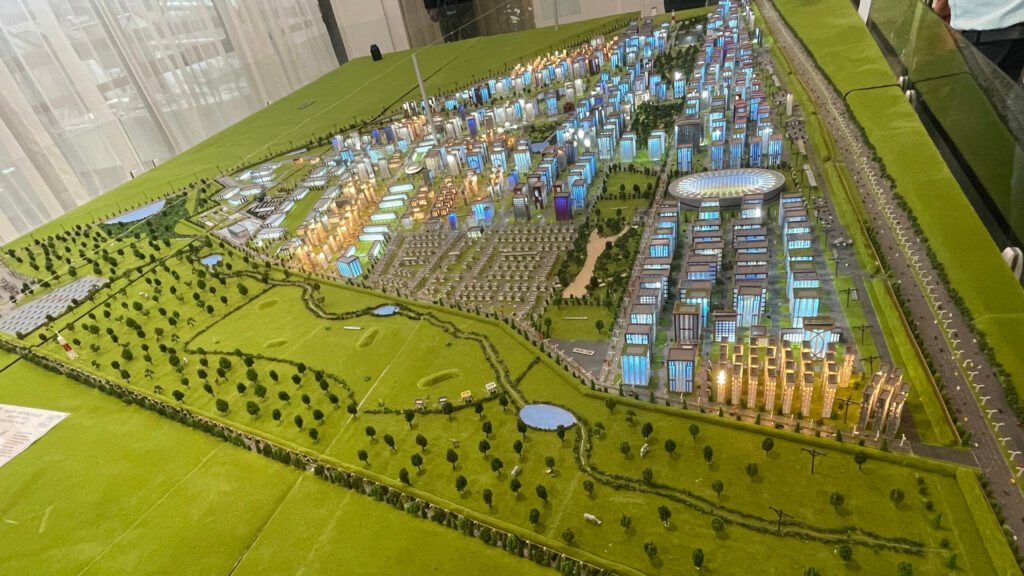
Major investments in digital infrastructure, internet connectivity and e-government services have created a more conducive environment for technology-driven businesses. One of the most ambitious projects is Konza Technopolis, a planned smart city designed to attract technology firms, research institutions and innovation-focused enterprises.
The government has also promoted policies aimed at encouraging entrepreneurship, supporting startups and expanding digital access across the country.
These efforts are helping strengthen Kenya’s competitiveness in an increasingly digital global economy.
Challenges Still Stand in the Way
Despite its remarkable progress, Nairobi’s technology ecosystem faces several challenges.
Many startups continue to struggle with access to late-stage funding, regulatory uncertainty and difficulties scaling across fragmented African markets. Infrastructure gaps, talent retention and cybersecurity concerns also remain significant obstacles.
Competition is intensifying as other African cities such as Lagos, Cape Town, Kigali and Cairo aggressively position themselves as regional technology hubs.
However, industry experts believe Nairobi’s strong foundation, established innovation ecosystem and growing investor confidence give it a competitive advantage in the race to become Africa’s leading technology destination.
More Than a Nickname
The term “Silicon Savannah” is no longer simply a catchy slogan. It reflects a profound transformation that has positioned Nairobi at the centre of Africa’s digital future.
From pioneering mobile money innovations to attracting global technology giants and nurturing world-class startups, Nairobi has demonstrated that transformative innovation can thrive in Africa.
As investment continues to grow and new technologies such as artificial intelligence reshape industries worldwide, Nairobi is increasingly proving that it is not merely following the path of Silicon Valley—it is creating its own model for innovation, one uniquely suited to Africa’s challenges and opportunities.
For entrepreneurs, investors and policymakers alike, the message is becoming increasingly clear: the future of African technology is being built in Nairobi.

