
When Raymond Vicky Ojwang’ Omollo stepped into office in November 2022, he was largely unknown to the public eye—more comfortable with data sets than political spotlights.
A trained statistician with over two decades of experience, Omollo built his career in academia and research, serving as a lecturer and examiner at institutions such as University of Nairobi, Strathmore University, and the University of the Witwatersrand. His rise to Principal Secretary for Internal Security and National Administration marked a shift from quiet analysis to one of the most demanding dockets in government.
Yet, even in power, Omollo has maintained a reserved, low-profile approach—until recent events thrust him into the centre of a growing political storm.
From numbers to national security
At 46, Omollo represents a technocratic breed of leadership—grounded in academic rigor. He holds a Bachelor’s and Master’s degree in Statistics from the University of Nairobi, and a PhD in Applied Statistics from Maseno University.
His appointment was seen as strategic, bringing analytical depth into the country’s internal security framework. His role involves coordinating national security policy and managing intergovernmental relations—responsibilities that often unfold far from the public gaze.
But in Kenya’s charged political climate, even the most reserved figures can quickly become focal points.
Allegations and political pressure
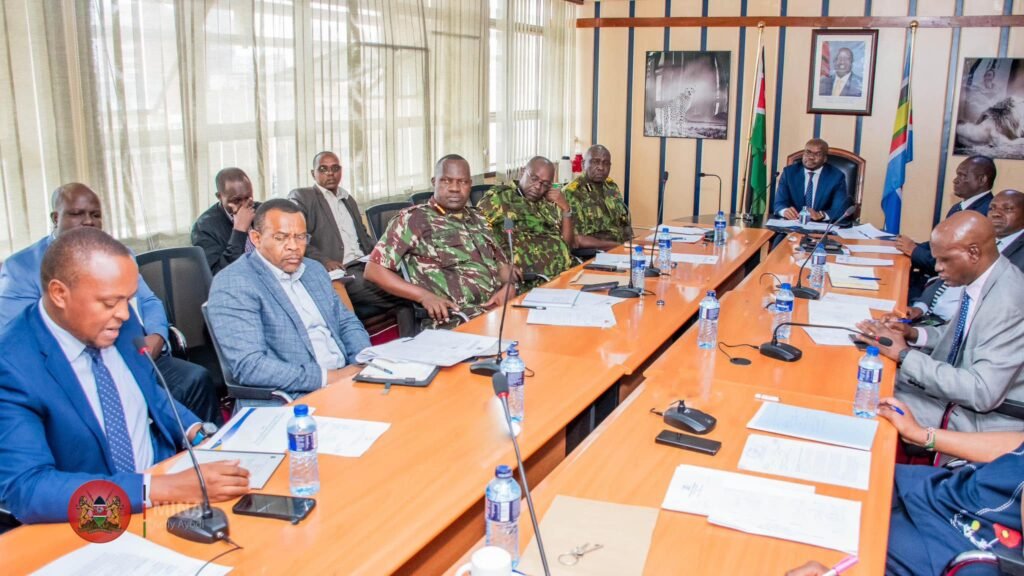
In recent weeks, Omollo’s name has surfaced repeatedly in political discourse, linked—without formal proof—to rising incidents of politically instigated violence.
The conversation intensified following an attack on Godfrey Osotsi in Kisumu on April 8, with the senator alleging that the assault was orchestrated by forces connected to the Interior Ministry.
Opposition leaders, including Kalonzo Musyoka, have called for accountability, with some demanding Omollo’s resignation. Former Deputy President Rigathi Gachagua also weighed in, accusing security agencies of tolerating or enabling organised groups he described as “goons” to disrupt political activities.
These claims have significantly raised the political temperature, placing Omollo under scrutiny despite his continued silence.
Government closes ranks
While Omollo has largely refrained from directly responding to the accusations, his superior, Interior Cabinet Secretary Kipchumba Murkomen, has come to his defence.
Murkomen challenged critics to denounce violence across the political divide, suggesting that blame should not be selectively assigned. At the same time, the ministry has reiterated its commitment to cracking down on criminal gangs and restoring order in affected regions.
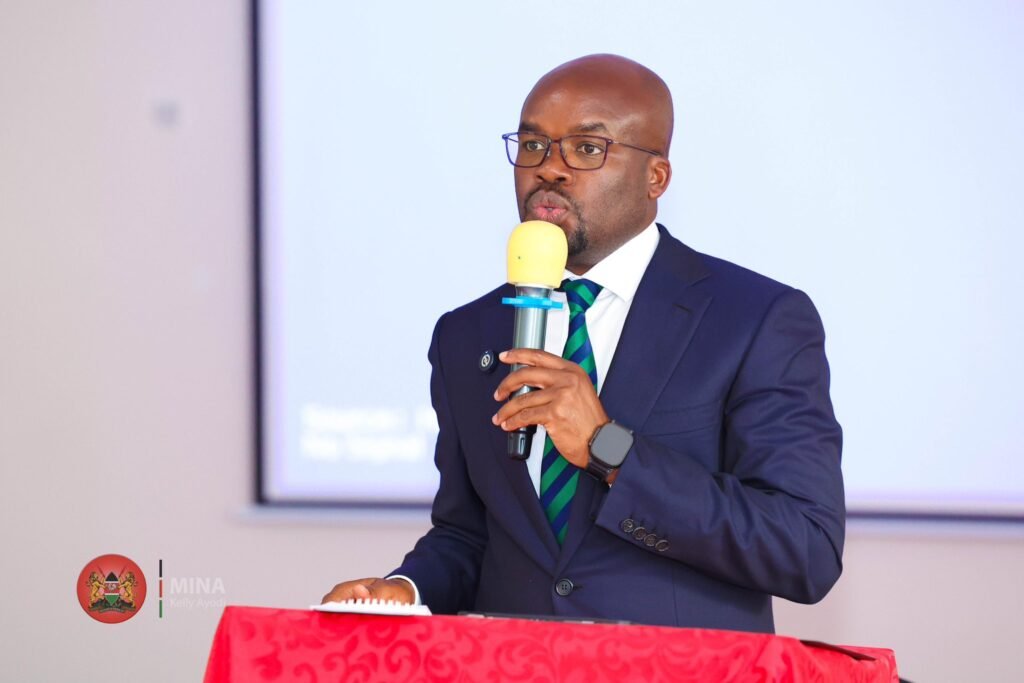
Rather than engage in public exchanges, Omollo has focused on security operations—signaling a preference for action over rhetoric.
The Nyanza factor
Beyond security concerns, Omollo’s growing visibility is also tied to shifting political dynamics in the Nyanza region.
Traditionally an opposition stronghold, the region is witnessing renewed competition for influence ahead of the 2027 General Election. Leaders such as John Mbadi and Oburu Oginga remain key voices, but Omollo’s increasing presence has drawn attention.
His consistent support for President William Samoei Ruto’s development agenda in the region has been interpreted by critics as political positioning—an accusation he has neither confirmed nor addressed publicly.
Oburu Oginga, however, has openly cautioned him against what he perceives as political overreach, urging the PS to focus strictly on his security mandate.
Calm under pressure
Despite the mounting criticism, Omollo’s defining trait remains his composure. In a political environment often dominated by public spats and rapid responses, his silence stands out.
Supporters view this as discipline and professionalism. Critics, however, interpret it as evasiveness at a time when public accountability is demanded.
As Kenya edges closer to the 2027 elections, the scrutiny surrounding Omollo is unlikely to fade. Whether he continues to operate behind the scenes or steps more visibly into the national conversation may shape both his career and the broader political landscape.
For now, he remains what many describe him as—a calm figure navigating the eye of a rapidly intensifying storm.


